
Koukoulion or Klobuk?
Delving into the Subtleties of Monastic Headwear
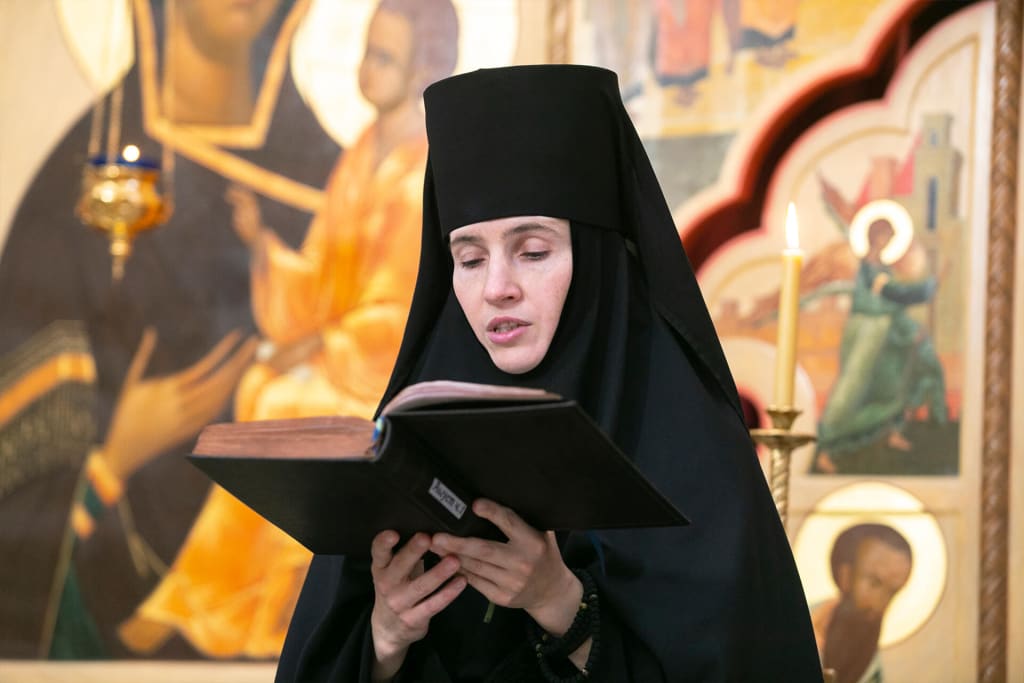
All clergy vestments, including monastic headwear, have a deep symbolic meaning. Although Vestments are called "veils of humility," symbolizing the armor of the warriors of Christ, struggling with the sin, their origin and usage are often determined by such reasons as certain historical period, local weather and climatic conditions, or others.
What is a koukoulion?
The koukolion is the oldest monastic headwear. In around the 2nd century, the Romans had an item of clothing called a pallium. It's a large piece of fabric that envelops the body almost completely, except for the face, hands, and toes. The pallium became quite popular according to its simplicity in manufacture and convenience in use.
The koukoulion, a short, hooded cloak reaching the middle of the back, developed from the pallium. Monks borrowed this headdress as soon as the very institution of monasticism (late 4th century) was established.
The first mention of monastic attire was by St. John Cassian the Roman (4th-5th centuries) in "De habitu monachi".
And St. Abba Dorotheus (6th century) already mentioned the koukoulion among the traditional monastic clothing in both the East and the West. In the West, there is even a proverb: "Cuculla non facit monachum" - "The koukoulion does not make the monk".
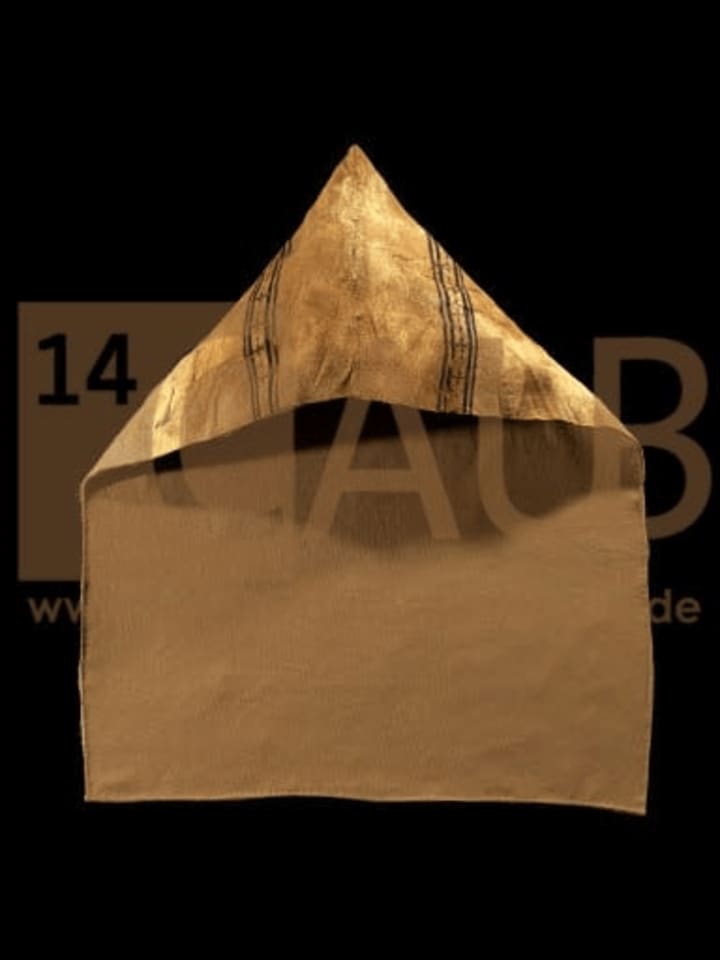
The oldest surviving koukoulion, found in an Egyptian monastic burial site, which is presumably from the 7th century and now it is in the Louvre Museum collection. the oldest image of a koukoulion is in the Syrian Rabula Codex (c. 586). In both cases, the koukoulion is a cape made of a small piece of fabric with a sharp top.
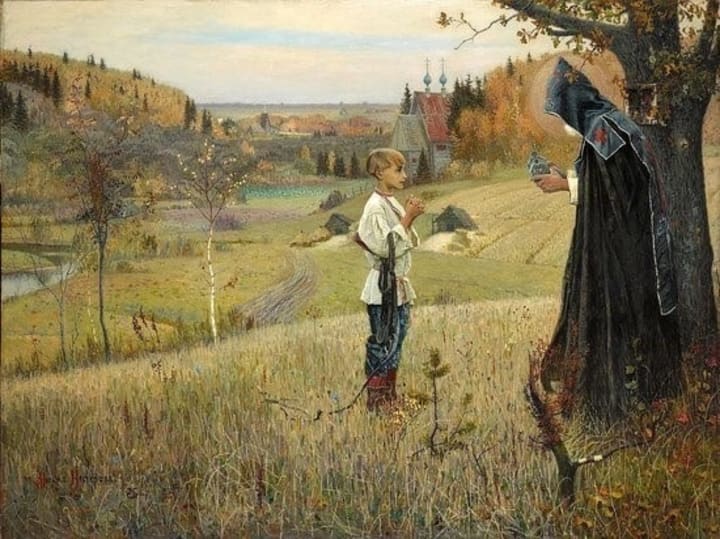
By the 11th century, in the Menologium of Basil II, the image of the koukoulion has changed. A cloth-cape, resembling the modern analabos, is sewn onto it, hanging down in the frontl to the chest and the back below the waistline.
It is important to note that Orthodoxy, unlike Catholicism, has no monastic orders, and therefore there is no strict general rules prescribing specific dress codes. Each monastery can make some changes to the vestments. Therefore, in ancient times there were different koukoulions: with a sharp top, clamming around the head, connected with a shoulder cape.
Perhaps the main reason for the wide use of the koukoulion in monastic life is the weather - the scorching sun, winds, rains, and night cold. The koukoulion warmed and protected from the weather, and when it was necessary to hide from the sand and dust in the desert, the ends of the koukoulion were worn around the face.
The simplicity of manufacture, along with a low cost and versatility, made the koukoulion a characteristic monastic item. Koukoulion and monasticism spread widely all over the world, including in Russia. The first mentions of wearing the koukoulion in Slavic lands appears in the 11th century in the Glagolitic Sinai Euchologium.
In 1280, in the Novgorod Kormchaya, in the rite of monastic burial, the koukoulion was called an attribute of the Great Schema. "If it is monk, tonsured into the great schema, put the koukoulion on top of his head, covering him up to the chin." Approximately at the same time, after the final division into Lesser Schemamonks and Great Schema assigned the koukoulion was allowed to be worn only by Great schema.
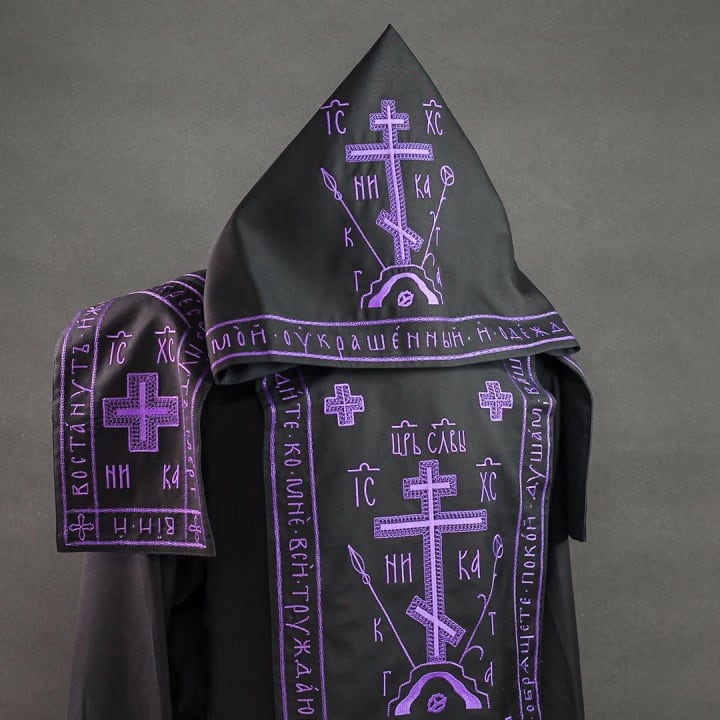
The Great Schema koukoulion is a pointed hood with two long cuts of fabric falling on the chest and back. It is embroidered with crosses, seraphim, and the words of the Trisagion, the 50th Psalm, the hymn "I see Thy Bridal Chamber, O my Savior," or other prayers. Today, koukoulion and the analavos are worn together - a square cloth with an image of an eight-pointed Golgotha cross, the instruments of the Passion, and the skull of Adam. It is noteworthy that after the reform of Patriarch Nikon, the Great Schema koukoulion, unlike other church headdresses, did not undergo changes.
Nowadays, the term "koukoulion" is sometimes used to refer to the Patriarch's klobuk (white for the Patriarch of the Russian Orthodox Church and black for the Catholicos-Patriarch of the Georgian Orthodox Church) or the monastic headdress of the Old-belivers Rite. In everyday speech, one can perhaps confuse these two concepts. But historically, the term "cucullus" can only be applied to the headdress of the ancient ascetics from the 4th to the 13th century (considering the cucullus, a shoulder-lenght cape), and after the 13th century, the term "cucullus" can only be refered to the headdress of the Great Schema monks.
The symbolic meaning of the koukoulion is expressed in the phrase about the rite of baptism: "The servant of God is vested in the koukoulion of innocency." St. Simeon of Thessalonica says more detailed about the symbolism of the koukoulion: "The koukoulion descends both onto front and back of the chest - for the strength of thought and heart, and also on the back. It is sewn around with scarlet crosses in order to drive away with this regal and formidable sign the enemies attacking us from the front and the back." And Abba Dorotheus wrote that the koukoulion is made as a cap for babies, to signify that the monk must keep his spirit pure and innocent, like a child.
What is a Klobuk?
The klobuk (from the Turkic word "kalpak" - hat) is the everyday headdress of monastics and bishops, also used for some divine services. In the Greek churches, klobuk is equivalent to kamilaukion (καμελαύκιον) and "headpiece" (περικεφαλαίαν), rarely the small koukoulion (μικρὸν κουκούλιον). The history of the origin of the klobuk is unknow. It's impossible to say exactly when it appeared, when or how it became the headdress of monastics. Although the history of the klobuk can only be traced from the beginning of the second millennium, it appeared much earlier.
The earliest known images of the klobuk date back to the 14th century, found in the Slavic translation of George Hamartolos chronicle. The klobuk is depicted as a headcloth with veils descending onto the chest and back. Notably, in this miniature St. Athanasius of Alexandria, who lived in the 4th century, was with klobuk. Similar depictions of the klobuk are also found in the miniature images of the "Theological Works" of John VI Kantakouzenos, late 14th century.
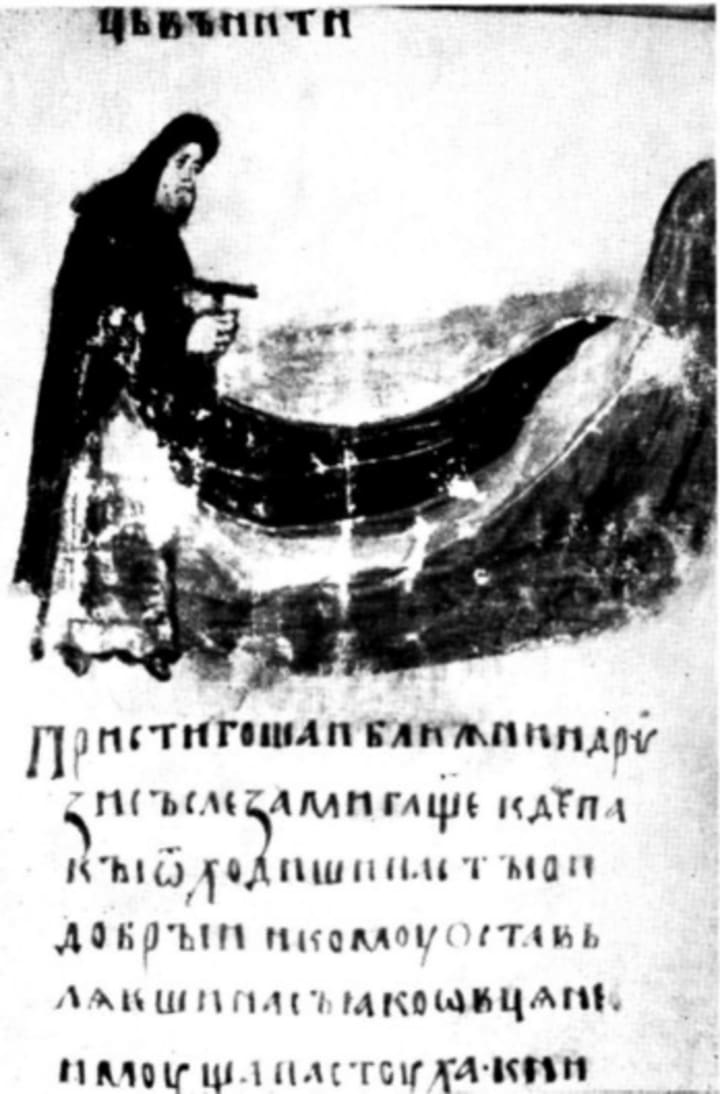
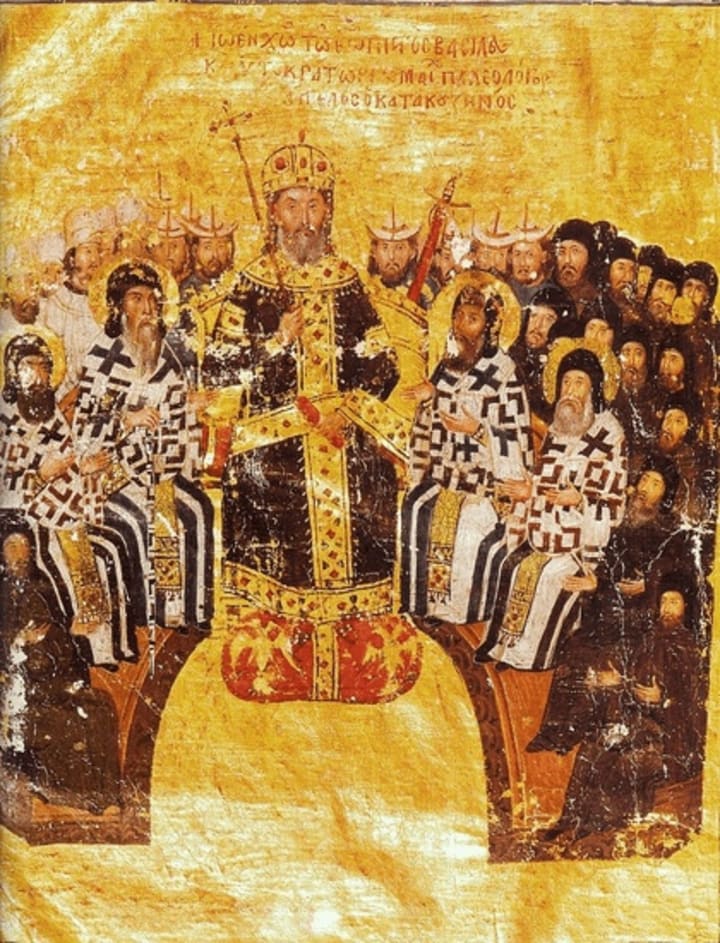
In the 8th-13th centuries, during the division into the lesser and Great Schema, the koukoulion became an attribute of the Great Schema , while the headdress of the little Schema was called the kamilaukion or small koukoulion. It is quite possible that this hat could have meant precisely such a cap.
It is also very likely that, the spread of the monasticism to northern areas, revealed the need in an additional headdress in addition to the ancient koukoulion. Combination of the koukoulion and veil, due to the climate and labors resulted in practical item.
A similar headdress can be seen in the miral of St. Euphrosynus in Macedonia, dated to the late 12th century.
In Russia' in the 12th-13th centuries, the word "klobuk" was used to refer to a princely headdress. It was a cap with the head-covering part covered in fur. Sometimes a small veil was changed into the princely klobuk, which fell on the shoulders.
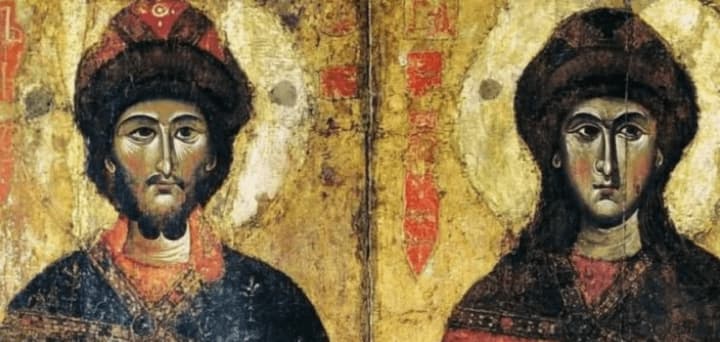
The original monastic klobuk was a kamilavka covered with a veil - worn in the East to protect from the sun. The kamilavka was traditionally made of camel hair, name from Greek κάμηλος - camel). In Russia', camilavka was replaced by small knitted hat, Which was called a kaptyr.
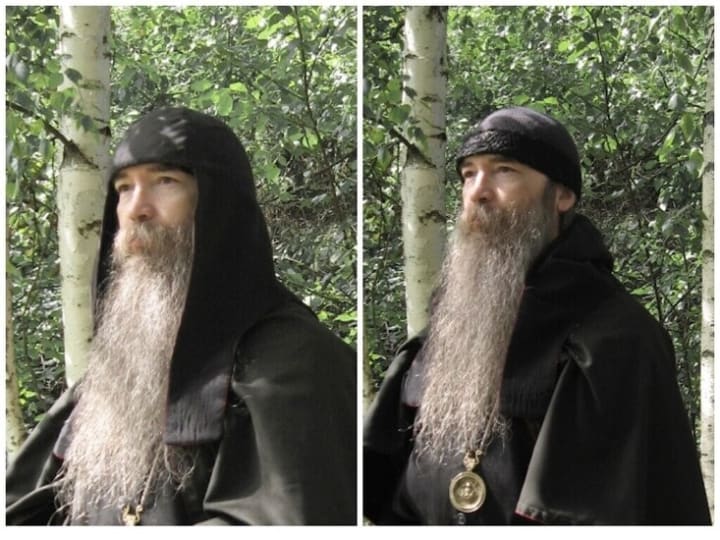
The klobuk appears in Russian tonsure rites mention in the 15th centur. The kamilavkion is mentioned in Byzantine sources from the 14th century, whereas the inner and outer kamilavka are mentioned from the 13th century. This was likely the kamilavka itself and the veil placed on it.
The veil of the kamilavka was historically called a maphorion, derived from "omophorion" (ωμοζ - shoulder and φέρω - to wear). Modern veil is made of thin fabric, but in ancient times the fabric was dense to protect from the weather.
It is unknown when the veil became divided into three parts. The later theological interpretation states that this division occurred for thethe sake of glorifying of the Holy Trinity. Most likely, this was due to an ancient tradition: in cold and windy weather, monks tied up the ends of the headdress as a scarf under the chin. And during the divine service, the split veil is tied the klobuk when it is necessary to take off the headdress without hands.
After the conquest of Constantinople by the Ottoman , the klobuk takes a different look. All men were required to wear certain headdresses of a certain color, which referred to their social status: the sultan and vizier wore white, the Janissaries and officials wore red, common Muslims wore green, and everyone else wore black.
Ordinary Muslims and others were obligated to wear fezzes - headdresses similar to the Byzantine kamilaukion. As a result, the kamilavka changed and in fact became a fezze.
Besides outside the monastery walls, monks were not allowed to wear the veil on the kamilavka, as the veil was also a distinctive feature of the Ottoman nobility. This has become so deeply established that even now among the Greek monastics, the veil being removable, is not worn outside the monasteries, churches and services, but for the kamilaukion. But, the hierodeacons serve without the veil, most likely for purely practical reasons. But in the Russian-style klobuk, the veil is sewn to the headdress and cannot be removed.
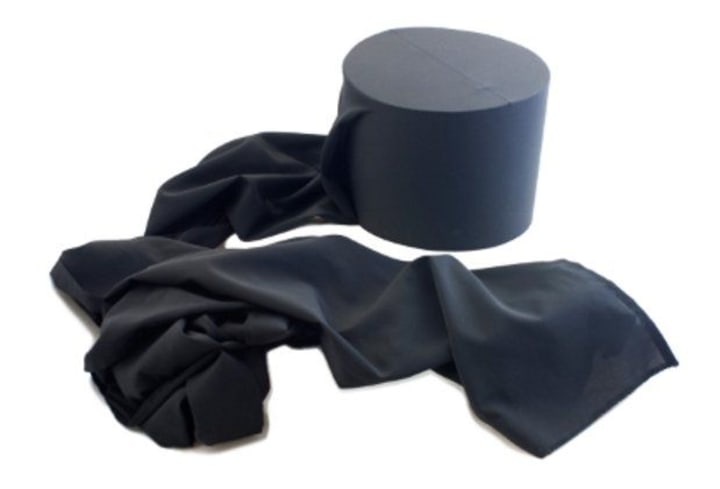
Greek nuns do not wear the kamilavka and klobuk at all, because the fezze was worn by a monks only. In the Russian Church, women are allowed to wear klobuks, because "in Christ there is neither male nor female" (Gal. 3:28).
Patriarch Nikon (1652-1666) penetrated the new form of the klobuk in the Russian Church. He was the first to wear a Greek klobuk, and the he even started to reform the church, one of the provisions of which was the establishment of Greek-style vestments in the Russian Church.
The old-style klobuk is now used only by the Old Believers, as well as by the primates of the Russian and Georgian Orthodox Churches. In the Russian Church, the old-style klobuk for the Patriarch was restored in the 20th century with the restoration of the Patriarchate, in order to distinguish the Patriarch from other bishops.
The symbolic meaning of the klobuk is revealed in the rite of monastic tonsure. Putting the klobuk over the head, the person performing the tonsure: "Our brother, N., accepts the helmet of salvation and unfading hope, so that he may stand against all the wiles of the devil, and covers his head with the veil of humility and constant obedience, as a sign of spiritual wisdom, and to turn away his eyes from seeing vanity, in the name of the Father and of the Son and of the Holy Spirit."
About the Creator
Keep reading
More stories from Smart Ocean and writers in Confessions and other communities.
Family Icon
What is a Family Icon? A family icon is an image that has been especially honored by family members for many generations. It can be any depiction of Jesus Christ, the Mother of God, or a particular saint. Parents bless their children for separate family life with Family icon.
By Smart Oceanabout a year ago in Confessions
Thoughts on Vocal and the way the world is
"Death cannot stop true love, only delay it." – Wesley in The Princess Bride. I decided to come back to Vocal on a very cold and dark night at the end of December. I had been, and still am, convalescing from a horrible staph infection that had gone misdiagnosed for months. This, paired with the increasing challenges of being healthy, making the best choices for my co-parented child, being a wife, and being a director at a new job, was a lot to manage.
By Jazzy 2 days ago in Confessions
I Kept Telling Myself I Was Fine Until I Couldn’t Anymore
By: Tazamain Khan For a long time, I told myself I was fine. Not great. Not happy. Just fine. And somehow, that felt acceptable. I thought as long as I was functioning—showing up, doing what was expected, keeping things together—I didn’t need to question how I really felt.
By Tazamain Jan4 days ago in Confessions
The Devil's Cut
“Comrade, finally you’re awake.” The voice was smooth, sensual. A flickering incandescent bar was all that lit the white, sterile room. All Vladimir remembered was everything going black. He tried to move his arms and found them strapped to the gurney.
By Matthew J. Fromm7 days ago in Fiction




Comments
There are no comments for this story
Be the first to respond and start the conversation.