
The Invisible Storm: Living With PTSD and Social Anxiety in a World That Can't See It
Kindness can be a trigger too : A raw look at the exhausting duality of wanting connection while fearing it - and what well-meaning strangers need to understand.


The Kindness That Feels Like Knives
I live in a town of kind people—the sort who notice when someone's hands shake at the grocery store, who stop strangers to ask, "You alright, love?" with warm eyes. Their intentions are pure. I know this.
But here's the truth no one prepares you for: When you live with PTSD and social anxiety, even compassion can feel like an ambush.
There's a special kind of guilt that comes with this realization. You want to appreciate their concern, to be the gracious recipient of kindness. But instead, your pulse quickens. Your palms sweat. Your brain screams danger when no threat exists.
I've perfected the art of the polite smile while internally calculating escape routes. It's exhausting, this constant negotiation between gratitude and self-preservation.
The Body Remembers What the Mind Tries to Forget
My disorders aren't moods. They're alarm systems stuck in permanent overdrive, leftover survival mechanisms from years of violence that my nervous system refuses to unlearn.
The triggers are unpredictable:
A friendly hand on my shoulder doesn't register as comfort—it's a flashback to being grabbed from behind in a dark alley twenty years ago. My muscles tense before I can stop them, preparing for an attack that isn't coming.
A stranger standing too close in line doesn't feel like impatience—it's my lungs forgetting how to expand because my brain is screaming "Trapped!" Suddenly I'm counting floor tiles, focusing on anything but the rising panic.
Even a gentle "You seem tense—want to talk?" can make my vision tunnel, because talking means vulnerability, and vulnerability once got me hurt. The words stick in my throat like shards of glass.
You see a conversation starter. My nervous system sees a threat assessment.
The cruel irony? I know how irrational this seems. That's the torture of trauma—being fully aware your reactions are disproportionate while being powerless to stop them. Your body reacts to ghosts, and your logical mind watches helplessly from the backseat.
The Impossible Calculus of Avoidance
"Just stay home if it's that bad," people suggest, as if life comes with a pause button.
Let me break down why that "solution" is its own prison:
Isolation breeds despair
The less I go out, the more the world shrinks—until even my apartment feels like a cell. I've spent weeks trapped indoors, watching life through windows, because the fear of triggers outweighed my need for human connection. But isolation has its own cost: depression creeps in, and the loneliness becomes its own kind of trigger.
Avoidance feeds the beast
Every skipped social interaction makes the next one harder. Decline one coffee date, and soon even texting feels overwhelming. Miss a few grocery trips, and eventually leaving bed requires heroic effort. The avoidance that promised safety instead becomes a self-fulfilling prophecy of fear.
Healing requires exposure
Like physical therapy for a shattered leg, recovery hurts before it helps. Some days I push myself to walk through town, practicing breathing techniques when my chest tightens. Other days, even opening the front door feels impossible. Progress isn't linear—it's a jagged line of small victories and devastating setbacks.
So I play Russian roulette with my triggers daily. Some mornings, I chat with the mail carrier like a "normal" person. Other days, I abort a shopping trip because the cashier's perfume smells like his cologne, and suddenly I'm 16 again, pressed against a wall, trying to disappear.
What My Face Betrays (And What It Hides)
I wish you could see:
How my abrupt exit isn't rudeness—it's me white-knuckling my way to the nearest exit before I vomit from panic. The shame burns as I hurry away, knowing how it must look.
How my monotone voice isn't boredom—it's the flat affect of someone dissociating to survive. The words come out robotic because feeling anything right now would be dangerous.
How my "I'm fine" might be the most heroic lie I tell all week. The smile takes every ounce of strength, but I paste it on anyway because explaining would require energy I don't have.
Trauma isn't a memory—it's a reenactment. My pulse doesn't care that the attack happened decades ago. My adrenal glands dump chemicals like it's happening now. The past isn't past when your body refuses to forget.
A Letter to the Stranger Who Means Well
Dear You,
I see your kindness. I am grateful. But please know:
When I flinch at your touch, it's not rejection—it's my spine remembering bruises. The reaction happens faster than thought, a lightning strike of muscle memory.
When I cut conversations short, it's not disinterest—it's me rationing spoons like a starving woman with crumbs. Each minute of small talk costs energy I may not recover for days.
If I seem "off," don't ask "What's wrong?"—ask "Do you need space?" That question is a lifeline, not a criticism.
I want connection. Truly. But trust is a language I had to relearn after it was weaponized against me. My hesitation isn't about you—it's about the ghosts only I can see.
Patiently,
The Woman Who's Both Grateful and Terrified of You
The Tightrope No One Sees
Some weeks, I host dinner parties, laughing easily as friends fill my home. Other weeks, I dissociate through a pharmacy pickup, praying the clerk doesn't notice my trembling hands as I fumble for my insurance card.
This isn't inconsistency—it's the pendulum swing of survival. Good days don't erase bad ones. Progress isn't linear. Healing looks less like a straight line and more like a spiral: sometimes moving forward, sometimes circling back, but gradually, imperceptibly expanding.
So if we meet when I'm drowning? Don't take it personally.
And if we meet when I'm floating? Celebrate that fragile moment with me. Stay awhile. Your presence is an anchor when the storm inside finally stills.
About the Creator
MALIK Saad
I write because my time is limited and my imagination is not....
Reader insights
Nice work
Very well written. Keep up the good work!
Top insights
Excellent storytelling
Original narrative & well developed characters
Eye opening
Niche topic & fresh perspectives
Keep reading
More stories from MALIK Saad and writers in Confessions and other communities.
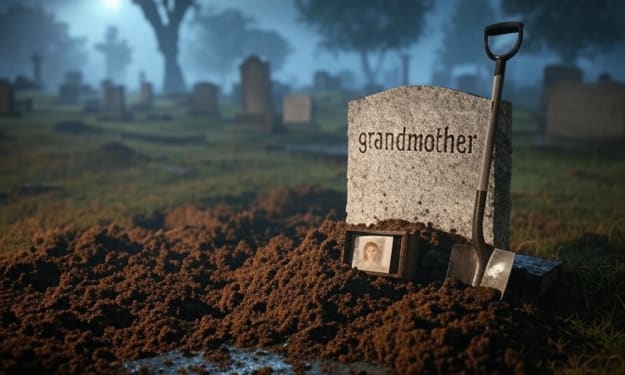
The Secret My Grandmother Took to Her Grave—And Why I Dug It Up
My grandmother, Eleanor, was the kind of woman who spoke in riddles. Stern, devout, always impeccably dressed in wool skirts and pearls, even in the summer heat. She ran our family like a quiet monarchy—respected, feared, and never questioned.
By MALIK Saad8 months ago in Confessions
The Shadow Manifesto: Search for Meaning
"What did I do wrong, papa? I don't understand why you are beating me. For what? It hurts. I am just 7 years old. . ." "This hurts me more than it hurts you, my son. You must learn to take pain like a man for that is what life is about. So stop crying. Don't be a cry baby. Be a man."
By WILD WAYNE : The Dragon Kinga day ago in Confessions
Wild Card Weekend Recap: What Happens Now?
I think I figured out why I love Wild Card Weekend so much. It's because it's the first playoff anything of the calendar year. The NFL season starts in the fall, and once upon a time, the champion was crowned either on or slightly before New Year's. The evolution of the NFL schedule has resulted in the playoffs starting just into the New Year, and currently, the final week of the season falls on the first weekend of the New Year, with Wild Card Weekend coming a week after that. So yes, chronologically, the NFL's Wild Card Weekend serves as the first playoff anything of the calendar year.
By Clyde E. Dawkins7 days ago in Unbalanced



Comments (1)
very nice