
The Hidden 20s: A Lesson Beyond Textbooks
A proud student discovers that true knowledge isn’t about memorization—it’s about learning to see what others overlook.

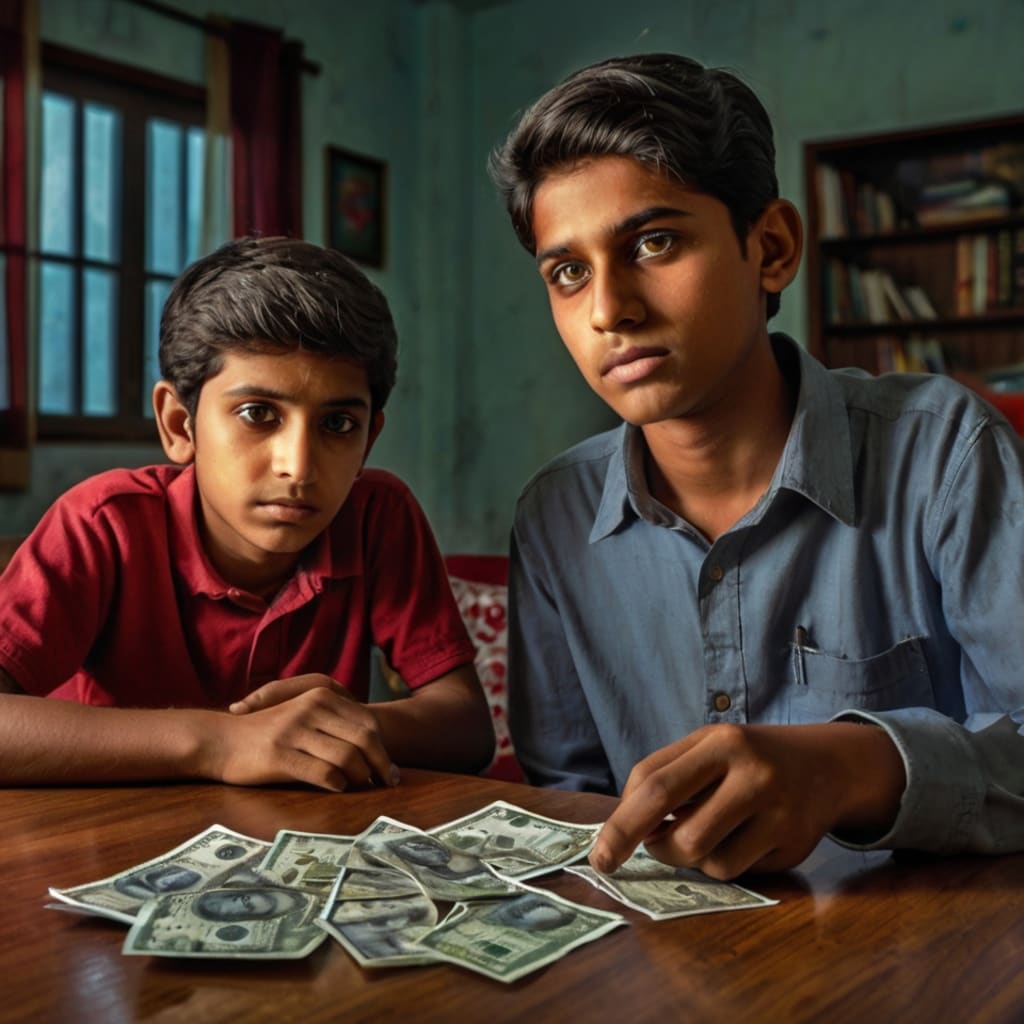
The Test Beyond the Textbooks
By Sadiq ur Rehman Shah, Sargodha
When I stood first in my school examination, joy overwhelmed me like never before. My parents were delighted, showering me with praise, and even arranged a grand family dinner in my honor. Being the youngest and much-loved son, my achievements were always celebrated, but this time it was different. Despite the expensive tuition classes my parents had invested in, despite their countless sacrifices, I had rarely brought them the kind of success that filled them with pride. Yet this time, with a first position, it felt like I had finally justified their hope in me.
On the appointed evening, the house was full of relatives—uncles, aunts, cousins—everyone smiling, congratulating, and treating me like a rising star. I could see the respect in their eyes and feel the warmth in their voices. I basked in the glow of this newfound admiration.
But not everyone was impressed.
Among all the cheers, one person remained unmoved—my elder sister, whom we all lovingly called Api. Unlike others, she did not see my position as a mark of brilliance. To her, my success was less about intelligence and more about rote memorization. Her opinion struck me like a slap across the face. I had expected pride and admiration, but instead, she dismissed my victory as ordinary.
Her indifference stung me deeply. Anger bubbled inside me, and I challenged her openly.
“If you think I don’t deserve this,” I said, my voice firm, “then ask me anything—about my textbooks or even outside them. I’ll answer.”
This was partly bravado, partly frustration. You see, Api had always complained that I limited myself to schoolwork, never thinking beyond what was in the syllabus, never exploring the wider world of knowledge.
“Fine,” she said calmly, almost too calmly. “I’ll test you this evening. But only in front of Amma and Abbu.”
That moment changed the entire atmosphere. My cousins giggled. My parents looked at me with surprise. And Api simply walked away to the rooftop, leaving me alone with my pride.
All day long, my heart raced. What kind of test would it be? Would she ask me to write? Would she question me about history, geography, or science? Or would she test my general knowledge? I did not know. For the first time, I felt unprepared—despite being the “topper.”
In desperation, I opened magazines and books that had never interested me before. I flipped through pages of stories, articles, and random facts, hoping something would stick. My mind, however, was restless. I could not focus.
Finally, evening arrived.
The “examination hall” was our living room. Amma and Abbu sat to one side, watching silently. Api was already seated, upright, and composed, like a stern judge awaiting the accused. My heart pounded in my chest.
“I will ask you only one question,” she said.
“What? Only one?” The words burst out of my mouth, echoed immediately by Amma and Abbu, who were equally astonished.
“Yes,” she replied firmly. “Only one.”
I leaned forward, bracing myself.
“Here is the question,” she said. “Every day, you receive a twenty-rupee note as pocket money. On that note, how many times is the number ‘20’ written?”
For a moment, I almost laughed. Of all the things I had worried about, she had chosen this—such a silly, trivial question. Confidently, I answered, “Eleven times!”
I knew this because I had once played this very game with my friends. I had counted the “20” written in digits, in English as ‘Twenty,’ and even in Urdu as ‘Bees.’ After turning the note upside down and inside out, I had never found more than eleven instances.
But to my surprise, Api shook her head.
“Wrong.”
Her voice carried the weight of a verdict. My smile faded. How could I be wrong? I had counted carefully before, multiple times.
“Look again,” she said, pulling out a note. She pointed not to the large visible numbers but to the faint lines across its surface. “Do you see these? They are not just lines. Under a magnifying glass, you’ll find hundreds of tiny 20s shimmering like hidden jewels.”
Skeptical, I borrowed a magnifier from Abbu and held it against the note. My eyes widened in disbelief. The so-called “lines” were indeed rows of miniature ‘20s’ printed across the note—too small for the naked eye to notice. There were far more than I had ever imagined.
Api leaned back and smiled, her point made without the need for further words.
In that moment, I felt both humbled and enlightened. My sister had not asked a question from textbooks, nor one requiring memorization. Instead, she had challenged me to observe, to think, to look beyond the obvious.
Her question was unconventional, even strange, yet it revealed a truth about me that no exam result could hide: I was excellent at rote learning but had never trained my mind to look deeper, to think critically, or to explore beyond the surface.
That evening, the applause and admiration of my relatives faded into the background. What remained with me was the quiet smile of my sister and the realization that she had taught me my greatest lesson yet—one that no textbook, no tuition, and no exam could ever provide.
Sometimes, the smallest question holds the biggest truth.
About the Creator
Keep reading
More stories from Ubaid and writers in Confessions and other communities.
Timeless Stories of Allama Iqbal: The Poet Who Inspired Nations
The Timeless Stories of Allama Iqbal BY: Ubaid Allama Muhammad Iqbal, the national poet of Pakistan, was more than just a poet. He was a philosopher, thinker, visionary, and above all, a man of deep humility and spiritual strength. His life was filled with remarkable incidents that continue to inspire generations. Here are some timeless stories from his life that reflect his wisdom, simplicity, and greatness.
By Ubaid 5 months ago in Confessions
My Last Story on Vocal Media
A new article came out about new changes coming to vocal. A lot of them were great rules and warranted rules. AI is taking over the art world and we need to get back to the simplicity of writing for ourselves again. Paying those who earn it is a must and a priority. However, I will not be able to pay the way to earn. I am a free user and will not be continuing on this site if I won't be getting paid because I can't pay. I wasn't just here for the payout, but man was it nice. I liked seeing that I was getting paid for my writing. Like I was actually an author. Big LOL on my part. I just can't afford to pay, so out the door I go.
By Rich Burtona day ago in Confessions
A More Human Vocal
When we launched Vocal nearly a decade ago, the world was a very different place. LLMs did not exist, and stories were created one at a time by people sitting down to write, revise, and share something personal. Many of our assumptions about publishing, trust, and participation were built for a world where effort and output were inseparable.
By Justin @ Vocal5 days ago in Resources




Comments
There are no comments for this story
Be the first to respond and start the conversation.