
The Happiness Trap: Why We Confuse Comfort with Fulfillment
Unpacking the Modern Pursuit of Ease—and How It Distracts Us from True Meaning and Growth.
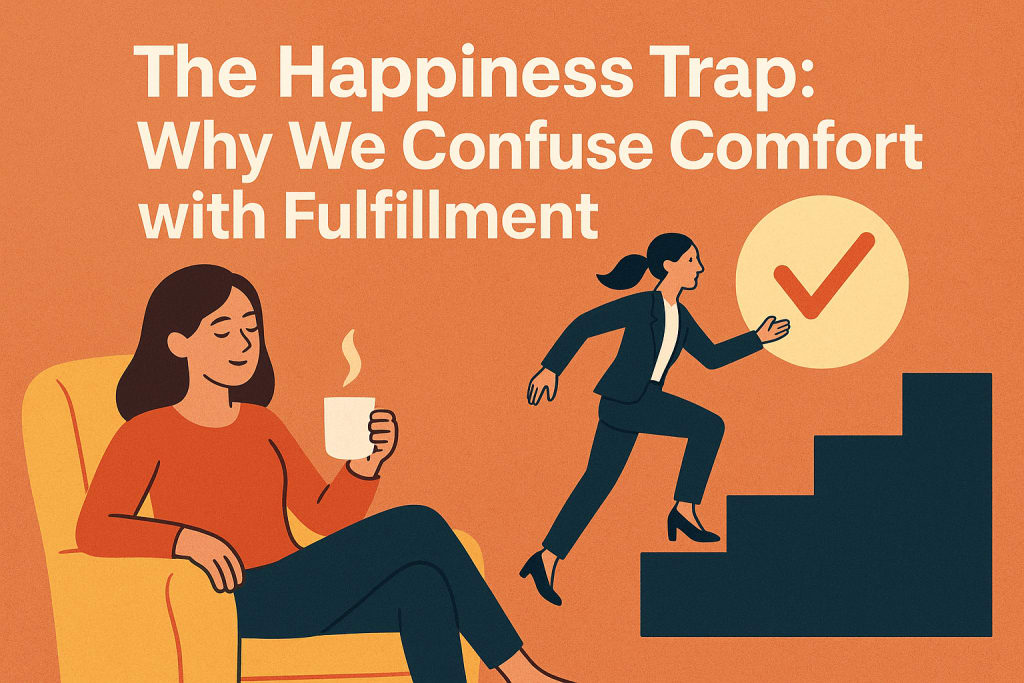
Introduction
Most of us grow up believing happiness is the ultimate goal. Advertisements sell us the latest gadgets with the promise that life will be easier, calmer, and more enjoyable. Social media feeds are full of curated smiles, exotic vacations, and cozy living rooms that seem to embody what it means to “live well.” Yet despite all this pursuit of comfort and pleasure, levels of anxiety, depression, and loneliness remain alarmingly high across the globe.
Why? Because many of us have fallen into what can be called the happiness trap—the mistaken belief that comfort, ease, and pleasure are the same as fulfillment. While comfort soothes us in the short term, it rarely provides the deeper sense of meaning, purpose, and satisfaction we truly crave.
In this article, we’ll explore why modern life encourages us to confuse comfort with fulfillment, the hidden costs of chasing comfort, and how we can begin to redefine happiness in a way that brings long-lasting richness to our lives.
The Modern Pursuit of Comfort
Never before in history has life been this comfortable. With just a few clicks, food is delivered to our doorstep, work can be done without leaving the couch, and entertainment is endless. On paper, this sounds like utopia. Yet beneath the surface, it often leaves us restless and unsatisfied.
Comfort is appealing because it’s immediate. A streaming binge, a sugary snack, or an online shopping spree gives us a quick dopamine hit. It feels like happiness—but it’s really just a momentary distraction. Real fulfillment, on the other hand, tends to require effort, sacrifice, and even discomfort. Building meaningful relationships, pursuing a creative passion, or contributing to something larger than ourselves takes time and persistence.
The problem is that our brains are wired to seek ease, and in a world designed to cater to that desire, it’s easy to stop short at comfort and mistake it for fulfillment.
Why We Confuse Comfort with Fulfillment
Cultural Messaging
We’re constantly bombarded with the idea that happiness equals material success, relaxation, and ease. The marketing industry thrives on equating comfort with satisfaction: the right car, the comfiest mattress, or the most advanced phone will supposedly “complete” us.
Instant Gratification Bias
In a fast-paced digital age, waiting feels unbearable. Comfort delivers immediately, whereas fulfillment takes time. Saving for years to travel the world or writing a book over many months is less enticing than the instant dopamine from a new purchase or viral video.
Fear of Discomfort
Fulfillment often requires stepping outside our comfort zones: confronting fears, risking failure, or embracing vulnerability. Many of us avoid discomfort at all costs, choosing instead the illusion of happiness found in easy pleasures.
Social Comparisons
On platforms like Instagram and TikTok, people rarely share the struggles behind their achievements. We see the highlights—vacations, new homes, smiling selfies—and assume those images equal fulfillment. Naturally, we try to replicate them, often mistaking surface-level comfort for deeper satisfaction.
The Costs of Mistaking Comfort for Fulfillment
At first glance, choosing comfort seems harmless. After all, who doesn’t want to feel good? But long-term reliance on comfort as a substitute for fulfillment can erode our well-being in several ways:
Stagnation: Growth requires challenge. When we avoid discomfort, we miss out on opportunities to develop resilience, learn new skills, or discover untapped potential.
Shallow Satisfaction: Comfort may silence restlessness temporarily, but it doesn’t address the deeper longing for purpose. Over time, this can lead to feelings of emptiness.
Declining Mental Health: Studies show that passive activities, like excessive social media scrolling or binge-watching, are linked to higher rates of anxiety and depression, while active, purpose-driven pursuits are tied to greater life satisfaction.
Erosion of Relationships: Building strong connections takes effort, patience, and sometimes uncomfortable conversations. When we choose comfort over connection, relationships can become shallow or distant.
What True Fulfillment Looks Like
Unlike comfort, fulfillment isn’t about avoiding struggle; it’s about embracing it in service of something meaningful. It doesn’t always feel good in the moment, but it brings deep satisfaction in the long run. Some hallmarks of fulfillment include:
Purpose: Feeling connected to something larger than yourself, whether it’s your career, family, art, or community.
Growth: Continuously developing your skills, resilience, and perspective, even when it’s challenging.
Contribution: Giving your time, energy, or talent to improve the lives of others.
Authenticity: Living in alignment with your values, even when it’s uncomfortable or unpopular.
Connection: Building and nurturing relationships based on vulnerability, honesty, and mutual care.
How to Break Free from the Happiness Trap
Redefine Happiness
Instead of equating happiness with ease, start seeing it as a balance between pleasure and purpose. Ask yourself not just, Does this feel good? but also, Does this matter to me?
Choose Growth Over Ease
Pay attention to the small choices you make each day. Instead of numbing boredom with scrolling, could you try learning a new skill? Instead of staying silent in fear of conflict, could you have the difficult but honest conversation?
Embrace Discomfort as a Teacher
Growth rarely feels cozy. The soreness after exercise, the nerves before a big presentation, the vulnerability of telling someone how you feel—these are signs you’re moving toward fulfillment, not away from it.
Practice Gratitude
Gratitude shifts your focus from constant consumption to appreciation. It turns what you have into enough, anchoring you in meaning rather than endless pursuit of comfort.
Limit Empty Comforts
Pleasure isn’t bad, but it becomes harmful when it replaces deeper pursuits. Try setting boundaries around passive entertainment or impulse spending and redirecting that energy into activities that build long-term satisfaction.
Finding Balance: Comfort and Fulfillment
It’s important to note that comfort isn’t the enemy. Rest, relaxation, and ease are vital for our well-being. The trap isn’t comfort itself—it’s confusing comfort for the whole picture.
Think of life as a diet. A treat now and then is enjoyable and even healthy, but a diet made up entirely of sugar will leave you malnourished. In the same way, comfort can refresh and restore you, but fulfillment comes from the nourishing work of growth, purpose, and connection.
The goal isn’t to eliminate comfort but to use it wisely—as a complement to a life built on meaning, rather than as a replacement for it.
Conclusion
The happiness trap is seductive. Comfort whispers promises of joy, ease, and satisfaction, but in reality, it only offers fleeting relief. Fulfillment, on the other hand, asks more of us. It demands effort, resilience, and courage, but rewards us with a deeper, more enduring sense of well-being.
True happiness isn’t about eliminating discomfort—it’s about embracing the right kind of discomfort in the pursuit of meaning. Once we learn to distinguish between comfort and fulfillment, we can step out of the trap and into a life that feels not just good, but profoundly worthwhile.
About the Creator
Keep reading
More stories from Aiman Shahid and writers in Confessions and other communities.
The Digital Detox Movement: Why Unplugging is Becoming the New Luxury
Introduction: The Age of Always-On We live in a world that never sleeps. Notifications buzz, emails flood in at midnight, and social feeds refresh endlessly. Being "always available" has become the cultural norm, but it comes with hidden costs—rising stress levels, declining focus, and an erosion of genuine human connection. Out of this environment, the digital detox movement has emerged. For some, unplugging feels like deprivation. For others, it has become the ultimate form of luxury: time, attention, and presence reclaimed.
By Aiman Shahid4 months ago in Confessions
The Last Day of the Year
My New Year Countdown Clock indicates that I have just over five hours left before this year is over. I am stuck in the suburbs with my mother and stepfather, contemplating what I am going to eat and drink to celebrate this great change in our lives. The weather is cold, but I do not feel as though it has really affected my attitude about what the new year will bring...but I am not as happy with this moment as I usually feel.
By Kendall Defoe 16 days ago in Confessions
Am i Demon-possesed?
On my journey to trying to understand the development of schizophrenia I've endured over the last five years, has given me the ultimate question. Am I demon-possessed? Let me begin by expressing the psychosis I was in five years ago It started when I was living away from family. Now, it's important to not that the brain and mind are interchangeable and schizophrenia is a brain disease. From what I've been told and the major consumption of research it is a chemical imbalance in the brain that has been brought on by stress, trauma, genetics, environmental factors such as an emotionally distressing event, drugs, and psychological factors.
By Cerina Galvan3 days ago in Confessions



Comments (1)
Such an eye-opening piece! I really liked how you explained the difference between comfort and true fulfillment, it made me stop and reflect. Thank you for sharing this thoughtful reminder.