
The Future is Here
Remember those movies like Total Recall? That tech is coming...

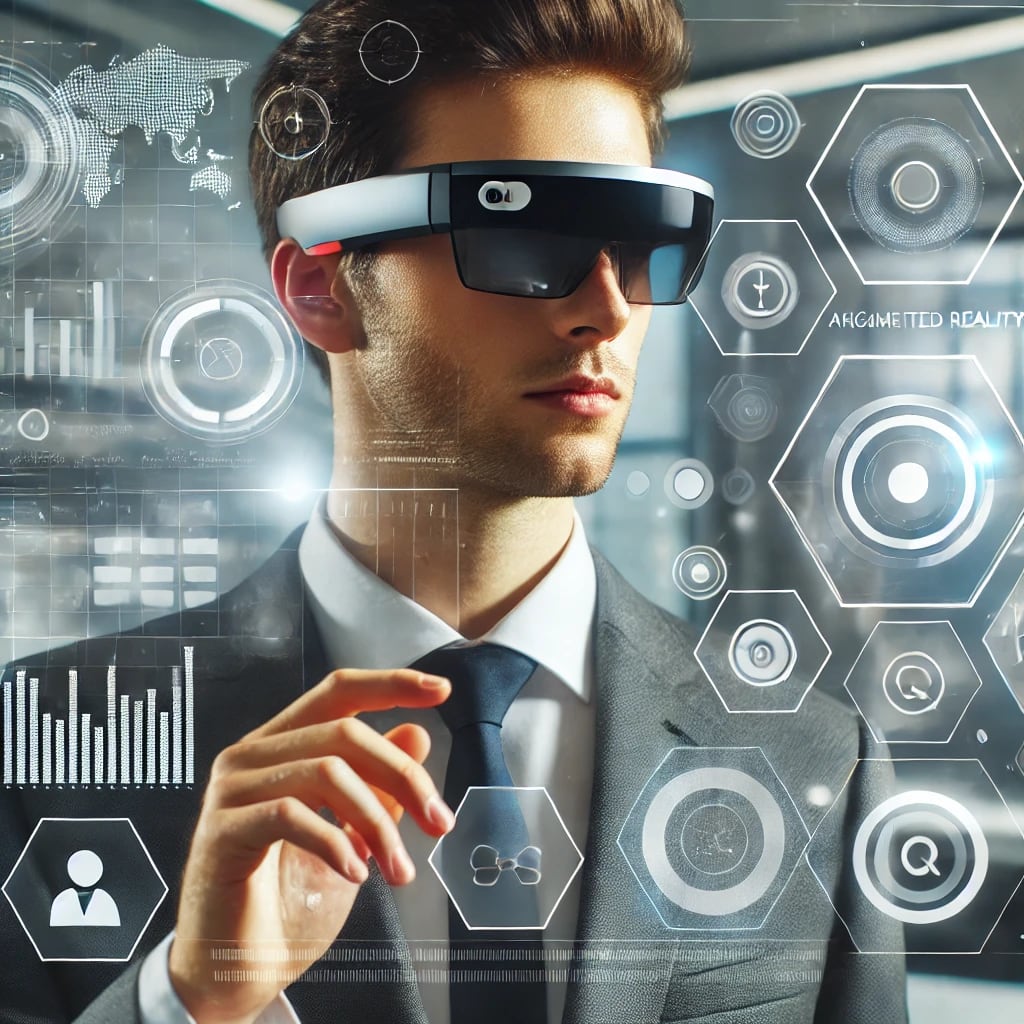
The Promise and Perils of Smart Glasses: A Look at Modern Augmented Reality.
Imagine walking into a room filled with people and instantly recalling every name, past interaction, and significant detail about each person you meet. Or envision walking through an unfamiliar city, accessing turn-by-turn directions, restaurant reviews, and even real-time translation, all without taking your phone out of your pocket. These scenarios are no longer confined to science fiction. Thanks to smart glasses like the Amazon AR Smart Glasses, technology is advancing toward a future where augmented reality (AR) seamlessly integrates with our daily lives. Its like Total Recall is coming to life!
But as with any emerging technology, smart glasses come with their own set of pros and cons. They promise to revolutionize how we interact with the world, they also raise important questions about our reliance on technology, privacy, and the impact on our cognitive abilities. Let’s delve deeper into the potential and the pitfalls of smart glasses, balancing optimism with caution.
1. Making Notes and Remembering People- In our hyper-connected world, it’s not uncommon to meet dozens, if not hundreds, of people at events, meetings, or even casual social settings. Smart glasses can act as your personal assistant, recording key details about each interaction. Imagine a scenario where you meet a new colleague, and the glasses immediately pull up their LinkedIn profile, past interactions, or notes you made about them.
For professionals who manage extensive networks—from salespeople to event planners—this could be a game-changer. It’s not just about saving time; it’s about building stronger, more meaningful connections by remembering the little details that matter.
2. Hands-Free Access to Information- One of the most touted benefits of smart glasses is their ability to keep your hands free while still providing instant access to information. Whether you’re walking through a warehouse managing inventory, cooking a new recipe, or even troubleshooting a technical issue, the glasses allow you to pull up relevant data without juggling a phone or a tablet.
Privacy is another key advantage here. Unlike glancing at your phone in public, where others might peek at your screen, smart glasses deliver the information directly to you. This is particularly valuable for professionals working in sensitive fields like healthcare, legal consulting, or finance, where discretion is paramount.
3. Enhanced Privacy Compared to Phones- With the rising concern over data breaches and invasive tracking, many people are wary of how much personal information their devices expose. Smart glasses—being less conspicuous than smartphones—offer an added layer of privacy. They reduce the risk of shoulder-surfing (when someone glances at your phone screen in public) and can make accessing personal or confidential information more secure. Imagine reading a sensitive email or reviewing proprietary business data in a crowded subway without worrying about prying eyes.
The Cons of Smart Glasses
1. Dependency on External Hardware- While smart glasses aim to be an all-in-one solution, they still require complementary devices to function optimally. For example, most smart glasses lack integrated audio capabilities and rely on Bluetooth headphones or earbuds for voice commands or audio playback. This added dependency can detract from their convenience, especially for users who prefer a single, streamlined device.
Additionally, pairing multiple devices means more things to charge, maintain, and carry—a small but persistent hassle for the average user.
2. Potential Impact on Cognitive Abilities- One of the most intriguing criticisms of smart glasses is their potential to reduce our mental agility. By outsourcing tasks like memory, navigation, or note-taking to a device, we may inadvertently weaken the brain’s natural capacity to perform these functions.
Consider the act of remembering someone’s name or recalling directions to a location. These mental exercises are not just practical; they’re a form of cognitive training that keeps our brains sharp. If we become overly reliant on technology to perform these tasks, we risk diminishing our natural abilities. Over time, this could have a ripple effect, making us less self-sufficient and more dependent on external tools for even the simplest tasks.
3. Societal and Ethical Concerns- Smart glasses may enhance privacy for the wearer, but they also raise concerns for those being recorded. The ability to discreetly capture photos or videos can make people uncomfortable, especially in sensitive settings. Balancing the convenience of this feature with ethical considerations will be a significant challenge as the technology becomes more widespread.
There’s also the question of accessibility. With premium smart glasses often carrying a high price tag, they risk becoming a tool of privilege rather than an inclusive technology. This could widen the digital divide, leaving those with limited resources at a disadvantage.
Striking a Balance
As with any groundbreaking innovation, the true value of smart glasses will depend on how we choose to use them. For all their potential, these devices are not without flaws, and it’s up to us to find a balance between embracing their benefits and addressing their drawbacks.
Smart glasses can undoubtedly make us more efficient, connected, and informed. But they should complement, not replace, our inherent abilities. Remembering someone’s name, navigating a new city, or jotting down notes by hand—these are small but meaningful ways to stay engaged with the world around us. Technology should enhance these experiences, not detract from them.
A Personal Reflection- As someone who has always been curious about the intersection of technology and human potential, I find smart glasses both exciting and thought-provoking. The idea of seamlessly integrating digital information into my daily life is appealing, but I’m also wary of losing the sense of presence that comes from unplugging and relying on my own skills. For example, I recently attended a networking event where I deliberately left my phone in my pocket to focus on face-to-face interactions. While it was tempting to reach for my device to jot down notes or look up a name, the act of engaging fully in the moment felt more rewarding. Would smart glasses have enhanced that experience, or would they have been a distraction? It’s a question worth considering as we navigate this new era of augmented reality.
Conclusion
Smart glasses like the Amazon AR Smart Glasses offer a glimpse into the future of wearable technology. They promise to make us more productive, connected, and efficient, but they also come with challenges that warrant thoughtful consideration. As we move toward a world where augmented reality becomes the norm, let’s strive to use these tools mindfully. By balancing their benefits with their drawbacks, we can ensure that smart glasses enhance our lives without diminishing the qualities that make us uniquely human.
About the Creator
Brun and AI makes me nervous
Hi, I’m Brun! I share stories and insights on harnessing AI for smarter living. From cutting-edge tools to life-enhancing products, explore the future with me. Visit aiinsightsportal.com for curated finds and follow for more discoveries!
Keep reading
More stories from Brun and AI makes me nervous and writers in Confessions and other communities.
Breaking Barriers: How AI Connects Us Through Communication and Creativity
Breaking Barriers: How AI Is Bridging Communication and Creativity Gaps The first time I truly saw the power of AI, I was scrolling through a social media feed filled with stories from around the world or watching football on TV. One video/ad stood out: two strangers, each speaking a different language, were laughing and connecting seamlessly, thanks to a real-time translation app that fed thru glasses and headphones. It felt like watching magic, but it wasn’t, it was technology. That moment stayed with me, not because of the technology itself, but because it showed me how AI could make the world more connected and less adversarial. Yet, even as I marveled at it, a small voice inside reminded me to stay cautious. AI makes me nervous, but it also gives me hope.
By Brun and AI makes me nervous12 months ago in Earth
Word of the Day: 発展
I am pretty taken down right now. I have Jahon over, he is sleeping in the bed. I am sort of waiting until tomorrow when he as to "work" to break up with him again. Also it is kind of crazy but Nam and Garth both sort of awoken from somewhere and are all of a sudden asking me how I feel and such. I am taking my chances with them rather than this psychopath any longer. I just, feel like there is nothing there. Yes maybe we care for each other and I don't want anything bad to happen to him. But, I can't take the karma and punishment of his crimes any longer.
By Kayla McIntosh7 days ago in Confessions


Comments (2)
Me too! Change always has me worried but I do believe we need it if the human race and planet earth is to survive. Thank you for taking the time to read it!
Great work! I love the future! Total recall! Wonderful