
The Digital Detox: Why Unplugging is the New Luxury
Finding Balance, Clarity, and Connection in a Screen-Saturated World
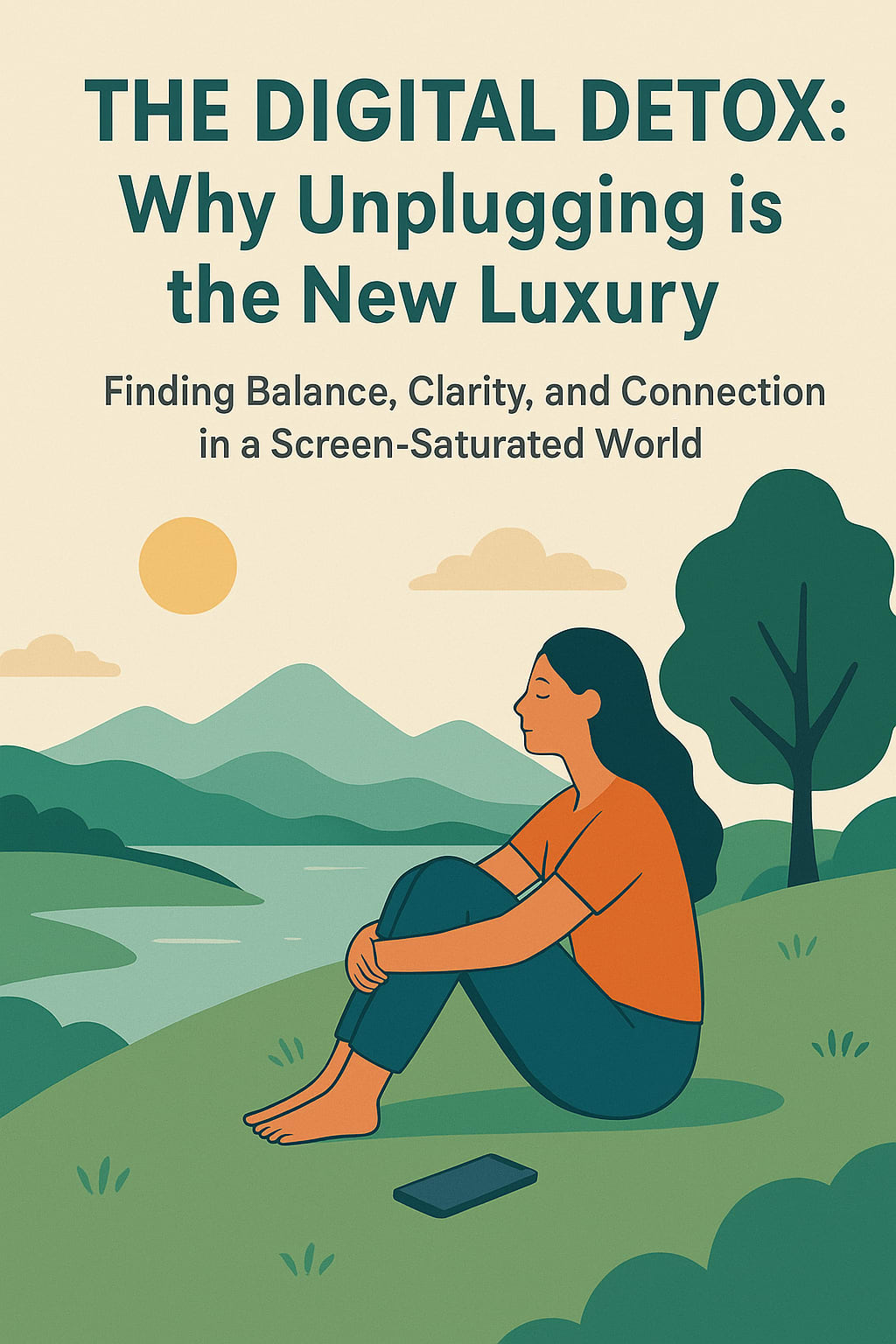
In today’s world, being constantly connected is the norm. Our mornings begin with notifications, our days are filled with endless scrolling, and our nights often end staring into the blue glow of a screen. Technology has brought us undeniable benefits—instant communication, access to unlimited knowledge, and global connection. Yet, in this hyper-connected age, one surprising truth has emerged: unplugging has become the ultimate luxury.
Digital detoxing—the intentional act of disconnecting from digital devices for a period of time—offers a rare escape from the constant noise of modern life. For many, it’s not just a wellness trend; it’s a survival strategy for reclaiming peace, focus, and genuine human connection.
The Overload of the Digital Age
We live in an era of overstimulation. On average, people spend over seven hours a day on screens, much of it outside of work responsibilities. Every ping, vibration, and pop-up notification demands our attention, fragmenting our focus and draining our energy.
The irony is that the very tools designed to make our lives easier have often made them more overwhelming. Social media connects us, but it also pressures us into comparison. Emails and messages promise efficiency but leave us chained to constant responsiveness. Streaming services offer relaxation, yet binge-watching can leave us feeling drained.
This digital overload comes at a cost:
Mental health declines. Studies link heavy screen time to increased anxiety, depression, and insomnia.
Productivity suffers. Constant multitasking reduces deep focus, leaving us busy but not truly effective.
Relationships weaken. We are often more present online than with the people right in front of us.
It’s no wonder that more people are seeking a way to step back and breathe.
Why Unplugging Feels Like a Luxury
The word “luxury” typically evokes images of five-star resorts, fine dining, or designer goods. But increasingly, the greatest luxury is time and mental space—things our screens often steal away.
For most of us, unplugging isn’t easy. Our jobs depend on technology. Our social lives revolve around group chats and Instagram updates. Even grocery shopping and banking have moved online. So, when someone takes the bold step of logging off—even just for a day—it feels indulgent, almost rebellious.
Think about it:
A weekend without Wi-Fi in a remote cabin feels like a priceless getaway.
A dinner with phones left in another room feels extraordinary in its simplicity.
A morning without the compulsion to check notifications feels like freedom.
The scarcity of true presence in our world makes it more valuable than ever.
The Benefits of a Digital Detox
The beauty of unplugging lies in what it gives back. Here are some of the most powerful benefits of a digital detox:
1. Mental Clarity
Without constant notifications, your brain finally gets a break. You may notice your thoughts slow down, your creativity increase, and your stress levels drop.
2. Better Sleep
Blue light from screens disrupts melatonin, the hormone responsible for sleep. Logging off before bedtime often leads to deeper, more restorative rest.
3. Improved Focus
When you’re not distracted by scrolling or buzzing alerts, you regain the ability to concentrate on one task at a time. This can boost productivity and efficiency.
4. Stronger Relationships
Putting away devices during conversations signals genuine presence. Eye contact, undivided attention, and laughter shared in real time build stronger bonds.
5. A Renewed Sense of Time
Without the endless scroll, hours no longer vanish unnoticed. You suddenly have space for hobbies, reading, or simply being still.
Small Steps to Start Your Digital Detox
The thought of completely unplugging can feel overwhelming, especially if your work and social life rely on technology. But you don’t need to disappear into the wilderness to reap the benefits. Start small with these steps:
Device-Free Mornings – Resist the urge to check your phone first thing. Spend your first 30 minutes reading, stretching, or enjoying a mindful breakfast.
Screen-Free Meals – Make a rule: no phones at the table. Let meals be a time of connection and presence.
Digital Curfew – Turn off screens at least one hour before bedtime. Instead, unwind with a book, journal, or meditation.
Notification Clean-Up – Disable non-essential alerts. Your brain will thank you for the reduced interruptions.
Scheduled Detox Days – Dedicate one day a week—or even one weekend a month—to going completely offline. Use it to recharge and reconnect with yourself and loved ones.
These small changes can snowball into meaningful shifts in how you relate to technology.
Digital Detox Retreats: Escaping to Reconnect
As demand grows, entire industries are forming around the concept of digital detox. Retreat centers worldwide now offer Wi-Fi-free spaces where guests can rediscover life without screens. Imagine yoga on a mountaintop, hiking through forests, or sharing meals without a single notification interrupting.
For some, these retreats are more rejuvenating than luxury vacations. While a beach resort may offer cocktails and cabanas, a digital detox retreat provides something rarer: silence, focus, and presence.
The Paradox of Technology and Detox
Ironically, technology itself has fueled the popularity of digital detoxing. Social media influencers promote “phone-free challenges,” wellness apps encourage screen-free time, and even tech companies now offer “digital wellbeing” features to limit use.
It’s a paradox: we use apps to remind ourselves to stop using apps. But perhaps this shows that the solution isn’t abandoning technology altogether—it’s redefining our relationship with it.
Unplugging doesn’t mean rejecting the modern world. It means choosing to engage with it on your terms.
Reclaiming Control in a Screen-Saturated World
Ultimately, the digital detox is about control. It’s about deciding when to be connected and when to be unavailable. It’s about choosing presence over distraction, depth over surface-level scrolling, and intentional living over constant reaction.
In a society that prizes busyness and availability, choosing to unplug is radical. It says: My attention is valuable. My peace of mind matters. My relationships deserve my presence.
Conclusion: The New Luxury is Simplicity
As technology continues to advance, our digital lives will only grow more complex. But luxury isn’t always about having more—it’s often about having less. Less noise, less distraction, less urgency.
A digital detox gives us that rare luxury. It restores balance, clarity, and connection in a world that rarely slows down. So whether it’s an hour a day, a weekend a month, or a full retreat in nature, unplugging is no longer just a wellness trend—it’s a powerful act of reclaiming your life.
Because in the end, the most luxurious gift you can give yourself isn’t a new gadget, but the freedom to live fully in the moment.
About the Creator
Keep reading
More stories from Aiman Shahid and writers in Confessions and other communities.
The Invisible Currency: Why Time Is Worth More Than Money
Introduction We live in a world that often equates success with the weight of a paycheck, the square footage of a home, or the digits in a bank account. From childhood, many of us are taught that financial security is the ultimate goal—the shield against hardship and the key to happiness. Yet, lurking quietly beneath this cultural obsession with money lies a resource even more valuable, yet far less celebrated: time.
By Aiman Shahid5 months ago in Confessions


Comments
There are no comments for this story
Be the first to respond and start the conversation.