
The Deadline Passed While I Kept Scrolling.
How procrastination stopped being laziness and started feeling like safety


The clock didn’t scream.
There was no dramatic music.
No lightning, no moment of panic that pushed me into action.
The deadline just… passed.
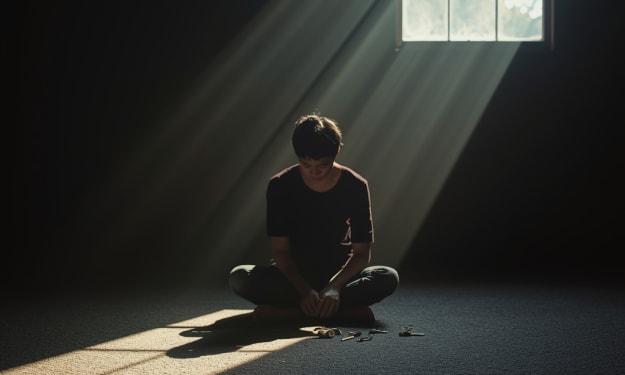
I remember the exact position of my body. Slouched. One leg folded under the other. Phone in my right hand, thumb hovering, scrolling for no reason. The document I was supposed to submit was open on my laptop, frozen on a half-finished paragraph that had been half-finished for days.
I knew what I was doing. That’s the part people don’t like to admit.
This wasn’t ignorance.
This wasn’t confusion.
This wasn’t even laziness in the simple sense.
It was a quiet, deliberate decision to avoid the discomfort of starting again.
The lie we tell ourselves about procrastination
We like to say procrastination happens because we don’t care enough. Or because we’re distracted. Or because something else came up. That’s comforting. It makes us feel less responsible.
But sitting there, watching the minutes crawl forward, I couldn’t hide behind that.
I cared.
I knew exactly what needed to be done.
I also knew that starting would mean facing how far behind I was.
So I didn’t.
Instead, I refreshed the same apps, reread the same messages, watched short videos I wouldn’t remember ten minutes later. Each scroll bought me a few more seconds of relief. Not happiness. Relief. Like holding your breath underwater and pretending it’s fine.
The strange safety of doing nothing
There’s a version of me who likes to believe I procrastinate because I’m disorganized. Or because I need pressure to perform. Or because I work better “last minute.”
That version of me sounds productive. Strategic, even.
The truth is uglier.
Doing nothing feels safer than doing something badly.
As long as I didn’t submit the work, it could still be “good in theory.” Untouched by evidence. Untested. Still perfect in some imaginary future where I suddenly became disciplined and brilliant overnight.
Once I acted, that illusion would collapse.
Action means exposure.
Exposure means judgment.
Judgment means I might have to accept that my best effort still isn’t great.
So I stayed still.
The embarrassment nobody sees
What people don’t talk about is the embarrassment that comes before failure.
Not the public kind. The private kind. The kind that sits in your chest when you realize you’re avoiding something for reasons that don’t sound impressive when said out loud.
“I didn’t do it because I was scared it wouldn’t be good enough” doesn’t feel heroic. It feels small.
There’s also shame in how aware you are while procrastinating. I wasn’t dissociating. I wasn’t unaware. I was fully present, watching myself make a decision I knew I would regret.
That awareness is exhausting.
You argue with yourself internally.
You promise you’ll start in five minutes.
You rehearse imaginary speeches explaining why you’re late.
None of it moves your hands.
The moment after the deadline
When the deadline passed, something unexpected happened.
The anxiety didn’t spike.
It dropped.
Not because things were better, but because the decision was over. The tension of “should I or shouldn’t I” was gone. The damage was done. There was a strange calm in that.
That scared me.
It made me realize procrastination isn’t just avoidance. It’s relief-seeking. A way to end uncertainty, even if the outcome is worse.
At least regret is familiar. At least failure is concrete. Hope, effort, and possibility are unstable. They require energy.
Why knowing better doesn’t help
I’ve read enough psychology to know the explanations. Fear of failure. Fear of success. Perfectionism. Dopamine loops. Executive dysfunction.
All of that can be true and still useless in the moment.
Knowing why you procrastinate doesn’t magically make you stop. If it did, self-help books would have solved this by now.
The problem isn’t lack of insight.
It’s lack of tolerance.
We don’t tolerate the discomfort of being bad at something long enough to get better at it.
We don’t tolerate the awkward first steps.
The messy drafts.
The clumsy attempts.
So we avoid the entire process and pretend the problem is motivation.
The contradiction I hate admitting
Here’s the part that makes me uncomfortable.
Sometimes, I procrastinate because it protects my identity.
If I never truly try, I never have to revise my self-image. I can keep believing I’m capable, talented, smart… just “busy” or “blocked” or “not in the right headspace.”
Trying would force me to confront limits.
And limits feel like loss.
This doesn’t make procrastination noble. It makes it understandable. Which is more dangerous, because understandable habits are easier to justify.
What regret actually teaches
Regret isn’t the villain we make it out to be. It’s a signal. A delayed message from a part of you that wanted better.
The problem is when regret becomes a loop instead of a lesson.
I’ve learned that regret doesn’t come from failing. It comes from betraying your own awareness. From knowing what mattered and choosing comfort instead.
That distinction matters.
Failure hurts, but it teaches.
Avoidance numbs, but it rots.
Where this leaves me now
I don’t have a clean ending. No sudden transformation. No productivity system that changed my life.
I still procrastinate. Sometimes badly.
But I notice something now that I didn’t before. The moment where procrastination feels safe. That’s the red flag. That’s the moment worth paying attention to.
Because safety isn’t always protection. Sometimes it’s a cage with soft walls.
And action, even messy action, at least keeps the door open.
I’m still learning how to step through it.
Disclosure: This story was written with the assistance of AI and edited for originality, clarity, and personal voice.
About the Creator
Muhammad Haris khan
Why its so hard to write about myself?
simply My Name is Haris Khan I am studing Master in creative writer, Having 4 years of experience in writing about a wide range of things, fiction,non-fiction and specially about the psychy of humans
Keep reading
More stories from writers in Confessions and other communities.
One Hard Thing
Stop me if you’ve heard this one before: You have the number, you know your schedule- you’ve even picked out the perfect day and time to make this appointment. Shoot, you’ve even picked out alternative days and times just in case their schedules can’t accommodate you!
By Taylor Rigsbya day ago in Motivation



Comments
There are no comments for this story
Be the first to respond and start the conversation.