
The Day I Gave Up “Just in Case''
I Thought Saving Everything Made Me Prepared — But It Was Only Holding Me Back.

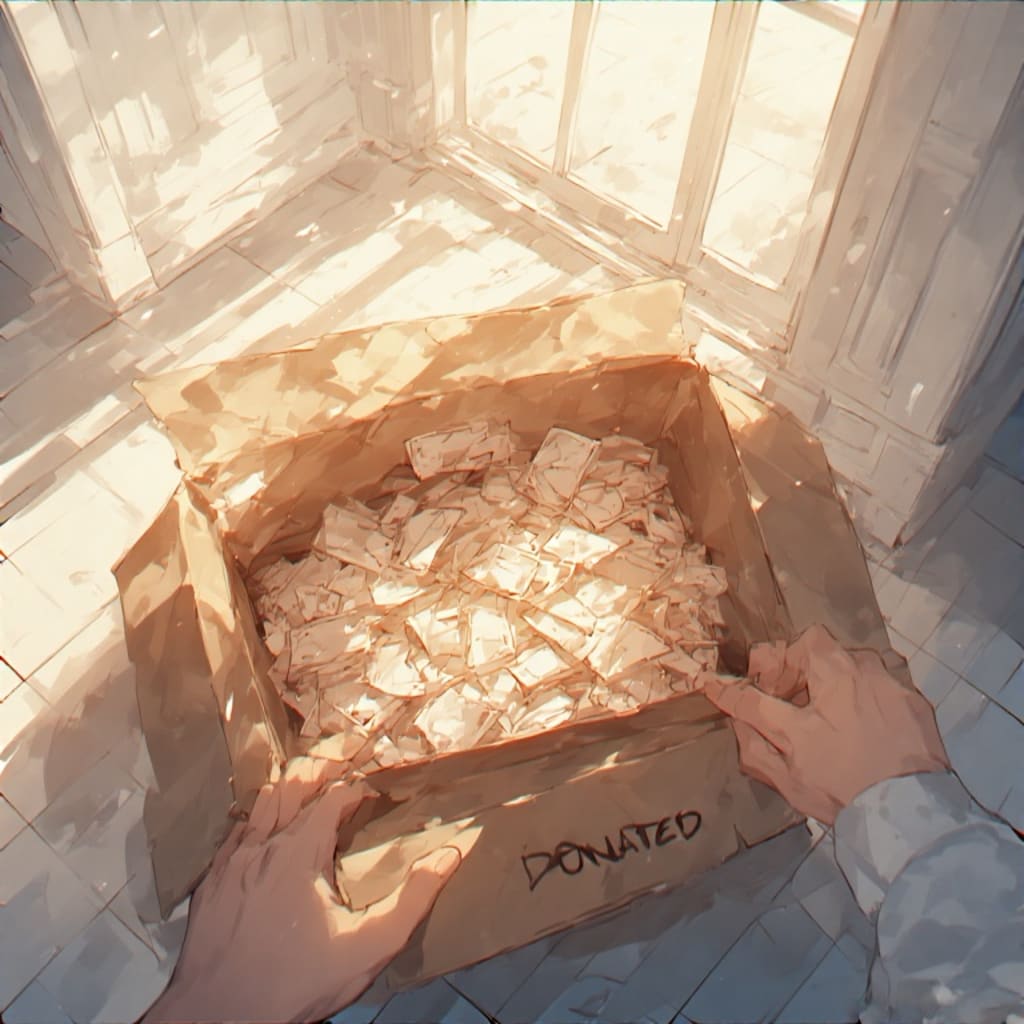
I Thought I Was Practical: I Used to Hold on to Everything — Old Chargers, Broken Picture Frames, Clothes That Didn’t Fit, Expired Cosmetics, Even Paper Bags From My Favorite Stores. I Told Myself I Was Smart. That Day, I Would Need Them. That Day, They Would Serve a Purpose. In my mind, “Just in Case” became a form of preparedness — proof that I was responsible, resourceful, even wise. I didn’t want to be the person who threw something away and later regretted it.
But in reality, “just in case” became a burden. One I didn’t realize was weighing me down until it nearly crushed me.
Clutter became my coping mechanism: At first, it wasn’t about fear. It felt harmless — even logical. What if the remote breaks? It’s better to keep it safe. What if I need a dress for a future wedding? Save the one I haven’t worn since college. What if the power goes out? Hold on to that broken flashlight. I can fix it.
But over time, my house began to feel like a fantasy land. Every drawer was full. Every shelf was bulging. I had boxes within boxes, filled with things I hadn’t touched in years. And worse, I couldn’t find the things I needed because they were buried under the things I needed.
Whenever life felt uncertain — and it often was — I organized instead of dealing with emotions. Rearranging gave me the illusion of control. But what I was doing was shifting the clutter, not releasing it.
The wake-up call I didn’t expect: One evening, I stumbled across a box of “spare cables” in my hallway. I landed hard on my knee. As I sat there, rubbing the wounds, something inside me snapped—not in anger, but in clarity. I looked around and realized: I wasn’t hoarding things. I was hoarding fear. Fear of the future. Fear of needing something I wouldn’t have. Fear of regret.
That moment would become my turning point.
Starting small: I didn’t dive in with black trash bags and dramatic announcements. I started quietly—with a single shelf. I opened a box of “miscellaneous devices” and realized I didn’t even know what half of them did. I threw out rusty nails, five measuring tapes, dried glue sticks, mystery strings, and a bent screwdriver. Each item was a choice: Do I own this, or is it mine?
As I worked my way through drawers, cabinets, and boxes, I noticed how emotional the process became. Things I hadn’t seen in years suddenly brought guilt. “But I spent money on this,” I would think. Or, “My aunt gave it to me.” But I realized: Guilt is not a reason to keep something. Nor is it an obligation.
Letting go of future fantasies: I found a pile of craft supplies from a hobby that I told myself I would get into “someday.” They represented the creative versions of me that I hadn’t become. I held up the bag of yarn and finally asked: If I hadn’t touched it in four years, would I really be there?
It was the day I learned to let go of the fantasy version of myself, too. I didn’t have to be a knitter, or a painter, or a DIY furniture refinisher. I could appreciate those skills without having to collect stuff to prove I could get there.
The same went for “round clothes” that no longer fit, travel guides to places I wasn’t planning on going to, and unread books I’d kept for years because they looked impressive on the shelf. I donated them all. And in return, I felt something that shocked me: peace.
The freedom was immediate: As the pile shrank, my stress level dropped. I stopped apologizing when friends came over. I wasn’t ashamed to open drawers. I could find things quickly. I had space to breathe and think.
The shift wasn’t just in my house. It resonated in my mind. I became less anxious. More focused. My energy was no longer sapped by clutter or the fear of leaving. I realized that life is always uncertain—and no amount of storage can fix that. But clarity, intention, and lightness? Those things are worth trying.
Just in case” became “just enough: Now, I don’t keep things for every conceivable scenario. I’ve learned to trust that if something unexpected comes up, I’ll figure it out. That’s what true preparedness looks like—flexibility, not hoarding.
I still make smart choices. I keep basic tools, seasonal clothes, backups for essentials. But I no longer confuse clutter with comfort.
Decluttering isn’t about creating an Instagrammable space — it’s about letting go of what weighs us down. It’s about facing the fear behind “what is” and choosing to be fully present in “what is.”
I didn’t realize how heavy my home and my heart had become until I lightened the load. And now, I’ll never go back.
About the Creator
Echoes of Life
I’m a storyteller and lifelong learner who writes about history, human experiences, animals, and motivational lessons that spark change. Through true stories, thoughtful advice, and reflections on life.
Keep reading
More stories from Echoes of Life and writers in Confessions and other communities.
Decluttering my house healed my mind.
The Mask of a “Clean” Life For years, my apartment seemed fine—at least on the surface. Visitors often commented on how “cute” or “cozy” my place was. But they didn’t notice what was buried behind closet doors, inside kitchen drawers, or under my bed. The truth was, I had mastered the art of “surface cleaning.” With ten minutes’ notice, I could make anything look acceptable: toss papers into a bag, put clutter in a closet, wipe down the counter, and smile.
By Echoes of Life8 months ago in Confessions
I See
I wish I could tell you it wasn’t fear that drove me into the oblivion. But, it was how I was placed in the world. Let me explain, I was given a duty a task so to speak. A task to show the world that demons do exist and if a demon exist than what would counteract a demon, how could I fight them? Me? All by myself? Does that mean I’m the opposite of a demon? Was I an angel?
By Cerina Galvan7 days ago in Confessions


Comments
There are no comments for this story
Be the first to respond and start the conversation.