
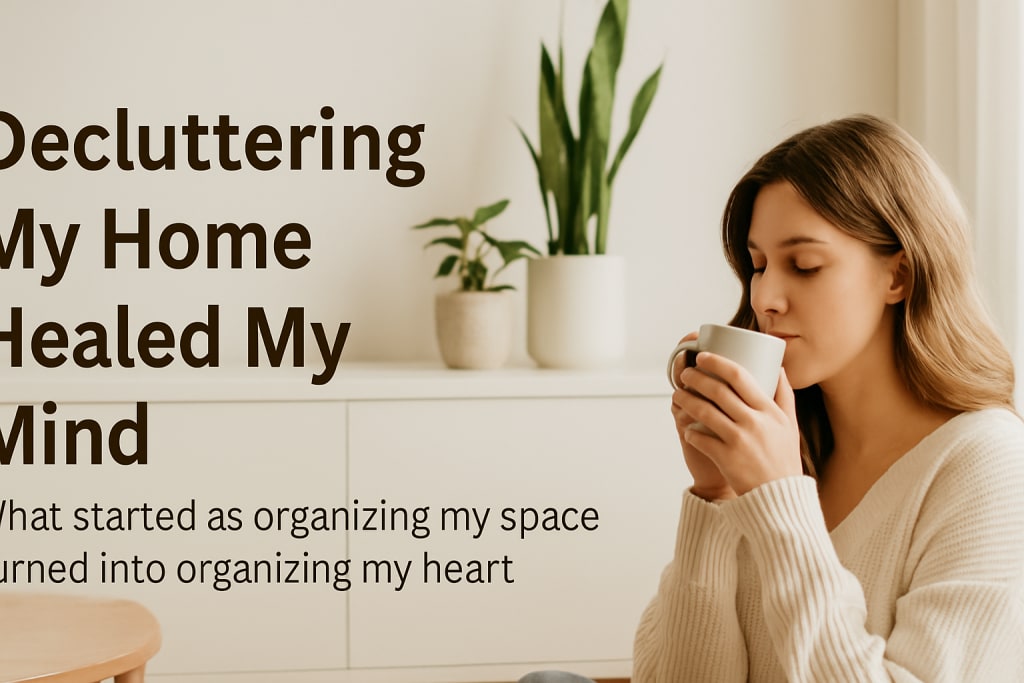
Decluttering my house healed my mind.
What started as organizing my space turned into organizing my heart.

The Mask of a “Clean” Life For years, my apartment seemed fine—at least on the surface. Visitors often commented on how “cute” or “cozy” my place was. But they didn’t notice what was buried behind closet doors, inside kitchen drawers, or under my bed. The truth was, I had mastered the art of “surface cleaning.” With ten minutes’ notice, I could make anything look acceptable: toss papers into a bag, put clutter in a closet, wipe down the counter, and smile.
But every time the door closed and I was alone again, chaos whispered back to me.
It wasn’t just that things were messy—it was who they represented. Old college notebooks that I hadn’t opened in years but felt guilty about tossing. Clothes that hadn’t fit me in a decade but reminded me of a time when I felt confident. Birthday cards from people I no longer spoke to. Each item held a piece of emotional baggage I wasn’t ready to unpack.
Clutter as a Sign of Emotional Overload
At some point, the clutter stopped being about things and began to reflect something deeper: how overwhelmed and emotionally stuck I was. I had gone through a difficult breakup, had changed careers twice in three years, and struggled with chronic anxiety. I didn’t talk about it much, even to close friends. But the inside of my home reflected it all. When you’re emotionally numb, even simple decisions—like where to put your winter boots—feel overwhelming.
I told myself I didn’t have time to deal with this. That once I moved up, or when I finally found a new apartment, I would “start fresh.” But deep down, I knew I was using clutter as a delaying tactic, a way to avoid facing the chaos inside.
Breaking Point: A Lost Set of Keys
It all came to light on a typical Saturday morning. I was running late to meet a friend for brunch and couldn’t find my keys. I tore through my apartment—digging through bowls, bags, every jacket pocket. Forty-five minutes later, I found them in a pile of unopened mail.
And I just broke down.
It wasn’t about the keys. It was about my own life feeling completely out of control. I sat down on my kitchen floor, surrounded by unopened packages, dirty laundry, and piles of paper. That day, something changed. I realized I didn’t want to live like this anymore. I didn’t need a fancy storage system—I needed to keep less.
The Drawer That Changed Everything.
That same afternoon, I opened the dreaded junk drawer—the one everyone has, where batteries, rubber bands, expired coupons, and mysterious screws go to die. Instead of organizing it, I emptied the entire thing. I made three piles: keep, toss, donate. It sounds simple, but it was revolutionary. I didn’t just ask, “Do I need this?” I asked, “Why did I keep it in the first place?”
Some things stayed because of guilt. Others because of fear. And some, embarrassingly, because I didn’t even remember putting them there. Letting go of the first drawer was like opening the first drain—everything else started flowing through there.
Shedding the Past, One Room at a Time
Over the next few weeks, I tackled one space at a time. My closet was full of clothes that didn’t fit my current lifestyle. My bookshelf was filled with titles I’d bought to seem smart or sophisticated but never read. The kitchen was filled with gadgets I hadn’t used in years.
With each donation box I filled, I felt physically lighter. I realized I was holding onto older versions of myself—one version that wore business suits, one that hosted dinner parties, another that was still clinging to hobbies she no longer enjoyed. Letting go of these items wasn’t just about cleaning up—it was about letting go of the ghosts of expectations, identities, and unfulfilled dreams.
Shifts in Energy and Anxiety
I didn’t expect a change in how I felt mentally. But almost immediately, I felt a difference. I no longer woke up and sighed at the pile of laundry. I no longer stepped past my cluttered desk and beat myself up before the day even began. My house began to breathe, and so did I.
My sleep improved. I felt less anxious. My productivity at work increased because I wasn’t dragging the mental burden of a chaotic space with me every time I worked. Minimalism, I discovered, wasn’t about aesthetics or deprivation. It was about alignment. My home finally reflected the peace I so desperately desired.
Living with intention, no less. Decluttering didn’t mean throwing everything away or living in a sterile white box. I still had cozy throws, a few sentimental books, and even that quirky mug I loved. But now, everything I owned served a purpose — or brought me joy.
I started applying that same logic to my schedule, my relationships, and even my social media. I unfollowed accounts that made me feel inadequate. I started saying “no” without guilt. The more intentional I became in my space, the more intentional I became in life.
A home that heals. Today, my apartment is peaceful. Not perfect, not magazine-worthy — but real, calm, and filled with light. Plants grow happily on the windowsills. My favorite books line a neat shelf. Mornings start with sunlight, not clutter. I sit with my tea and breathe, knowing everything around me supports who I am now — not who I used to be or thought I should be.
Decluttering my house didn’t just change how my apartment looked. It changed how I felt about myself. I finally stopped hiding behind my things and faced the deeper truths I had long avoided. And in doing so, I found healing — in the silence, in the space, and in the simple act of letting go.
About the Creator
Echoes of Life
I’m a storyteller and lifelong learner who writes about history, human experiences, animals, and motivational lessons that spark change. Through true stories, thoughtful advice, and reflections on life.
Keep reading
More stories from Echoes of Life and writers in Confessions and other communities.
Sharing Fantasies Between Couple Increases Trust Communication And Mutual Satisfaction
Relationship intimacy is beyond emotional and physical attachment. Exchanging fantasies among the couples may result in an improvement of trust and communication and mutual satisfaction leading to a stronger bond. Fantasies can be wishful thinking, intrigues or a weakness that couples might be uncertain to share. By speaking to each other about them openly, couples show their honesty and readiness to get to know the inner world of each other. This openness creates trust and emotional intimacy, which enables partners to understand each other at a deeper level and the limits of each other as they know their preferences.
By Mark Hipster3 days ago in Confessions
Guard Your Battery
Why are some people so attractive just by standing there? It’s not because they are "likable," but because they don’t need everyone to like them. I realized later that truly charismatic people allow themselves to be criticized, but they never criticize themselves. They never try to please the world; instead, the world stops to watch them.
By Emily Chan - Life and love sharing6 days ago in Poets


Comments
There are no comments for this story
Be the first to respond and start the conversation.