
The Conversation Melvin Couldn’t Finish
In the quiet space between therapist and patient, some truths stay unspoken.

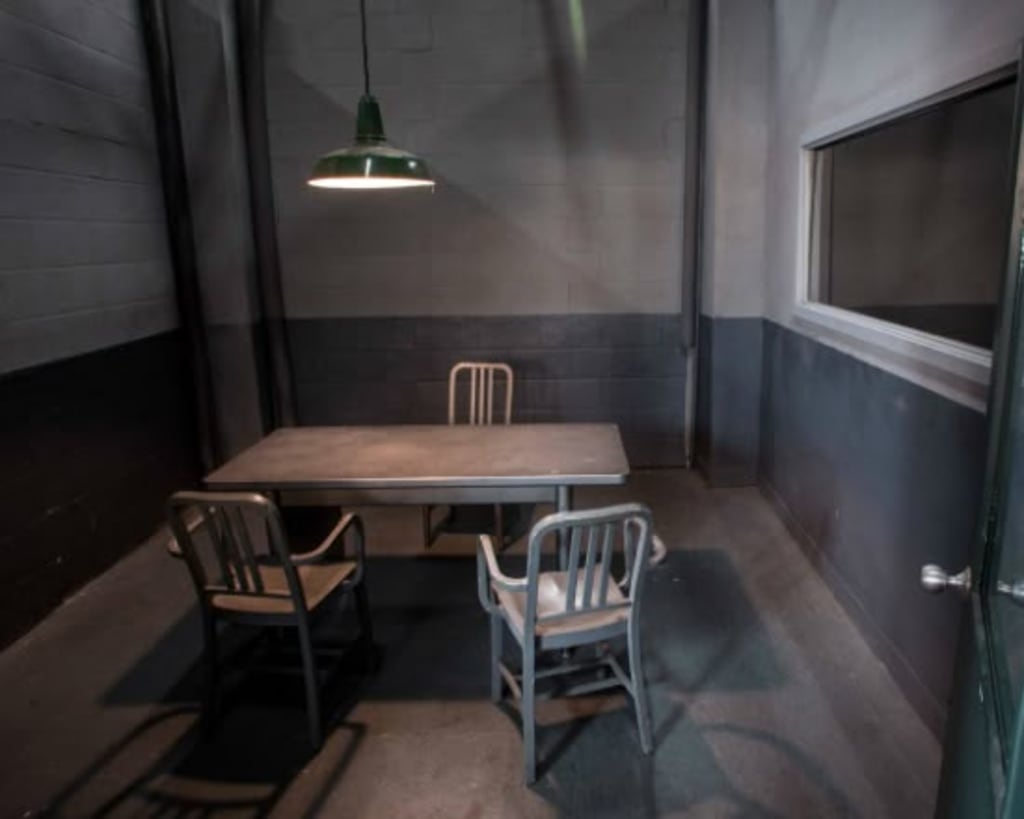
“What do you think the problem is?”
I stared past her and out the window. The rain was roaring against the glass, loud and relentless. As if trying to barge in.
Behind me, the fire crackled. It barely reached me but the attempt was comforting.
It felt like two worlds sat on either side of me. One cold, the other burning.
And I was stuck in the middle.
The room wasn’t empty, but it may as well have been.
A dusty glass table stood untouched, old wooden bookshelves sagged in the background, and the marble floor stretched out cold and lifeless.
Things were there, but not warmth. No breath. Not really.
Only the fireplace dared to offer any comfort, its flame flickering smaller with every word left unsaid, as if the room itself was growing tired of waiting for me to speak.
She adjusted her glasses and sighed. It was becoming her refrain – each sigh scribbled louder than her words. They spoke of my problems and disagreed with my issues.
“If you can’t even talk to me,” she said, closing her book, “then I’d rather you just leave than stay here and waste my time.”
God what I wouldn’t give to crack that book open and see what she’s written about me.
The version of me that lives in her ink. The broken one.
Silent.
The one who never knows what to say until it’s far too late.
I scraped together a flicker of interest, but even that burned out before I spoke. You know it would’ve been a lot more interesting if she had rather talked about herself instead. Even a shallow conversation about her cat or the weather would’ve felt more human than this silence.
Despite my hesitation, I pushed out the words caught on the edge of my throat.
“I thought you were the one who was supposed to tell me what the problem is. Isn’t that why I came here?”
I was right, you know.
To me, there was no point coming here every other Sunday.
Sitting down on this uncomfortable chair and throwing, what seems like tantrums, towards her. I was ready to give up on this. And myself.
“Mel, you’re here to piece yourself together after what happened with your child. If you could do it yourself, you would. But you can’t. You wouldn’t need the paroxetine medication from me if you could.”
She leaned in. Her voice now sharper than before, time ticking in her tone.
“So tell me. What do you think the problem is?”
And just like that, what felt like therapy was now a trial.
Each word weighed like a verdict.
And I was too tired to defend myself. So I sat there, guilty and shrinking.
For someone who was meant to care, she wore callouses like a second skin. Distant, cold, and clinical.
Like she was here because someone else forced her to. Not because she wanted to.
I’d say the same things over and over again, or at least try to.
But my words never seemed to land. They just ricocheted off of her, lost before they ever reached her heart.
I swallow the pills because I’m apologising in advance.
For being too quiet, too tired.
For not knowing how to get myself back together.
“I don’t know.”
My voice cracked in between.
I swallowed hard, trying to steady myself, but it was already too late. The tremble had set in.
“Whatever I do, someone points and laughs. Picking at it, like I’m broken or stupid or–”
I stopped, my eyes burning.
“I try to sit here and talk about it…” my fingers curled into the fabric of the couch, “but nothing comes out.
“You do it too.” I glanced at her, then away.
“You’re always doing it.”
The tears slipped out before I could stop them, like they’d be waiting their turn all along.
He has repeated that same sentence many times before.
Any indirect proposition from me to take the conversation forward and talk deeper about his interaction last week is met with a defensive facade. His aggravation and the accusation when he said I was supposed to fix him caught me off guard. As if I had been attacking him the past half an hour. As if everything I’d said today was a personal attack towards him and just him, despite my attempts to cushion my words.
“Melvin, I am going to be very straight forward with you because I feel that is what is required from this conversation. Last time you said that you’d rather I not beat around the bush as much. I think that if you can gather your thoughts and put them out into the world, we can most definitely tackle the root cause of your problem. We can get you off the medication you have and you can go back to living the ‘normal’ life you seek. We have enough time.”
I had tried to put it as plainly as possible, but obviously his patience with me has been draining ever since he sat in that chair.
“I… I don’t.”
His fingers dug further into the seams of the couch. He opened his mouth, closed it again.
Was it shame? Regret? Something else entirely? I couldn’t tell.
Something in him wavered.
Like a thread straining to snap or tie itself into a knot. And all I could do was watch it fray again.
“I am not okay. I don’t know what it is. And I am too scared to talk about it. I am… afraid of…”
So achingly close. Something was clawing its way up his throat, desperate and fragile.
I would’ve taken anything.
A whisper, a string of broken syllabus. Even the breath before his thought.
Anything. I could’ve helped piece it together.
I just needed him to hand me that first shard.
“Melvin, I can understand what you are going through. Postpartum depression is a serious difficulty and is very much treatable. However the treatment requires these conversati- “
Before I finished, his voice cut through the room. Quiet but firm.
“I’m sorry I have to go.”
Melvin stood without a word, eyes fixed anywhere but on me. The soft click of the door closing echoed like a final punctuation to his sentence.
The room felt still.
The fire had dimmed to a drying ember.
Outside, the rain kept tapping the window like a cold static rhythm. Endless, distant, indifferent.
For the fourth week in a row, Melvin had left without finishing his thought.
And for the fourth week in a row, Erin wondered if she was part of the problem too.
About the Creator
Shreyas Vartia
I write sharp-edged fiction that peers into fractured minds and tense silences. My stories live where truth blurs, guilt festers, and memory isn't always your friend.
New stories every week. Stay curious, stay unsettled.
Keep reading
More stories from Shreyas Vartia and writers in Confessions and other communities.
The Storm That Took Him at the Lake’s Edge
Reports of a storm had been surging for weeks, but it didn’t feel like one was coming. It was just like any other day. Gleaming amber light raced through the tall, branching canopy and struck the fresh, uncut earth beneath it, mingling in with the ferns and flowers much like a Joan Mitchell piece. It changed quite often and had many faces throughout the day, but this was my favorite. A tranquil state where nothing much happened, and you were free to explore however you wished. A symphony of yellow sun, green leaves, and lush flora performing around you.
By Shreyas Vartia5 months ago in Fiction
Thoughts on Vocal and the way the world is
"Death cannot stop true love, only delay it." – Wesley in The Princess Bride. I decided to come back to Vocal on a very cold and dark night at the end of December. I had been, and still am, convalescing from a horrible staph infection that had gone misdiagnosed for months. This, paired with the increasing challenges of being healthy, making the best choices for my co-parented child, being a wife, and being a director at a new job, was a lot to manage.
By Jazzy 5 days ago in Confessions
The Shadow Manifesto: Search for Meaning
"What did I do wrong, papa? I don't understand why you are beating me. For what? It hurts. I am just 7 years old. . ." "This hurts me more than it hurts you, my son. You must learn to take pain like a man for that is what life is about. So stop crying. Don't be a cry baby. Be a man."
By WILD WAYNE : The Dragon King5 days ago in Confessions


Comments
There are no comments for this story
Be the first to respond and start the conversation.