
The Burnout Generation: Why Constant Hustle Culture is Making Us Miserable
How the pressure to always be productive is draining our health, happiness, and sense of purpose.
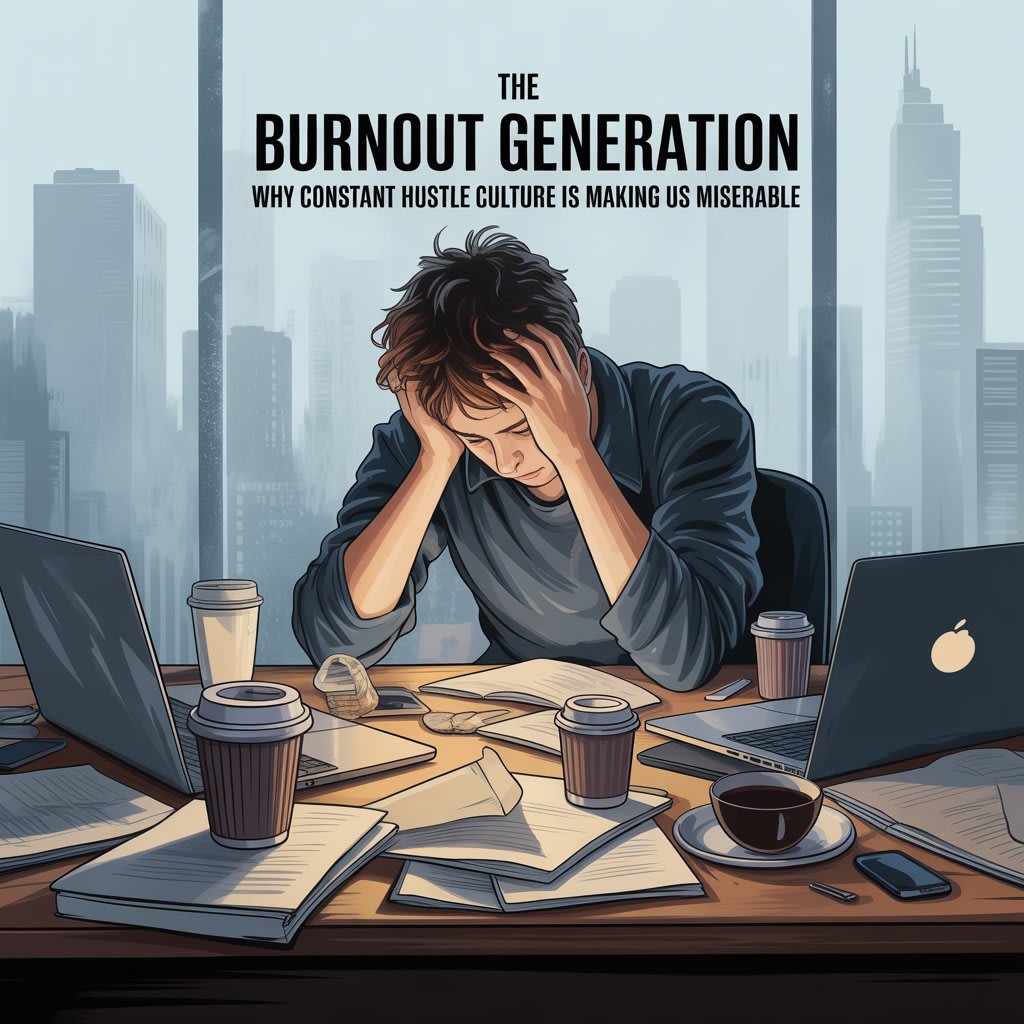
Introduction
We live in an age where success is often measured by how busy we are. From Instagram posts glorifying “grind mode” to TikTok clips showing off 4 a.m. wake-up routines, hustle culture has become the standard of what it means to be ambitious. The message is clear: if you’re not working around the clock, you’re falling behind. But beneath the polished productivity aesthetics lies a darker truth—burnout.
The so-called “burnout generation” is facing exhaustion at unprecedented levels. Millennials and Gen Z, in particular, are caught in a cycle of constant striving, juggling multiple jobs, side hustles, and endless self-improvement goals. While technology promised to make life easier, it has instead blurred the boundaries between work and rest, turning every hour into potential “productive” time. This article explores why hustle culture has become so ingrained in our society, the consequences of living in a permanent state of work, and what it would mean to break free from this cycle.
The Rise of Hustle Culture
Hustle culture didn’t appear overnight—it’s the result of decades of shifting social and economic forces. In the late 20th century, economic instability, rising inequality, and stagnant wages created an environment where traditional 9-to-5 jobs no longer guaranteed financial security. At the same time, the internet opened new avenues for entrepreneurship, freelancing, and remote work.
Platforms like YouTube, Instagram, and TikTok created overnight success stories, feeding the belief that anyone could “make it big” with enough effort. The gig economy added to the pressure, normalizing side hustles and portraying them as empowering rather than a necessity born out of financial strain. Suddenly, working multiple jobs wasn’t just practical—it became aspirational.
Corporate culture also played its part. Companies began glorifying “workaholic” employees who stayed late, responded to emails at midnight, and treated work as their entire identity. This mindset trickled down to younger generations, who internalized the idea that constant hustle was the only way to achieve security and respect.
The Illusion of Productivity
One of the most dangerous aspects of hustle culture is the illusion it creates—that more work automatically equals more success. Social media plays a huge role here. Influencers showcase their “productive” lives through morning routines, color-coded planners, and endless streams of achievement. But what’s rarely shown are the sleepless nights, mental health struggles, and sacrifices behind the scenes.
The truth is, productivity has diminishing returns. Studies have shown that working beyond 40–50 hours per week actually lowers overall efficiency. Exhaustion leads to mistakes, decision fatigue, and declining creativity. Yet hustle culture ignores these realities, insisting that if you’re tired or unfulfilled, the solution is to work harder.
This constant chase for productivity also shifts our sense of self-worth. Instead of valuing rest, hobbies, or relationships, we begin to measure our lives solely by output. Did you finish a project? Launch a side hustle? Hit your next milestone? If not, it feels like failure—even when you’re simply being human.
The Mental and Physical Toll
The costs of hustle culture are staggering. Burnout, defined by the World Health Organization as a state of chronic workplace stress, is now considered a global epidemic. Symptoms include exhaustion, cynicism, and reduced professional effectiveness, but the impact goes far deeper.
Mental Health: Anxiety, depression, and imposter syndrome are all exacerbated by constant pressure to perform. Social media comparisons make individuals feel like they’re perpetually falling short.
Physical Health: Long work hours often lead to poor sleep, unhealthy eating, and neglect of exercise. Stress hormones like cortisol remain elevated, which can weaken the immune system and increase the risk of chronic diseases.
Relationships: When every hour is dedicated to hustling, personal connections suffer. Friendships fade, family time diminishes, and romantic relationships often take a backseat.
For younger generations, the consequences are particularly severe. Many Millennials and Gen Z workers report feeling burned out before even reaching their 30s. The irony is that the very hustle intended to build a better future is instead eroding the foundation of their present lives.
The Capitalist Undercurrent
It’s impossible to separate hustle culture from capitalism. The glorification of busyness benefits corporations and economies more than individuals. By normalizing overwork, companies can extract more labor without increasing wages. The “passion economy” also encourages people to monetize every interest—from baking to painting—transforming hobbies into another revenue stream rather than a form of joy.
This system keeps people trapped in a cycle where rest feels undeserved, and leisure is seen as laziness. Even vacations are framed as opportunities for “personal growth” or networking. In this way, hustle culture erodes one of the most basic human rights: the ability to simply exist without needing to justify it through productivity.
Breaking the Cycle
Escaping hustle culture isn’t easy, especially when financial pressures are real. But change is possible—both individually and collectively.
Redefining Success: We must broaden our definition of success beyond money and titles. Success can mean having time for family, maintaining mental health, or pursuing passions that aren’t monetized.
Setting Boundaries: Simple practices like turning off email notifications after work, saying no to extra commitments, and protecting weekends can create a healthier balance.
Valuing Rest: Rest isn’t wasted time—it’s essential for creativity, problem-solving, and emotional resilience. Normalizing naps, vacations, and downtime is key to dismantling hustle culture.
Collective Action: On a societal level, advocating for better labor policies, such as shorter workweeks, fair wages, and universal healthcare, can reduce the need for constant hustling. Countries experimenting with four-day workweeks have already seen increased productivity and improved worker well-being.
Cultural Shifts: Media and influencers also have a role to play. Highlighting stories of balance, fulfillment, and alternative lifestyles can provide counter-narratives to the endless grind.
Finding Purpose Beyond Productivity
At the heart of hustle culture is a search for meaning. Many people work tirelessly not just for money, but for a sense of accomplishment, recognition, and purpose. The challenge is to untangle purpose from productivity. Fulfillment doesn’t have to come from work alone. It can come from relationships, creativity, community involvement, or simply appreciating the present moment.
Philosophers and spiritual traditions across centuries have emphasized the importance of being rather than doing. In a world obsessed with output, reclaiming the value of existence itself may be the ultimate rebellion.
Conclusion
The burnout generation is a symptom of a society that equates worth with work. Hustle culture promises empowerment but delivers exhaustion. It sells us the dream of freedom while chaining us to constant labor. If we continue down this path, we risk creating a world where no one ever feels “enough.”
But change is possible. By redefining success, setting boundaries, and valuing rest as much as work, we can reclaim our health, happiness, and humanity. The goal isn’t to stop striving altogether but to build a culture where ambition coexists with balance, and productivity doesn’t come at the cost of well-being.
The question we must ask ourselves is not, How much can I achieve? but rather, What kind of life do I want to live? For the burnout generation, the answer might just lie in slowing down.
About the Creator
Keep reading
More stories from Aiman Shahid and writers in Confessions and other communities.
The Loneliness Epidemic: Why We Feel More Isolated in a Hyper-Connected World
Introduction: A Paradox of Connection We live in a time when connection has never been easier. With just a few taps, we can video chat with someone halfway across the globe, post life updates to hundreds of followers, and access communities built around every niche interest imaginable. Yet paradoxically, rates of loneliness are climbing at alarming levels across societies. Governments, health organizations, and psychologists now refer to loneliness as an “epidemic,” linking it to rising levels of anxiety, depression, and even physical health risks comparable to smoking or obesity.
By Aiman Shahid4 months ago in Confessions
Bruce Lee and The God of War: Kuan Ti
It starts with love.. The Power to the God Of War and Wealth Walk into a Chinese restaurant (even in Oklahoma, USA), a Chinese police station, a kung fu martial arts studio or even a Chinese temple and you often see a red faced warrior holding a heavy quan-do (spear like weapon).
By WILD WAYNE : The Dragon King5 days ago in Chapters



Comments
There are no comments for this story
Be the first to respond and start the conversation.