
The Loneliness Epidemic: Why We Feel More Isolated in a Hyper-Connected World
Exploring how social media, modern lifestyles, and shifting communities are fueling disconnection—and what we can do to reclaim genuine human bonds.
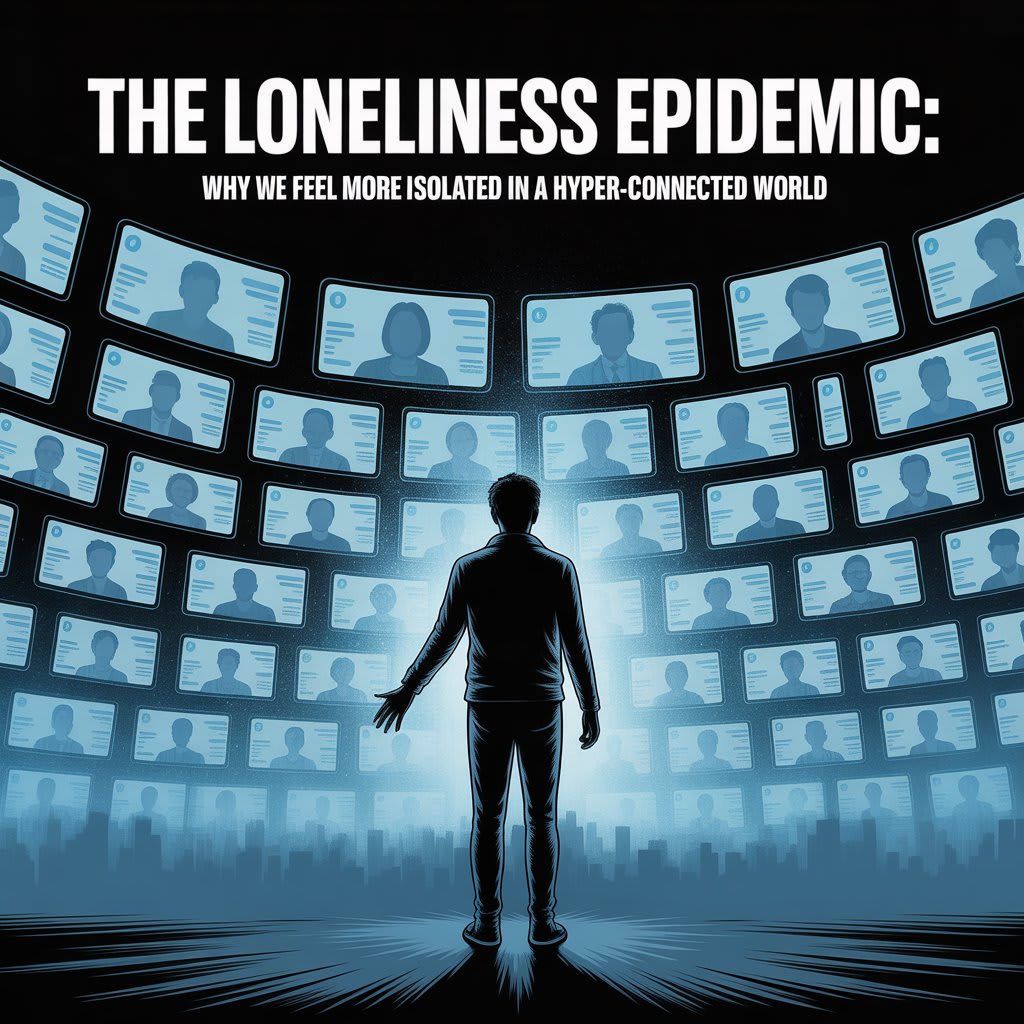
Introduction: A Paradox of Connection
We live in a time when connection has never been easier. With just a few taps, we can video chat with someone halfway across the globe, post life updates to hundreds of followers, and access communities built around every niche interest imaginable. Yet paradoxically, rates of loneliness are climbing at alarming levels across societies. Governments, health organizations, and psychologists now refer to loneliness as an “epidemic,” linking it to rising levels of anxiety, depression, and even physical health risks comparable to smoking or obesity.
How is it possible to feel so isolated while surrounded by constant digital connectivity? The answer lies in understanding the difference between being networked and being truly connected.
The Rise of the Loneliness Epidemic
Loneliness is not new—it has always been part of the human experience. But what makes today’s loneliness different is its scale, visibility, and health implications. The U.S. Surgeon General recently called loneliness a “public health crisis,” while studies in the UK and Europe report similar trends. A 2023 global survey by Meta and Gallup revealed that one in four adults worldwide report feeling very or fairly lonely.
Several forces are driving this crisis: technological changes, shifting social structures, urbanization, and lifestyle pressures. Instead of reducing isolation, modern systems often amplify it. People are “always online” but lacking in deep, face-to-face, emotionally supportive relationships.
Social Media: A Double-Edged Sword
One of the most discussed contributors to modern loneliness is social media. Platforms like Instagram, TikTok, and Facebook promise constant interaction, but they often deliver surface-level exchanges instead of meaningful conversations.
The illusion of connection: Seeing others’ curated highlights can trigger comparison, leaving users feeling less satisfied with their own lives.
Quantity over quality: A person may have thousands of followers yet no one to call in a time of crisis.
Displacement of real interaction: Hours spent scrolling often replace opportunities for in-person connection.
While social media can be a tool for building communities, particularly for marginalized groups, the challenge lies in how it’s used. When it becomes a substitute rather than a supplement for human interaction, it fosters isolation.
Shifting Community Structures
Beyond technology, the very structure of our communities has transformed. In previous generations, people often lived in close-knit neighborhoods, surrounded by extended families and lifelong neighbors. Today, mobility, urban living, and individualistic cultural values mean that people move more often, live alone more frequently, and rely less on physical communities.
In the U.S., for example, nearly 30% of households consist of just one person, a number that continues to rise globally. While independence can be empowering, it also reduces everyday opportunities for connection—those casual chats with neighbors, the spontaneous visits, the sense of “we’re in this together.”
Work, Productivity, and the Culture of Busyness
Another driver of loneliness is the culture of busyness. Modern economies often glorify productivity, side hustles, and constant achievement. Many people work longer hours, commute farther, and spend less time on social activities. Even leisure time has been commodified, with relaxation tied to consumerism rather than connection.
Remote work, while beneficial for flexibility, can also blur the boundaries between personal and professional life. A 2022 Microsoft study showed that many remote employees feel “digitally exhausted” yet disconnected from their colleagues. Without intentional efforts to build workplace community, remote structures can deepen isolation.
Health Consequences of Loneliness
Loneliness is not merely an emotional state; it carries real physical and psychological consequences. Studies show that chronic loneliness is associated with:
Increased risk of heart disease and stroke
Weakened immune system
Higher rates of depression and anxiety
Cognitive decline and dementia in older adults
Reduced life expectancy
One landmark study even equated the health impact of loneliness to smoking 15 cigarettes a day. This highlights why public health organizations treat it not just as a social issue, but as a medical one.
The Role of Technology Beyond Social Media
It’s important to note that technology itself is not inherently isolating—it depends on how it’s used. Tools like video calls, online support groups, and digital communities can be lifelines for people who are geographically distant, living with disabilities, or lacking local support.
The challenge is balance. Technology should enhance real-world connections rather than replace them. The more we use screens as stand-ins for genuine presence, the greater the risk of loneliness.
Generational Dimensions of Loneliness
Interestingly, loneliness affects all age groups, but in different ways:
Young adults (18–30): Despite being the most digitally connected generation, they often report the highest loneliness levels due to social comparison and instability in careers and relationships.
Middle-aged adults: Loneliness here often stems from work pressure, parenting challenges, or caregiving responsibilities that reduce social time.
Older adults: Retirement, loss of partners, and reduced mobility contribute to isolation, especially when community networks aren’t strong.
Recognizing these distinctions helps tailor solutions—what a university student needs to feel connected is not the same as what an 80-year-old retiree needs.
Cultural Factors: Individualism vs. Collectivism
Western societies that emphasize independence and personal achievement often struggle more with loneliness than collectivist cultures where community and family bonds remain central. However, even collectivist societies are seeing changes as urbanization, globalization, and Western lifestyles spread.
The challenge is to maintain traditions of community and belonging in modern contexts without stifling individual freedom.
Addressing the Loneliness Epidemic
Solving loneliness requires both individual actions and systemic changes.
On a personal level:
Prioritize depth over breadth in relationships—nurture a few close bonds rather than chasing many shallow ones.
Limit passive scrolling on social media and replace it with intentional communication.
Engage in shared activities—sports, volunteering, book clubs—that foster organic connections.
Practice vulnerability—genuine conversations create intimacy, not small talk alone.
On a societal level:
Governments can invest in community spaces such as parks, libraries, and cultural centers.
Workplaces can prioritize employee well-being, offering social support networks and team-building opportunities.
Schools can teach emotional intelligence and connection skills, preparing future generations for healthy relationships.
Healthcare systems can integrate loneliness screening into routine checkups.
Finding Hope in Reconnection
Despite the alarming statistics, there are reasons for hope. Communities are experimenting with innovative ways to rebuild connection—from “men’s sheds” in Australia that give older men a social outlet, to co-living arrangements for young adults, to intergenerational housing projects that bridge age gaps.
Even small gestures matter. Research shows that simple acts like greeting a neighbor, making eye contact, or expressing gratitude can improve feelings of belonging. The antidote to loneliness doesn’t always require dramatic life changes—it often begins with everyday moments of kindness.
Conclusion: Choosing Real Connection
Loneliness may be the defining epidemic of our digital age, but it doesn’t have to be permanent. By acknowledging the gap between hyper-connectivity and genuine connection, we can take steps to rebuild community, intimacy, and belonging.
The human need for connection is timeless. No number of followers, likes, or digital notifications can replace the warmth of shared laughter, the comfort of presence, or the reassurance of knowing someone truly cares. If we shift from chasing virtual interactions to cultivating real human bonds, we can turn the tide on the loneliness epidemic and create societies where people feel seen, supported, and genuinely connected.
About the Creator
Keep reading
More stories from Aiman Shahid and writers in Confessions and other communities.
The Authenticity Revolution: Why Being Real Beats Being Perfect in Today’s World
Introduction: A World Obsessed with Perfection We live in an era where perfection is everywhere—or at least it seems that way. Social media feeds overflow with flawless selfies, meticulously curated travel photos, and highlight reels of accomplishments. Ads constantly remind us that we could be thinner, smarter, richer, or more successful if we only tried harder. In such a climate, it’s easy to believe that perfection is the ultimate goal.
By Aiman Shahid4 months ago in Confessions
The Last Day of the Year
My New Year Countdown Clock indicates that I have just over five hours left before this year is over. I am stuck in the suburbs with my mother and stepfather, contemplating what I am going to eat and drink to celebrate this great change in our lives. The weather is cold, but I do not feel as though it has really affected my attitude about what the new year will bring...but I am not as happy with this moment as I usually feel.
By Kendall Defoe 16 days ago in Confessions
Am i Demon-possesed?
On my journey to trying to understand the development of schizophrenia I've endured over the last five years, has given me the ultimate question. Am I demon-possessed? Let me begin by expressing the psychosis I was in five years ago It started when I was living away from family. Now, it's important to not that the brain and mind are interchangeable and schizophrenia is a brain disease. From what I've been told and the major consumption of research it is a chemical imbalance in the brain that has been brought on by stress, trauma, genetics, environmental factors such as an emotionally distressing event, drugs, and psychological factors.
By Cerina Galvan3 days ago in Confessions



Comments
There are no comments for this story
Be the first to respond and start the conversation.