
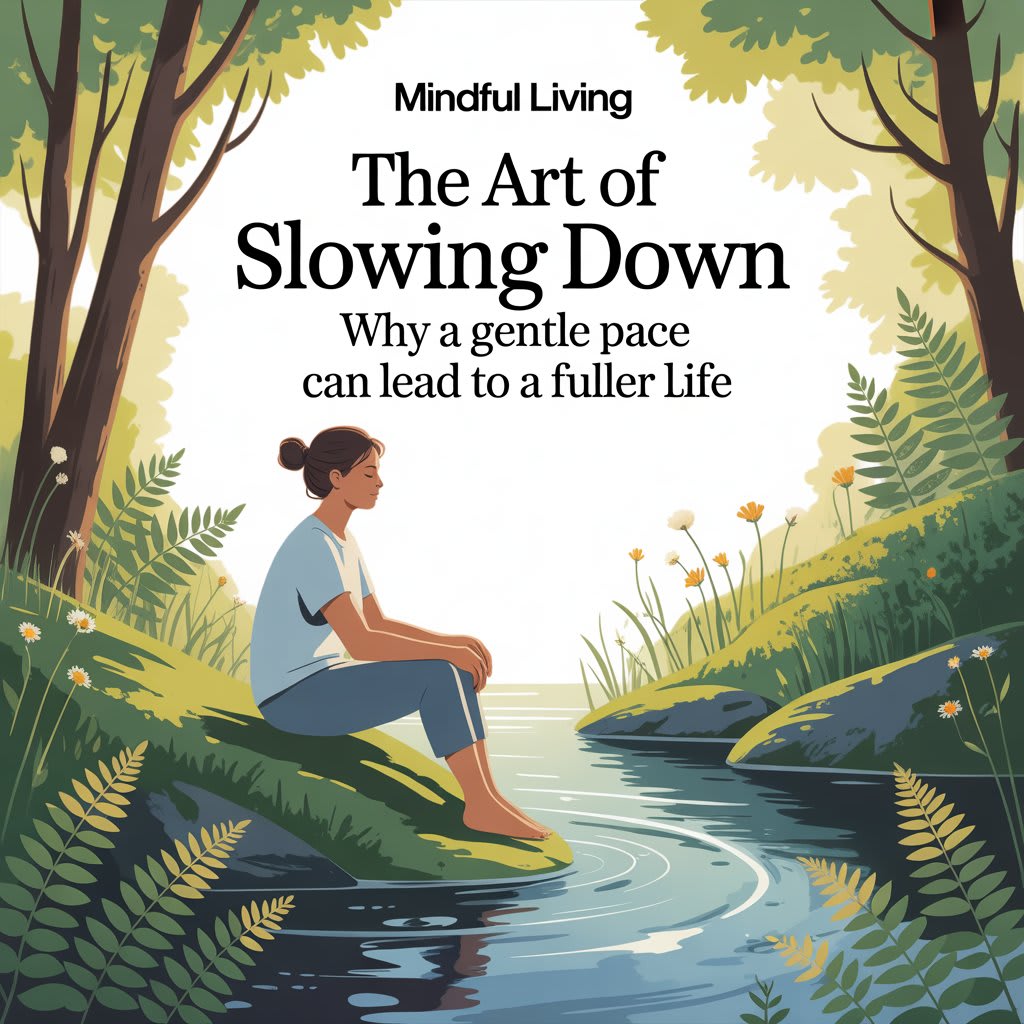
The Art of Slowing Down: Why a Gentle Pace Can Lead to a Fuller Life
Embracing Stillness in a World That Never Stops
Introduction
We live in an age that glorifies speed. Fast food, high-speed internet, instant replies, overnight delivery—our culture prizes immediacy. The faster we move, the more productive we appear, and the more we feel we’re keeping up with everyone else. But beneath the rush lies an uncomfortable truth: in our relentless pursuit of speed, we often sacrifice depth, connection, and fulfillment.
Slowing down may sound counterintuitive in a world where hustle culture dominates, yet history, philosophy, and even science remind us that a gentle pace can lead to a fuller, richer life. The art of slowing down is not about rejecting ambition or progress. Instead, it’s about reclaiming balance, savoring experiences, and aligning with what truly matters.
In this article, we’ll explore why slowing down is essential, how it reshapes our mental and physical health, the way it transforms our relationships, and practical ways to adopt a slower rhythm in daily life.
The Problem with Constant Acceleration
Modern life conditions us to believe that faster is better. Smartphones ensure we’re always “on.” Social media algorithms reward rapid posting and engagement. Workplaces often measure success by how much gets done in the least amount of time.
This acceleration comes with hidden costs:
Burnout: The pressure to always perform leaves people exhausted and unmotivated.
Shallow living: Constant multitasking fragments our attention, reducing the quality of our experiences.
Decline in well-being: Stress levels soar, sleep patterns are disrupted, and relationships suffer when we’re too busy rushing.
Ironically, the faster we try to live, the less we seem to experience. Like speeding past a breathtaking landscape, life becomes a blur instead of a journey.
Ancient Wisdom on Slowing Down
Long before smartphones and deadlines, great thinkers and traditions emphasized the value of slowing down:
Stoic philosophy taught that peace comes from living in accordance with nature’s pace, not society’s rush.
Eastern traditions like Taoism highlight the flow of life—wu wei, or effortless action, which means aligning with natural rhythms rather than forcing outcomes.
Religious practices such as the Sabbath in Judaism or mindfulness in Buddhism offer sacred pauses, reminding people to step back and rest.
These traditions recognize what modern society often forgets: life’s richness is found in presence, not in speed.
The Science of Slowing Down
Modern research now confirms what ancient wisdom has long suggested: slowing down improves well-being.
Mental health benefits: Mindfulness and slower living reduce anxiety and depression by grounding us in the present moment.
Cognitive advantages: Studies show that people who avoid multitasking retain information better and make clearer decisions.
Physical health: Chronic stress from constant busyness raises blood pressure and weakens immunity. Slower rhythms allow the body to heal, recover, and thrive.
Creativity boost: Slowness gives the mind space to wander, fostering fresh ideas and problem-solving.
Far from being laziness, slowing down is actually a strategy for long-term productivity and resilience.
The Joy of Presence
Perhaps the greatest gift of slowing down is presence—the ability to fully engage with the moment.
When we slow our pace:
Meals become rituals rather than rushed refueling stops.
Conversations deepen, as we actually listen instead of preparing our next response.
Nature feels alive, with details we’d miss if we were hurrying past.
Small joys resurface, like the smell of coffee, the sound of laughter, or the comfort of stillness.
Presence transforms ordinary life into something extraordinary. It reminds us that fulfillment doesn’t come from cramming more into our days but from appreciating what’s already there.
Relationships and Slowness
Speed affects not just us individually but also our relationships. When life is rushed:
Family dinners are skipped.
Friendships weaken because “I’m too busy” becomes a default excuse.
Intimacy fades as partners communicate in quick check-ins rather than meaningful conversations.
By slowing down:
Families bond over shared time and traditions.
Friendships grow stronger with unhurried conversations.
Romantic relationships deepen when there’s space to listen, laugh, and simply be together.
Slowness is love expressed through time—arguably the most valuable gift we can offer.
Slowing Down at Work
The workplace may seem like the last place where slowing down is possible. But more organizations are realizing that constant urgency leads to mistakes, turnover, and burnout.
Leaders and employees who embrace mindful pacing experience:
Higher quality work due to focused attention.
Better collaboration, as slower discussions encourage thoughtful input.
Sustainable productivity, reducing the cycle of overwork followed by exhaustion.
Some companies now encourage walking meetings, digital detox days, or flexible schedules—all strategies to reintroduce slowness into fast-paced industries.
How to Practice the Art of Slowing Down
Slowing down doesn’t require dramatic lifestyle changes. Small, consistent shifts create a ripple effect:
Start your mornings intentionally
Instead of rushing to check notifications, spend a few minutes stretching, journaling, or sipping tea in silence.
Single-task, don’t multitask
Choose one activity and give it your full attention. Washing dishes, writing an email, or reading a book can all become meditative if done without distraction.
Schedule breaks
Treat pauses as essential, not optional. A 10-minute walk or a breathing exercise can reset your energy.
Protect slow spaces
Reserve time for family meals, hobbies, or simply doing nothing. Guard this time as fiercely as you would a meeting.
Embrace nature
Nature naturally slows us down. Spend time outdoors, even if it’s just noticing the sky or listening to birds.
Digital boundaries
Set limits on social media and screen time. Replace endless scrolling with meaningful activities.
Practice gratitude
Writing down three things you’re thankful for each day helps you notice life’s richness in real time.
The Paradox of Slowness
Here’s the paradox: when we slow down, we don’t fall behind—we actually move closer to what we truly want. Life feels more spacious, relationships grow stronger, and health improves. Productivity often rises because we act with clarity instead of haste.
The gentle pace doesn’t mean doing less of what matters. It means eliminating the noise and savoring the essentials.
Conclusion
In a society obsessed with acceleration, slowing down is a radical act of self-care and wisdom. It reconnects us with ourselves, with others, and with the world around us. The art of slowing down is not about withdrawing from life but about entering it more deeply, with intention and presence.
The next time you feel pressured to rush, remember: speed may impress, but slowness fulfills. A fuller life isn’t lived in the fast lane—it’s savored in the gentle rhythm of the present moment.
About the Creator
Keep reading
More stories from Aiman Shahid and writers in Confessions and other communities.
The Power of Small Wins: Why Tiny Steps Lead to Big Changes
Introduction: The Myth of Overnight Success In a world that celebrates dramatic transformations, viral moments, and sudden breakthroughs, it’s easy to fall into the trap of believing that big changes come from big actions. We admire the entrepreneur who launches a multimillion-dollar startup seemingly out of nowhere or the person who loses fifty pounds in a year. What we don’t see are the countless small actions—the late nights of planning, the skipped desserts, the extra ten minutes of walking—that built up to those results.
By Aiman Shahid4 months ago in Confessions
After He Was Gone: Part 2
Distance Returned Without Warning After campus, I moved to a different city for work, and just like that, the distance returned. Not just the physical miles between us, but the emotional space that had once felt like a canyon. Life moved quickly with new responsibilities and new routines, and the noise of becoming an adult filled my days. The calls became fewer. The visits became fewer than the calls.
By Eunice Kamau6 days ago in Confessions


Comments
There are no comments for this story
Be the first to respond and start the conversation.