
The Power of Small Wins: Why Tiny Steps Lead to Big Changes
How Celebrating Progress in Micro-Moments Creates Momentum for Lasting Success
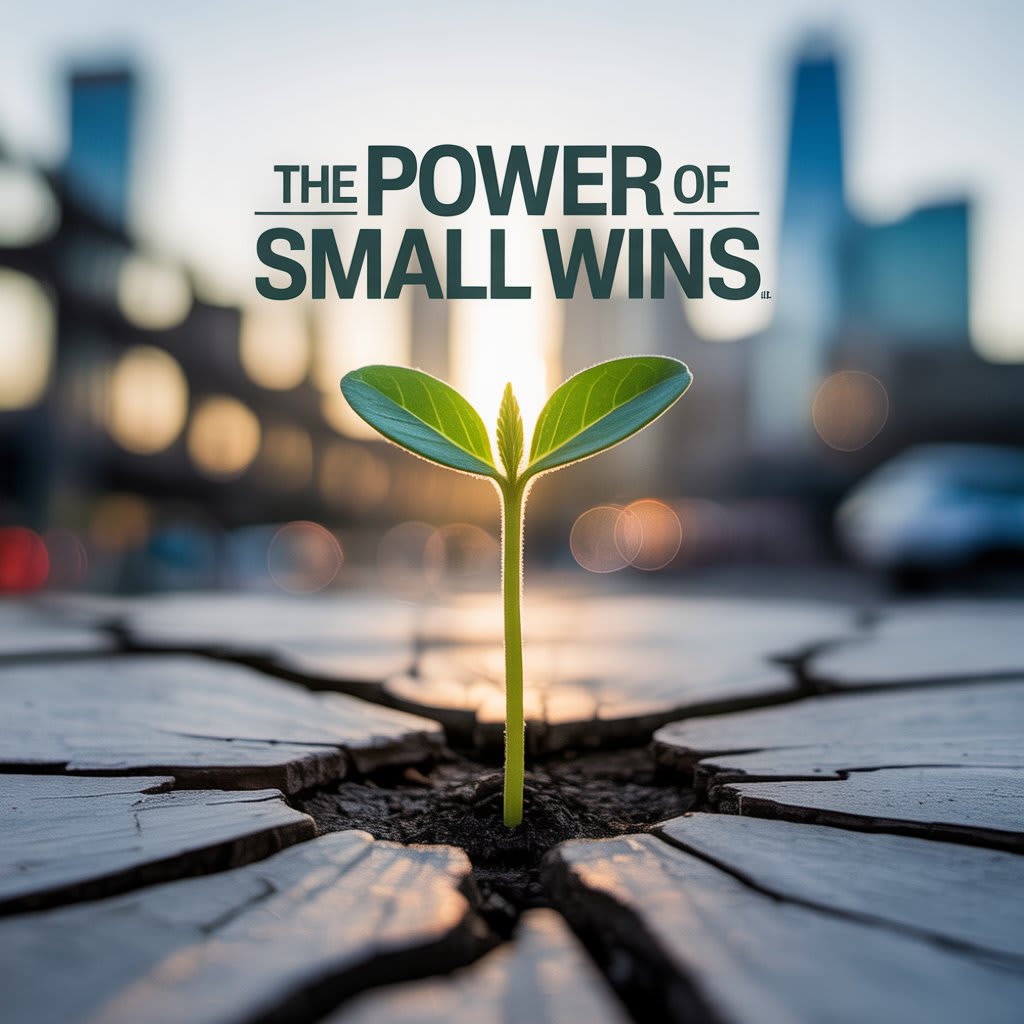
Introduction: The Myth of Overnight Success
In a world that celebrates dramatic transformations, viral moments, and sudden breakthroughs, it’s easy to fall into the trap of believing that big changes come from big actions. We admire the entrepreneur who launches a multimillion-dollar startup seemingly out of nowhere or the person who loses fifty pounds in a year. What we don’t see are the countless small actions—the late nights of planning, the skipped desserts, the extra ten minutes of walking—that built up to those results.
The truth is, success is rarely the result of giant leaps. Instead, it’s the product of small, consistent actions compounded over time. Psychologists call these “small wins,” and research shows they are far more powerful than we often realize. Small wins create momentum, reinforce motivation, and slowly reshape our habits and identities. In this article, we’ll explore why small wins matter, how they create lasting change, and practical ways to harness their power in everyday life.
The Psychology of Small Wins
Harvard researcher Teresa Amabile described the “progress principle” in her studies of workplace motivation. She found that people are most motivated and engaged when they feel they are making progress—even small progress—toward meaningful goals. It’s not massive breakthroughs that keep us moving forward, but rather the daily sense that we are advancing, even by an inch.
This makes intuitive sense. The brain releases dopamine when we achieve something, no matter how small. That dopamine hit makes us feel good and encourages us to repeat the behavior. Over time, these repeated small wins not only build confidence but also create a snowball effect, turning minor efforts into major results.
Think of it like compound interest in finance: a tiny deposit doesn’t look like much at first, but with consistency, the gains multiply and grow into something significant.
Why Small Wins Beat Big Goals
Many people fail to achieve their resolutions or long-term goals not because they lack willpower, but because they set goals that are too big, too vague, or too overwhelming. “Get fit” or “write a book” sounds inspiring, but it doesn’t provide a clear or achievable starting point. Without early wins, motivation fizzles out.
Small wins solve this problem by lowering the barrier to action. They create achievable steps that give us a sense of accomplishment right away. For example:
Instead of aiming to “run a marathon,” the small win might be jogging for five minutes today.
Instead of committing to “eat healthy forever,” the small win might be swapping soda for water at lunch.
Instead of deciding to “declutter the whole house,” the small win might be cleaning one drawer.
Each of these actions is so small it feels manageable, yet powerful enough to build momentum. Over time, these small wins add up, gradually transforming not just our environment but our mindset.
The Momentum Effect: How Small Wins Snowball
Momentum is one of the most underrated forces in personal growth. Once you’ve made progress, even a little, it becomes easier to continue. One success makes the next more likely. Psychologists call this “behavioral activation”—engaging in a positive behavior makes you more likely to engage in another.
For example, someone who commits to walking for just ten minutes might find that over time they enjoy it, increase the duration, and start improving other habits like eating better. That one small win sets off a chain reaction.
Momentum also helps overcome resistance. Starting something is often the hardest part. But when you lower the threshold to a small, achievable action, you bypass procrastination. Once you’re moving, it’s easier to keep going.
Building Identity Through Small Wins
One of the most profound effects of small wins is their ability to shape identity. James Clear, in his book Atomic Habits, argues that habits are votes for the kind of person you want to become. Each small win, no matter how insignificant it seems, is a signal to yourself about who you are.
If you write one paragraph a day, you’re casting a vote for being a writer.
If you put on your running shoes and jog around the block, you’re casting a vote for being a runner.
If you cook one healthy meal, you’re casting a vote for being someone who cares about health.
Over time, these small votes accumulate, reinforcing a new identity. Eventually, the shift becomes less about achieving a goal and more about embodying a way of life.
Real-Life Examples of Small Wins Leading to Big Change
1. Health and Fitness:
Many people who transform their health don’t start by running marathons or cutting out all sugar. They begin with small shifts: drinking more water, taking the stairs, or adding one vegetable to each meal. These small wins create confidence, energy, and momentum for larger lifestyle changes.
2. Career Growth:
Career breakthroughs often come from small, consistent efforts. Replying thoughtfully to emails, networking with one person a week, or learning one new skill each month can position someone for opportunities that seem like “luck” to outsiders but are actually the result of steady wins.
3. Creativity:
Great authors and artists rarely produce masterpieces in one burst. They commit to a daily practice—sometimes just writing 200 words or sketching for 15 minutes. Over months and years, these small wins accumulate into published books, exhibitions, and innovative ideas.
4. Personal Development:
Even emotional resilience can be built through small wins. Practicing gratitude daily, meditating for five minutes, or journaling a single sentence each night might seem trivial, but over time, they build emotional awareness and strength.
Practical Ways to Harness the Power of Small Wins
Break Goals into Micro-Steps
Take your big goal and break it into the smallest possible action. If you want to exercise, your first win might be just putting on your workout clothes. If you want to save money, your first win might be setting aside just $1.
Track Your Progress
Use a journal, app, or calendar to mark your wins. Seeing progress, no matter how small, reinforces motivation. Even a streak of small wins creates a sense of pride.
Celebrate Every Win
Don’t dismiss small progress as “not enough.” Celebrate it. Pat yourself on the back, share it with a friend, or reward yourself in small ways. Recognition reinforces the habit.
Stack Habits
Attach new small habits to existing ones. For example, after brushing your teeth, meditate for two minutes. After pouring your morning coffee, write one sentence in your journal. This makes it easier to sustain wins.
Focus on Consistency, Not Perfection
Missing a day isn’t failure. What matters is returning to the habit. Small wins rely on consistency, and over time, consistency outweighs intensity.
Why Small Wins Matter in a Fast-Paced World
In today’s culture of instant gratification, we want results now. That impatience makes us dismiss the value of small steps. But small wins remind us that transformation is not about speed—it’s about sustainability. They keep us grounded, reduce overwhelm, and help us maintain motivation through challenges.
Big leaps often lead to burnout, while small wins build resilience. They make us realize that progress is within our control, accessible to anyone willing to take the first tiny step.
Conclusion: The Ripple Effect of Tiny Steps
The power of small wins lies not in their size but in their consistency and compounding effect. Each small step forward creates momentum, builds confidence, and reshapes identity. They help us shift from a mindset of chasing perfection to one of valuing progress.
When we embrace small wins, we stop waiting for the perfect moment to change our lives. Instead, we create progress in micro-moments that ripple outward, transforming our habits, identities, and futures.
So if you’re staring at a big goal that feels impossible, start small. Write one sentence. Take one walk. Save one dollar. These tiny victories are not insignificant—they are the building blocks of lasting success.
Because in the end, it’s not giant leaps but steady, small steps that lead to the biggest changes of all.
About the Creator
Keep reading
More stories from Aiman Shahid and writers in Confessions and other communities.
The Comparison Trap: How Measuring Ourselves Against Others Steals Our Joy
Introduction: The Subtle Thief of Joy In a world that runs on social media feeds, highlight reels, and constant updates, it has become easier than ever to measure our lives against the lives of others. A neighbor’s new car, a colleague’s promotion, or a friend’s picture-perfect vacation can stir feelings of inadequacy. This phenomenon—often called the “comparison trap”—is as old as humanity itself, but in our hyperconnected age, it has grown into one of the most common sources of discontent. While comparison can sometimes motivate us to improve, more often than not, it steals our joy, leaving us feeling unworthy and perpetually behind.
By Aiman Shahid4 months ago in Confessions
Word of the Day: 三日月
I am needing to get to the next page but, I am already tired. It is 9:20pm. I couldn't even buy food now if I wanted to. I am just drinking tea and drinking water. I tried to eat buldak ramyeon but my body rejected it so badly I had to throw it all up.
By Kayla McIntosh8 days ago in Confessions
FPS: The Last Flame Challenge Winners
Welcome to our first Winners Announcement of the year and to the final challenge in the Fall Poetry Series. The Last Flame invited writers to sit with endings, using fire as a central image to consider what remains when something burns out: ash, warmth, memory, silence, or the faint promise of what comes next. The strongest pieces treated endings as gradual rather than sudden, allowing them to flicker, dim, and linger.
By Vocal Curation Team5 days ago in Resources


Comments
There are no comments for this story
Be the first to respond and start the conversation.