
Silent Cries Behind Closed Doors
When Love Turns into Fear

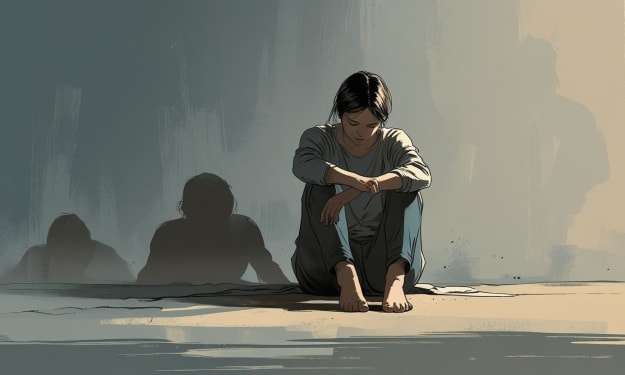
Meher sat by the window of her small living room, staring blankly at the world outside. Children ran in the street, their laughter echoing through the evening air. Neighbors exchanged greetings as they carried groceries home. Life seemed warm, full of ordinary joys. But inside her home, there was no warmth—only shadows, fear, and silence.
She had once believed in fairy tales, in the kind of love that healed wounds instead of creating them. When she first married Faizan, she thought he was her protector. He was charming, caring, and spoke to her with tenderness. For a few months, life was close to the dream she had built in her head. But slowly, the mask began to slip.
The first time he raised his hand, it was over something as small as a misplaced shirt. She had apologized, thinking it was just his bad temper, that maybe he was tired. He hugged her afterward, promising it would never happen again. She believed him. She wanted to believe him.
But once a line is crossed, it’s rarely redrawn. The slaps turned into punches, the insults into curses that cut deeper than any bruise. Every evening, Meher waited in dread for the sound of his footsteps at the door, praying he wouldn’t be angry, praying dinner would be exactly as he liked it, praying the children wouldn’t make noise.
Her life became a routine of fear. She covered her bruises with long sleeves and powdered her swollen cheeks with makeup. To the world, they looked like a normal couple. But behind closed doors, the walls had become witnesses to her suffering.
One winter night, when the rain lashed hard against the windows, Faizan returned home in a rage. His business deal had failed, and in his eyes, someone had to pay for his frustration. Meher’s heart raced the moment she saw his clenched jaw. She whispered a prayer, but it went unheard. His anger unleashed like a storm, leaving her breathless on the floor.
Her little daughter, barely six, had stood at the doorway, frozen, clutching her doll. Meher locked eyes with her child, and in that moment, she realized something broke deeper than bones—it was her child’s innocence, her child’s trust in the idea of love and family.
The next morning, Meher sat in front of the mirror, looking at the bruises scattered across her face. But this time, she didn’t reach for the makeup. Instead, she reached for strength—the strength she thought she had lost long ago. She thought about her daughter’s eyes, wide with fear, and she knew she could not let that image repeat.
It wasn’t easy. Leaving meant facing the unknown, the whispers of society, the fear of survival. But staying meant destroying herself and her children piece by piece.
She packed a small bag and left while Faizan was still asleep. With trembling hands, she held her daughter’s hand and stepped out of the house that had been nothing less than a cage. The cold air outside stung her skin, but for the first time in years, she breathed freely.
At a local shelter for women, she found other faces marked by the same story—wives, mothers, daughters, all of whom had endured silent wars within their homes. They welcomed her, not with pity but with understanding. For the first time, Meher didn’t feel alone.
Weeks passed, and she began rebuilding her life, brick by brick. She found a small job at a tailoring shop, started learning computer skills in the evenings, and slowly gathered the courage to stand tall. Her daughter began smiling again, her laughter no longer drowned by fear.
Faizan tried to lure her back with promises, apologies, even threats. But Meher had already crossed the bridge of fear. She was no longer the woman who believed bruises came with love. She was a survivor, a mother determined to give her child a future free of fear.
Her story became a quiet inspiration for other women in the shelter. She spoke to them, not with grand speeches but with the honesty of her scars. She reminded them that silence only feeds the cycle of violence, but courage—no matter how small—can break it.
The world outside still bustled with its ordinary joys, but now Meher walked through it with a steady heart. She was not just existing anymore—she was living. And in her journey, she found a truth she wanted every woman to know:
Love should never hurt. Respect is not optional. And silence is not strength—it is surrender.
Meher had chosen not to surrender. And in that choice, she found her freedom.
About the Creator
Hasbanullah
I write to awaken hearts, honor untold stories, and give voice to silence. From truth to fiction, every word I share is a step toward deeper connection. Welcome to my world of meaningful storytelling.
Keep reading
More stories from Hasbanullah and writers in Confessions and other communities.
“Raised by Shadows: The Lingering Wounds of Toxic Parents”
Growing up should feel safe. Childhood should be a sanctuary of warmth, love, and guidance—a time where we are nurtured, seen, and protected. But for many, home was not a place of healing—it was a battlefield. Instead of lullabies, there were insults. Instead of support, there was silence. And instead of love, there was control, manipulation, or fear.
By Hasbanullah8 months ago in Confessions
I was in a Toxic Relationship, with my Workplace
“You got that?” My ex yelled. His hands were balled into fists at his side. At six foot three, he towered over me. A normal person would have been afraid, but I looked up a video of George Lopez repeatedly saying, “I got this,” and showed it to him. I had grown used to this treatment, so much so that I didn’t blink when he ripped the phone from my hand and threw it across the room.
By Jade M.4 days ago in Confessions



Comments
There are no comments for this story
Be the first to respond and start the conversation.