
“Raised by Shadows: The Lingering Wounds of Toxic Parents”
How Childhood Emotional Abuse Shapes Us—And the Courage It Takes to Heal and Reclaim Your Life
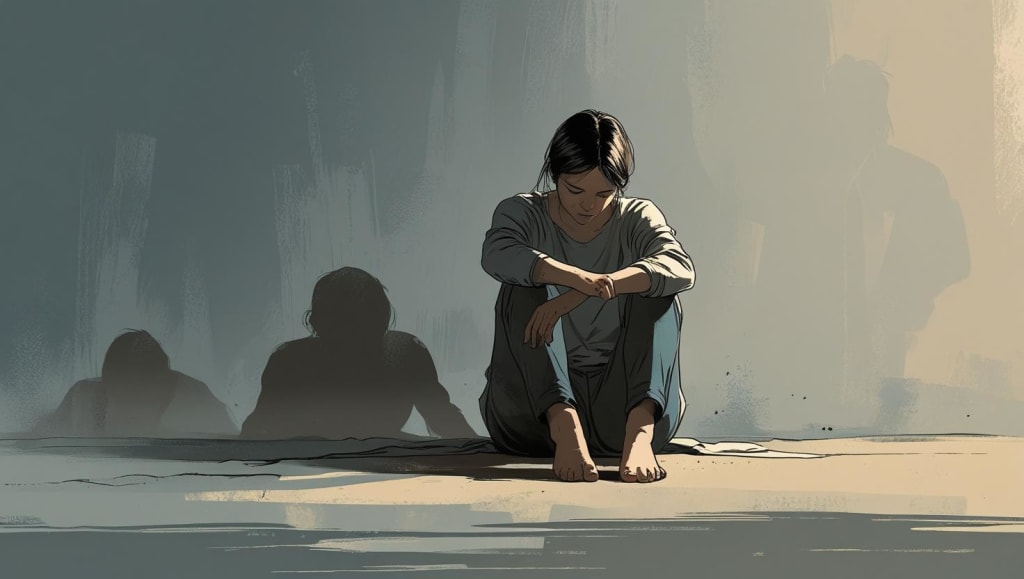
Growing up should feel safe. Childhood should be a sanctuary of warmth, love, and guidance—a time where we are nurtured, seen, and protected. But for many, home was not a place of healing—it was a battlefield. Instead of lullabies, there were insults. Instead of support, there was silence. And instead of love, there was control, manipulation, or fear.
If you were raised by toxic parents, you already know the haunting echo they leave behind. The wounds are not always visible. There are no broken bones, but the soul? Fractured. The heart? Guarded. The self-worth? Often in ruins.
This article isn’t just about pain—it’s about recognizing it, naming it, and finding the courage to heal. Because no matter how deeply rooted the damage, you have the power to reclaim your story.
---
What Does It Mean to Be Raised by Toxic Parents?
Toxic parenting isn’t always loud. It doesn’t always come in the form of beatings or screaming fits. Often, it is quiet cruelty—a subtle, steady erosion of a child’s sense of worth and identity.
Toxic parents may:
Constantly criticize, compare, or belittle.
Use guilt as a weapon to control.
Invalidate your feelings and experiences.
Ignore emotional needs or give affection only conditionally.
Create environments where love is earned, not given freely.
You may have grown up questioning your own reality, unsure if what you felt was real—because gaslighting was part of daily life. You were told you were “too sensitive,” “ungrateful,” or “dramatic” for reacting to hurtful words.
And so, you adapted. You became a people-pleaser. You hid your emotions. You became overly independent or cripplingly anxious. You worked endlessly to prove your worth—to them, to the world, and even to yourself.
---
The Invisible Scars: How Emotional Abuse Shapes Adults
Emotional abuse in childhood has lasting consequences that can carry over into every area of life:
1. Low Self-Worth
When your earliest caregivers made you feel like you weren’t enough, you internalized that belief. Even in adulthood, you may struggle to accept compliments, celebrate achievements, or believe you are lovable.
2. Fear of Abandonment or Intimacy
Toxic parenting can create attachment wounds. You might fear closeness, expecting betrayal. Or you may cling too tightly in relationships, desperate for the love you never received.
3. Perfectionism and Overachievement
You may have learned that love was earned only through performance. Now, as an adult, you overwork, over-give, or overextend yourself—hoping you’ll finally feel worthy.
4. Difficulty Setting Boundaries
Growing up, boundaries were likely ignored or punished. Now, saying “no” might feel selfish or unsafe, even when it's necessary for your well-being.
5. Inner Critic and Shame
The voice of a toxic parent often becomes your own inner voice. You may berate yourself before anyone else has the chance. Shame becomes your default emotion.
---
“But They Did Their Best…” – The Guilt That Silences Healing
Many adult survivors struggle with guilt. They think:
> “They had a tough childhood, too.”
“They fed me, clothed me—I should be grateful.”
“It wasn’t that bad. Others had it worse.”
These thoughts are normal. You’re trying to make sense of your past while protecting your heart. But here’s the truth: acknowledging your pain isn’t betrayal. It’s liberation.
You can hold compassion for your parents’ wounds without excusing how they wounded you. You can name your trauma without rewriting history. Healing begins with honesty.
---
Breaking the Cycle: The Courage to Heal
Healing from toxic parenting is not linear, nor is it easy. But it is possible. You are not doomed to carry this weight forever. You are allowed to become someone new—someone free.
Here are steps toward healing:
1. Acknowledge the Truth
It’s painful to admit that your parents failed you. But that truth is the doorway to healing. Name what happened. Mourn what you didn’t receive.
2. Learn to Reparent Yourself
You now have the power to give yourself what you were denied: love, validation, patience, protection. Speak gently to your inner child. Nurture them.
Ask:
What did I need as a child that I never got?
How can I give that to myself now?
3. Set Boundaries Without Guilt
Boundaries are not punishments—they are acts of self-respect. Whether it’s limiting contact or ending toxic conversations, you are allowed to protect your peace.
You are not cruel for walking away from people who repeatedly hurt you—even if they’re family.
4. Seek Support
You do not have to carry this burden alone. Therapy, support groups, and trusted friends can offer validation and tools for growth.
Books like:
“Adult Children of Emotionally Immature Parents” by Lindsay C. Gibson
“Complex PTSD: From Surviving to Thriving” by Pete Walker
can also be life-changing.
5. Rewrite the Narrative
You are not broken. You are not difficult. You are not unlovable.
You are someone who survived emotional starvation and still dares to seek love and joy. That is strength. That is resilience.
---
Forgiveness Is Not a Requirement—Peace Is
Many believe healing requires forgiving your parents. But forgiveness is your choice—not an obligation. What you need is peace. And sometimes peace means accepting that you may never get an apology, understanding, or closure from them.
Sometimes peace means letting go of the hope that they will change.
And that’s okay.
---
Your Past Does Not Define Your Future
You were raised in shadows—but you are not made of them.
You are allowed to build a life unlike the one you were given. A life where love is not conditional. Where your voice is heard. Where your feelings are valid. Where your soul can breathe.
Healing takes time, effort, and courage. But every boundary you set, every tear you cry, and every step you take toward self-love is a revolution.
You are not alone. Millions walk this path with you—quiet warriors learning to bloom in sunlight for the first time.
So take your time. Be gentle with yourself. And remember:
You are not the darkness you were born into. You are the light you chose to become.
About the Creator
Hasbanullah
I write to awaken hearts, honor untold stories, and give voice to silence. From truth to fiction, every word I share is a step toward deeper connection. Welcome to my world of meaningful storytelling.
Keep reading
More stories from Hasbanullah and writers in Confessions and other communities.
The Salute That Broke a Nation’s Heart
The sun was bright, almost uncomfortably so, on the morning when the officer stepped forward in full uniform. The crisp blue fabric, the gleaming badges, the medals pinned neatly to the chest—everything about the uniform spoke of discipline, duty, and decades of service. But the officer’s trembling hands and tear-filled eyes spoke of something far deeper: a heartbreak the world could barely imagine.
By Hasbanullah2 months ago in Confessions
I can feel it
I dunno what is in store with me ,but I feel like there’s going to feel something great : Have you ever in your life felt like that? Like as your heart is beating real fast with joy ? That feeling where you know or aware what it is ,but do not know what it is ( if that makes sense )? That feeling that you cannot put your finger on it ? That one where you have to keep silent and say what it is but not even a single soul ? Yeah that feeling.
By Erica Williams5 days ago in Confessions



Comments
There are no comments for this story
Be the first to respond and start the conversation.