
Pahalgam terror attack: ‘Hope Pakistan cooperates with India to make sure terrorists hunted down’, says US Vice President J D Vance
*Pahalgam Terror Attack: U.S. Vice President J.D. Vance Urges Pakistan-India Cooperation Against Militants*

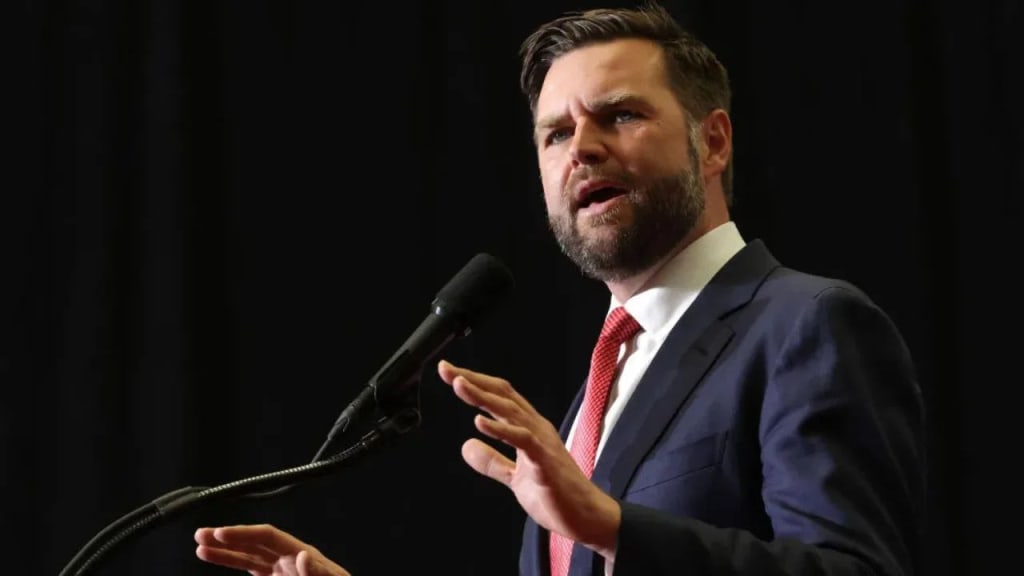
In the wake of the devastating Pahalgam terror attack on April 22, 2025, which claimed the lives of 28 civilians, U.S. Vice President J.D. Vance emphasized the importance of Pakistan cooperating with India to ensure that the perpetrators are brought to justice. The attack, targeting tourists in the Baisaran Valley of Indian-administered Kashmir, has intensified tensions between the two nuclear-armed neighbors, drawing international concern over potential escalation.
-- In an interview with Fox News, Vance added, “I am worried about any time you see a hot spot breaking out, especially between two nuclear powers. We have been in close contact with our friends in India and Pakistan.”
“Our hope here is that India responds to this terrorist attack in a way that it doesn’t lead to a broader regional conflict. And we hope that Pakistan, to the extent that they are responsible, cooperates with India to make sure that the terrorists sometimes operating in their territory are hunted down and dealt with. That’s how we hope this unfolds,” he said.
The Pahalgam Attack: A Detailed Account
On April 22, 2025, five armed militants launched a brutal assault on tourists in the Baisaran Valley near Pahalgam, Anantnag district. Armed with AK-47s and M4 carbines, the assailants targeted male tourists, reportedly asking their religion before opening fire. The attack resulted in 28 fatalities and 20 injuries, marking it as the deadliest incident in India since the 2008 Mumbai attacks. The Resistance Front (TRF), believed to be linked to Pakistan-based Lashkar-e-Taiba, initially claimed responsibility, citing opposition to Indian government policies in Kashmir, but later retracted the claim. [1]
---
U.S. Response: Calls for Cooperation and Restraint
Vice President J.D. Vance, during his visit to India, condemned the attack and expressed hope that Pakistan would collaborate with India in targeting Pakistan-based militants. He urged India to avoid escalating the situation into a broader regional conflict and stressed that Pakistan, if responsible, should act against militants operating from its territory. [2]
The U.S. State Department echoed these sentiments, condemning the attack and supporting India, while refraining from directly criticizing Pakistan. Secretary of State Marco Rubio engaged with officials from both countries to encourage de-escalation and a responsible resolution. [3]
---
Escalating Tensions Between India and Pakistan
Following the attack, India accused Pakistan of supporting cross-border terrorism, leading to a series of retaliatory measures:
- *Suspension of the Indus Waters Treaty*: India halted the water-sharing agreement, citing Pakistan's alleged support for terrorism.
- *Diplomatic Actions*: India expelled Pakistani diplomats and closed borders, while Pakistan suspended the Simla Agreement, restricted trade, and closed its airspace to Indian airlines.
- *Military Skirmishes*: Border skirmishes erupted along the Line of Control on April 24, 2025, further escalating tensions. [1]
- Pakistan denied involvement in the attack and called for an impartial investigation. Some Pakistani defense analysts labeled the attack as a false flag operation staged by India to malign Pakistan and Kashmiri freedom fighters. [4]
---
International Reactions and Concerns
The international community expressed condolences and concern over the attack and the subsequent escalation:
- *United States*: Beyond Vice President Vance's statements, the U.S. emphasized the importance of both nations working toward a responsible solution to prevent further conflict. [3]
- *United Nations and European Union*: Both entities condemned the attack and urged restraint from both India and Pakistan.
- *Neighboring Countries*: Countries like Afghanistan, Bangladesh, Bhutan, China, and Sri Lanka expressed condolences and called for peace in the region.
---
The Path Forward: Emphasizing Diplomacy and Cooperation
The Pahalgam attack underscores the fragile nature of India-Pakistan relations and the potential for rapid escalation following terrorist incidents. Vice President Vance's call for cooperation highlights the international community's desire for both nations to engage in dialogue and collaborative counter-terrorism efforts.
As investigations continue and diplomatic channels remain active, the hope is that both India and Pakistan can navigate this crisis through measured responses and mutual cooperation, ensuring regional stability and the prevention of future tragedies.
---
About the Creator
Krypton
Be happy,Be calm,Be Better,Be honest,Be Strong,Be faithful,Be Loving,Life is journey&I am a traveler.
Keep reading
More stories from Krypton and writers in Confessions and other communities.
Document shows Iran had imperial plans in Syria that were foiled by Assad’s collapse
In December 2024, the unexpected fall of Syrian President Bashar al-Assad marked a significant turning point in Middle Eastern geopolitics. For Iran, which had invested heavily in Syria both financially and militarily, Assad's ousting represented a substantial blow to its regional strategy and aspirations.
By Krypton 9 months ago in Confessions
Word of the Day: 推し
I am not putting any more time on my timer right now. I am just trying to get by here. There is almost no point to school because, like 35% of the time is technical difficulties and the rest of the time is things that actually aren't really useful.
By Kayla McIntosh6 days ago in Confessions



Comments
There are no comments for this story
Be the first to respond and start the conversation.