
Document shows Iran had imperial plans in Syria that were foiled by Assad’s collapse
Iran’s Imperial Ambitions in Syria Thwarted by Assad’s Collapse

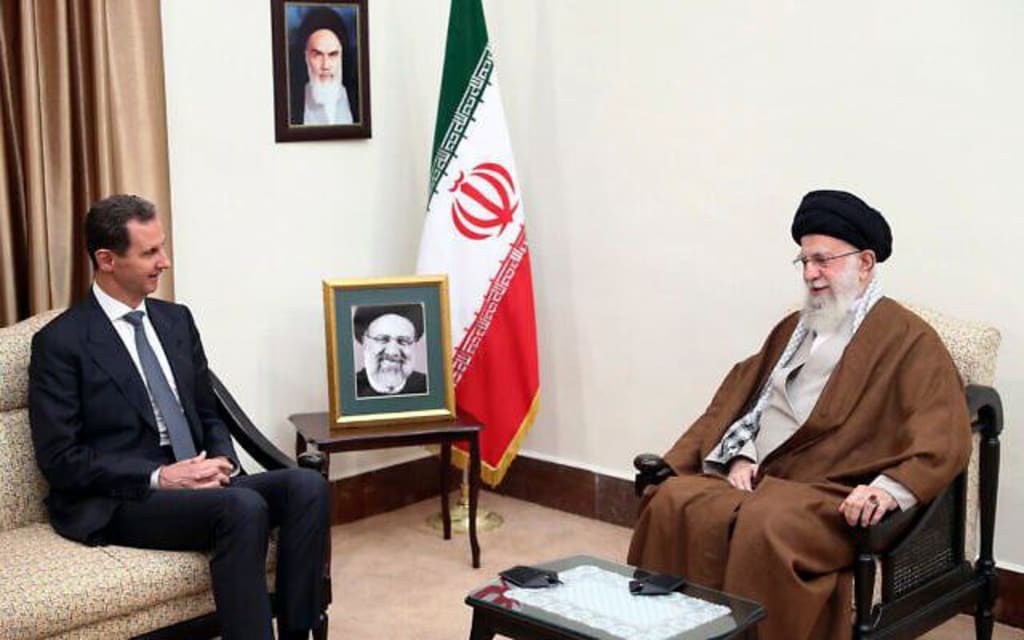
In December 2024, the unexpected fall of Syrian President Bashar al-Assad marked a significant turning point in Middle Eastern geopolitics. For Iran, which had invested heavily in Syria both financially and militarily, Assad's ousting represented a substantial blow to its regional strategy and aspirations.
---
Iran's Strategic Vision for Syria
Iran's involvement in Syria was not merely about supporting an ally; it was a calculated move to expand its influence in the region. A 2022 Iranian strategy document, uncovered by Reuters, revealed plans to transform post-war Syria into a key economic and strategic partner, akin to the U.S. Marshall Plan in Europe. This vision included rebuilding Syria's infrastructure, establishing economic dependencies, and solidifying political alliances [1] .
Tehran's ambitions were multifaceted:
- *Economic Integration*: Iran aimed to secure lucrative contracts in various sectors, including energy, telecommunications, and construction, to ensure long-term economic ties.
- *Military Presence*: By establishing bases and deploying forces, Iran sought to create a strategic foothold in the Levant, facilitating support to allied groups like Hezbollah.
- - *Cultural Influence*: Through educational and religious institutions, Iran intended to promote its ideological narratives and strengthen its soft power in Syria.
---
The Collapse of Assad's Regime
Despite Iran's extensive support, Assad's regime could not withstand the mounting pressures. In December 2024, a coalition of rebel forces launched a successful offensive, capturing Damascus and effectively ending Assad's rule [2] .
The rapid fall of the regime caught many off guard, including Iran. Iranian diplomats and military personnel were forced to evacuate, leaving behind significant investments and infrastructure projects [1] .
---
Financial and Strategic Losses
Iran's involvement in Syria came at a high cost. Estimates suggest that Iran invested over $50 billion in Syria, encompassing military aid, infrastructure projects, and economic assistance [3] .
The fall of Assad's regime meant that many of these investments were lost or left incomplete. Iranian companies faced unpaid debts, and numerous projects, including power plants and oil facilities, were abandoned [1] .
Moreover, the strategic land corridor that Iran had established through Iraq and Syria to Lebanon was disrupted, hindering its ability to supply Hezbollah and diminishing its influence in the region [4] .
---
Regional Implications
The collapse of Assad's regime had broader implications for Iran's regional strategy:
- *Weakened 'Axis of Resistance'*: Syria was a critical link in Iran's network of allied groups opposing Western and Israeli influence. Its loss disrupted coordination and support mechanisms [5] .
- *Increased Israeli and Turkish Influence*: With Iran's diminished presence, other regional powers, notably Israel and Turkey, expanded their roles in Syria, further sidelining Iranian interests [6] .
- *Domestic Repercussions*: The significant financial losses and strategic setbacks led to increased criticism within Iran, with calls for accountability and reassessment of foreign policy priorities [7] .
---
Iran's Response and Future Outlook
In the aftermath, Iranian leaders, including Supreme Leader Ayatollah Ali Khamenei, attributed Assad's downfall to foreign conspiracies, particularly by the U.S. and Israel [8] . However, internal critiques highlighted strategic miscalculations and overreliance on Assad's regime.
Looking ahead, Iran faces the challenge of recalibrating its regional strategy. With its influence in Syria curtailed, Tehran may focus on strengthening ties with other allies and exploring new avenues to assert its presence in the Middle East.
Conclusion
Iran's ambitious plans to establish a dominant role in post-war Syria were significantly undermined by the unexpected collapse of Assad's regime. The financial, strategic, and political losses underscore the complexities of regional interventions and the risks associated with overextension. As the Middle East continues to evolve, Iran's experience in Syria serves as a cautionary tale of the challenges inherent in pursuing imperial ambitions amidst a volatile geopolitical landscape.
---
About the Creator
Krypton
Be happy,Be calm,Be Better,Be honest,Be Strong,Be faithful,Be Loving,Life is journey&I am a traveler.
Keep reading
More stories from Krypton and writers in Confessions and other communities.
Talks or no talks: who blinks first in US-China trade war?
Talks or No Talks: Who Blinks First in the US-China Trade War? The protracted trade conflict between the United States and China has entered a critical juncture. Recent developments suggest a potential thaw in relations, yet underlying tensions persist. This article delves into the current state of the trade war, examining the recent agreements, economic impacts, and the strategic calculations of both nations.
By Krypton 10 months ago in Confessions
Inside the Palace: The Moment I Realized the Royal Story Was More Complicated Than We Were Told
I still remember the moment when a single sentence from the palace changed the tone of a global conversation. At the time, it seemed simple. Calm. Diplomatic. But looking back now, that moment carried more weight than most people realized.
By CelebCast Central3 days ago in Confessions
The Forsyth House Fire
Since 1851, Forsyth House has stood on the corner of Union Street and Gordon Street in the heart of Glasgow. Its iconic, or was... because on Sunday 8th of March, 2026, a fire broke out in a small, seemingly un-named shop in the building and tore all that history down. As I write, the rubble is still unsettled and the street is still blocked off. Central Station is quiet on the upper level, and around 30 small businesses have quite literally gone up in smoke.
By S. A. Crawforda day ago in The Swamp



Comments
There are no comments for this story
Be the first to respond and start the conversation.