
Lessons from the Dying We Can't Afford to Ignore
The 5 Regrets That Could Change Your Life

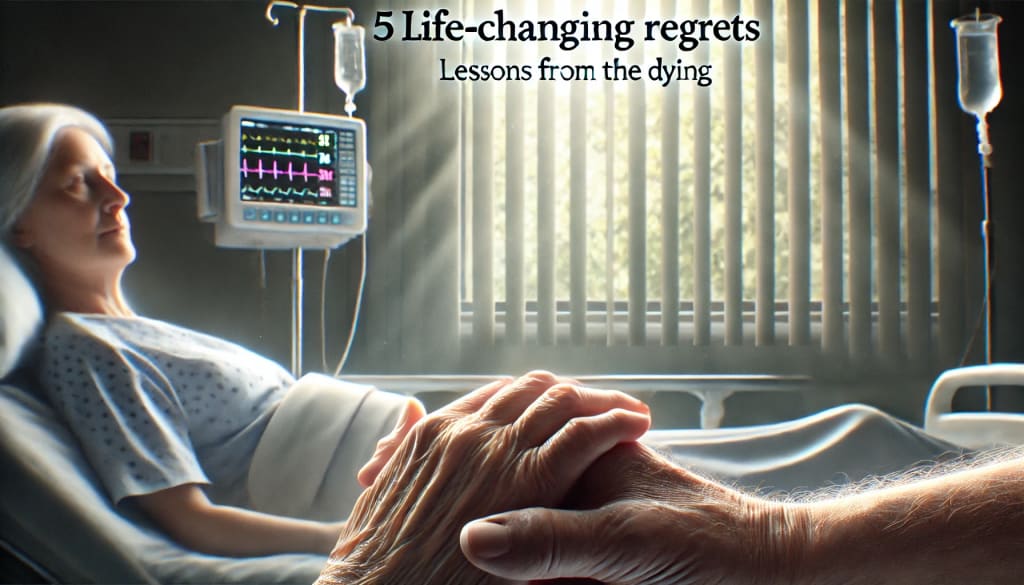
Imagine lying on your deathbed, reflecting on your life. What would you wish you’d done differently? The truth is, most of us spend our lives running, chasing, and striving—only to realize too late what truly matters. In our relentless pursuit of success, we often overlook the simple joys, the deep connections, and the authentic selves we leave behind. But what if we could learn from those who have already walked this path? What if their regrets could become our guideposts, helping us live a life without regret?
As we navigate the complexities of life, it's easy to get caught up in the hustle and bustle, forgetting the deeper essence of what it means to live fully. We often postpone our dreams, suppress our true feelings, and let precious relationships slip away, all while convincing ourselves that there will be time to fix it later. But what if that "later" never comes? What if the final moments of our lives are marked by regret? Bronnie Ware, a palliative care nurse, spent years tending to the terminally ill, listening to their stories, and witnessing their most profound regrets. Her experiences culminated in a powerful revelation: the five most common regrets of the dying. These regrets, shared by those who had reached the end of their journey, offer a profound lesson for the living—a roadmap to a life lived without regret.
Regret #1: I Wish I’d Had the Courage to Live a Life True to Myself
This was the most common regret expressed by those nearing the end of their lives. Ware’s patients often spoke of dreams that went unfulfilled, of paths not taken, and of lives lived according to the expectations of others rather than their own desires. When faced with the stark reality of their impending death, the illusion of time shattered, revealing the precious opportunities that were squandered. They realized, often too late, that they had been living a life dictated by societal norms, family expectations, or the desire to please others, rather than following their own passions and dreams.
The fear of judgment, failure, or disappointing others often holds us back from pursuing our true desires. We conform to the roles we believe we should play—dutiful child, responsible parent, reliable employee—without questioning whether these roles align with our true selves. Over time, this dissonance between who we are and who we think we should be creates a life of quiet desperation, where our true potential remains locked away.
The Consequence of Living for Others
When people realize that their life is almost over and look back clearly on it, it's easy to see how many dreams have gone unfulfilled. Most people had not honored even half of their dreams and had to die knowing that it was due to choices they had made, or not made. The courage to live true to oneself requires breaking free from the constraints of societal expectations and daring to pursue a path that resonates with our innermost desires. It’s about honoring our own values, pursuing our passions, and living authentically, even if it means going against the grain.
The consequence of living for others is not just a life unfulfilled but a life lived in quiet resentment. This resentment can manifest in various ways—bitterness, depression, a sense of being trapped in a life that doesn’t feel like our own. As Ware’s patients reflected on their lives, they recognized that the time they had spent conforming to others’ expectations was time they could never get back. The dreams they had postponed, the passions they had ignored, were lost to them forever.
Overcoming the Fear of Authenticity
Living authentically requires courage. It means being true to ourselves, even when it’s difficult, even when it means disappointing others or taking risks. It’s about understanding that our lives are our own and that we have the right—and the responsibility—to live them as we see fit. This might mean pursuing a career that others don’t understand, making lifestyle choices that go against the norm, or simply allowing ourselves to be who we truly are.
Overcoming the fear of authenticity involves recognizing that the opinions of others, while they may seem important, are ultimately irrelevant to our happiness. What matters is how we feel about the lives we are living. Are we content? Are we fulfilled? Are we living in a way that aligns with our values and desires? If the answer is no, then it’s time to make a change.
Regret #2: I Wish I Hadn’t Worked So Hard
For many, the relentless pursuit of career success comes at a significant cost: time with loved ones. Ware's patients, particularly men, expressed deep sorrow over the countless hours spent at work, missing out on their children's milestones and the companionship of their partners. They had spent the majority of their lives on the treadmill of a work existence, believing that financial success was the key to happiness and fulfillment. However, as they approached the end of their lives, they realized that the things they had sacrificed for their careers were the very things that mattered most.
The Illusion of Work-Life Balance
In today’s society, work often takes precedence over everything else. We are conditioned to believe that our worth is tied to our productivity, that success is measured by our professional achievements, and that the more we work, the more successful we will be. This belief system creates a culture where work becomes the center of our lives, and everything else—family, friends, hobbies, self-care—becomes secondary.
The problem with this approach is that it’s unsustainable. Human beings are not machines; we cannot work endlessly without experiencing burnout, stress, and a decline in our overall well-being. Moreover, the more time we spend at work, the less time we have to invest in the relationships and activities that truly bring us joy and fulfillment.
The Cost of Overworking
The cost of overworking is not just physical and mental exhaustion; it’s the loss of the precious moments that make life meaningful. Ware’s patients spoke of missing out on their children’s childhoods, of being absent during important milestones, of losing touch with their partners, and of sacrificing their health in the name of work. They realized, too late, that no amount of professional success could compensate for the loss of these irreplaceable experiences.
The irony is that, in the end, our careers will not be the things we remember most fondly. When we are on our deathbeds, we won’t be thinking about the promotions we received, the projects we completed, or the hours we spent at the office. Instead, we will be thinking about the people we loved, the moments we shared, and the memories we created. If we have sacrificed these things for the sake of work, we will be left with nothing but regret.
Redefining Success
To avoid this regret, we need to redefine what success means to us. Instead of measuring success by our professional achievements, we should measure it by the quality of our lives—the richness of our relationships, the fulfillment of our passions, and the contentment we feel in our day-to-day lives. Success should not be about how much we achieve, but about how well we live.
This doesn’t mean that work isn’t important or that we shouldn’t strive for excellence in our careers. It simply means that work should be one part of a balanced and fulfilling life, not the whole of it. By making conscious choices about how we spend our time, by setting boundaries around our work, and by prioritizing the things that truly matter, we can create a life that is both successful and fulfilling.
Regret #3: I Wish I’d Had the Courage to Express My Feelings
Burying emotions to keep the peace may seem like the easier path, but it often leads to a life of mediocrity and unfulfilled potential. Many of Ware’s patients harbored bitterness and resentment, having never expressed their true feelings. They had spent their lives suppressing their emotions, afraid of conflict, afraid of being vulnerable, afraid of being rejected. But in the end, they realized that by hiding their true selves, they had denied themselves the opportunity to live fully and authentically.
The Cost of Suppressing Emotions
Suppressing our emotions may seem like a way to avoid conflict, but it comes at a high cost. When we bury our feelings, we also bury our true selves. We deny our own needs and desires, and we live a life that is not fully our own. Over time, this can lead to a sense of emptiness, dissatisfaction, and even physical illness. Ware’s patients spoke of the illnesses they developed as a result of their unexpressed emotions—illnesses that could have been avoided if they had only had the courage to speak their truth.
The cost of suppressing emotions is not just internal; it also affects our relationships. When we hide our true feelings, we create distance between ourselves and others. We may appear to be keeping the peace, but in reality, we are building walls that prevent us from truly connecting with the people we care about. This can lead to a sense of isolation and loneliness, even in relationships that are outwardly close.
The Power of Vulnerability
Expressing our feelings requires vulnerability. It means allowing ourselves to be seen and heard, even when it’s uncomfortable. It means risking rejection, conflict, and judgment in order to be true to ourselves. But the rewards of vulnerability are profound. When we allow ourselves to be vulnerable, we create the possibility for deeper, more meaningful connections with others. We open the door to greater intimacy, understanding, and acceptance.
Vulnerability is not a sign of weakness; it is a sign of strength. It takes courage to be honest about our feelings, to stand up for what we believe in, and to show others who we really are. But in doing so, we free ourselves from the burden of living a life that is not fully our own. We create the possibility for a life that is rich, authenticand fulfilling, and we open ourselves to the possibility of living a life without regret.
Regret #4: I Wish I Had Stayed in Touch with My Friends
In the final weeks of their lives, many of Ware’s patients expressed deep sorrow over the friendships they had let slip away. Life, with all its demands and distractions, had pulled them in different directions, and before they knew it, years had passed without contact with those who had once been dear to them. It was only when faced with the end that they realized the true value of these relationships and the regret of not nurturing them.
The Importance of Relationships
Human beings are social creatures by nature. Our relationships with others are among the most significant aspects of our lives. Friends provide us with support, companionship, and a sense of belonging. They share in our joys and sorrows, and they enrich our lives in ways that material success or professional achievements never can.
Yet, as life becomes busier and more demanding, friendships often take a backseat. We may intend to reach out, to reconnect, but other priorities get in the way. Before long, the distance grows, and the once-strong bonds begin to fade. By the time we realize the importance of these relationships, it may be too late.
The Consequences of Neglecting Friendships
The neglect of friendships can lead to a deep sense of loneliness and regret. As Ware’s patients approached the end of their lives, they recognized that the connections they had once taken for granted were among the things they missed the most. They regretted not making the effort to stay in touch, to nurture those relationships, and to let their friends know how much they meant to them.
Friendships require time, effort, and commitment. They need to be nurtured, just like any other important aspect of our lives. When we neglect our friendships, we miss out on the joy, support, and love that these relationships bring. We also lose the opportunity to share our lives with others, to create lasting memories, and to experience the deep sense of connection that only true friendship can offer.
Reconnecting and Strengthening Bonds
To avoid this regret, it’s essential to prioritize our friendships. This means making time to connect with friends, even when life is busy. It means reaching out, staying in touch, and letting our friends know how much we value them. It also means being there for our friends in times of need, supporting them, and sharing in their lives.
Reconnecting with old friends can be a powerful way to rekindle the bonds that have faded over time. It may feel awkward at first, but the effort is often worth it. Many people find that once they reach out, their friends are eager to reconnect as well. By taking the initiative to revive old friendships, we can rediscover the joy and connection that these relationships bring.
Regret #5: I Wish That I Had Let Myself Be Happier
Happiness, as it turns out, is a choice—a choice that many fail to make. Trapped in patterns of routine and fear of change, Ware’s patients often realized too late that they had the power to choose joy. This final regret is a call to embrace happiness now, to seek out the things that make us smile, and to allow ourselves the freedom to enjoy life fully.
The Misconception of Happiness
Many people believe that happiness is something that happens to them, rather than something they can actively choose. They think that happiness depends on external circumstances—success, wealth, relationships, or the approval of others. As a result, they spend their lives chasing these things, hoping that they will bring them happiness.
However, true happiness is not dependent on external factors. It comes from within, from the choices we make and the attitudes we adopt. We can choose to be happy, regardless of our circumstances. We can choose to focus on the positive aspects of our lives, to appreciate what we have, and to find joy in the simple things.
The Cost of Neglecting Happiness
When we neglect our own happiness, we often end up living a life of quiet discontent. We go through the motions, doing what we think we should do, rather than what brings us joy. We stay stuck in routines, afraid to take risks or make changes that could lead to greater happiness. We convince ourselves that we’ll be happy once we achieve certain goals or meet certain expectations, but the truth is, happiness doesn’t work that way.
Ware’s patients often spoke of the years they had spent living in a state of mild dissatisfaction, believing that happiness was something they would achieve later. But as they approached the end of their lives, they realized that they had wasted precious time waiting for happiness to arrive, when they could have chosen it all along.
Choosing Happiness
Choosing happiness requires a shift in mindset. It means recognizing that we have the power to create our own happiness, regardless of our circumstances. It means letting go of the belief that happiness is something we have to earn or achieve, and instead embracing the idea that happiness is a choice we can make every day.
This doesn’t mean ignoring the challenges or difficulties in our lives. It simply means choosing to focus on the positive, to find joy in the present moment, and to make choices that align with our true desires. It means taking responsibility for our own happiness, rather than placing it in the hands of others or in the future.
Living Without Regret
The regrets of the dying offer us a powerful lesson: life is short, and the choices we make today will determine the quality of our lives tomorrow. By learning from their experiences, we can make choices that lead to a life lived fully and without regret.
To live without regret, we must have the courage to be true to ourselves, to prioritize what truly matters, to express our feelings, to nurture our relationships, and to choose happiness. These are not always easy choices, but they are the choices that lead to a life well-lived.
As you move forward in your own life, take a moment to reflect on these lessons. Are you living a life true to yourself? Are you prioritizing the people and moments that matter? Are you expressing your true feelings? Are you nurturing your relationships? Are you choosing happiness? The power to change your story is in your hands. Don’t wait until it’s too late to live the life you deserve.
Conclusion: Embrace Life’s Final Lessons
Life is fleeting, and the wisdom of those who have lived it fully—or not—offers us a powerful guide. The regrets of the dying are not just reflections of the past; they are lessons for the living. They remind us to live courageously, to prioritize what truly matters, and to make choices that lead to a life without regret.
As you read these words, consider what changes you can make in your own life. How can you live more authentically? How can you balance your work with your personal life? How can you express your true feelings? How can you nurture your relationships? How can you choose happiness, every day?
The answers to these questions may not come easily, but they are worth pursuing. By embracing these lessons, you can create a life that is rich, fulfilling, and free from the burden of regret. You can live a life that, when you reach the end of your journey, you can look back on with a sense of peace, knowing that you have lived fully, loved deeply, and embraced the joy that life has to offer.
Take a moment to reflect on your own life. What are your dreams? What are your passions? What relationships do you want to nurture? What changes do you need to make to live more authentically and fully? The answers may be difficult, but they are worth finding. Life is too short to live with regret. Choose today to live a life that is true to yourself, that prioritizes what matters most, and that embraces happiness, every step of the way. Your future self will thank you.
About the Creator
Keep reading
More stories from Matthew Adekanmbi and writers in Confessions and other communities.
The Hidden Blueprint for Success
Imagine if there were a set of principles—simple yet profoundly effective—that could transform your life, elevate your success, and help you achieve your highest potential. What if I told you that these principles are not only within your reach, but that they have already been practiced by some of the most successful people in the world? This is the promise of Stephen Covey's The 7 Habits of Highly Effective People.
By Matthew Adekanmbiabout a year ago in Lifehack




Comments (1)
Great work on this article. I do not have any regrets. I worked as a CNA at a nursing home for almost two years before becoming an LPN along with also becoming an Activities Assistant/Director where I worked as an LPN when the Music therapist was at conferences or vacations. I have also earned a second Bachelors degree as well as a Masters and Doctorate in Education. I am now after 16 years as a nurse/activities assistant I am a writer having published articles in a few educational magazines and here on Vocal over the past years.