Latest Stories
Most recently published stories in Confessions.
Men Didn’t Read a Word But They Still Tried to Shut Me Up
I knew it the moment the comments started rolling in. Not because they were angry, or dismissive, or even predictable, but because they were arguing with a version of my article that simply did not exist. They weren’t responding to my words. They were responding to a title they’d skimmed, a feeling they’d had, a story they’d already decided I was telling before I ever got the chance to finish telling it.
By No One’s Daughter19 days ago in Confessions
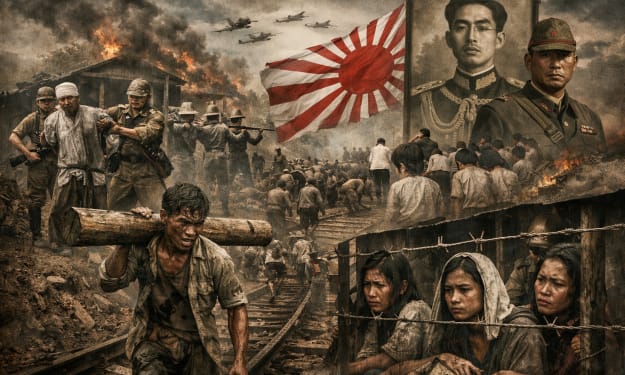
Japan’s Occupation of Indonesia: When “Asian Liberation” Turned Into Systematic Brutality. Content Warning.
During the chaos of World War II, as Southeast Asia became a battleground for competing empires, Japan entered Indonesia under a slogan that appeared revolutionary at the time: Asia for Asians. To a population that had endured more than three centuries of Dutch colonial rule, the collapse of European authority in 1942 seemed, at first, like the dawn of a new era. It was not. What followed was not liberation, but a militarized occupation that proved more violent, more intrusive, and in many ways more destructive than the colonial system it replaced. Within three years, Japan reshaped Indonesian society through fear, forced labor, starvation, and cultural coercion—leaving scars that remain deeply embedded in the nation’s collective memory. Indonesia was, and remains, a predominantly Muslim society. Islam was not only a religion, but the backbone of social organization, education, and moral authority. Mosques, scholars, and Islamic associations connected villages across the archipelago, forming networks capable of mobilizing large segments of the population. To the Japanese military administration, this was not spirituality—it was a potential threat. From the earliest months of occupation, Islam was treated as a security issue. Religious schools were closed or tightly restricted. Sermons were censored, and imams were required to submit their speeches for approval. Major Islamic organizations were placed under constant surveillance, not because they opposed Japan at the time, but because the occupation understood that faith-based unity could quickly turn into organized resistance. The most catastrophic policy imposed on Indonesians was the forced labor system known as Romusha. Entire communities were emptied overnight. Young men were taken by force and transported to work sites deep in jungles, mountains, and remote construction zones. They were used to build roads, military facilities, and railways under inhumane conditions—without adequate food, medical care, or rest. Death was routine. Starvation, disease, beatings, and exhaustion claimed hundreds of thousands of lives, and some estimates suggest the number may exceed one million. There were no proper records. To be taken as a Romusha laborer was, in effect, to disappear. One of the most infamous projects was the Burma–Thailand “Death Railway.” While international narratives often focus on Allied prisoners of war, far less attention has been given to Indonesian Muslim laborers, who constituted a larger portion of the workforce and suffered even higher mortality—without names, graves, or recognition. Women were subjected to a different form of violence. The Japanese military established a widespread system of sexual slavery known as the “comfort women” system. Thousands of Indonesian Muslim girls were abducted from their villages and confined in military facilities, where they were repeatedly abused. For decades, silence surrounded this crime—not because it was unknown, but because shame, fear, and social pressure buried the victims’ voices. Economic life collapsed under the demands of Japan’s total war strategy. Rice harvests were confiscated to supply the military, transforming food into a weapon of control. By 1944 and 1945, famine spread across large parts of Indonesia. Villagers survived on wild plants, while child mortality rates soared. Hunger was not incidental—it was systemic. Any attempt at dissent was met with extreme punishment. Religious scholars who spoke out were executed publicly, imprisoned, or buried alive. Education was restructured to glorify the Japanese emperor, portrayed as a divine figure. Teaching Arabic and the Qur’an was restricted, and children were forced to recite imperial slogans that directly contradicted their religious beliefs. When Japan surrendered in August 1945, it left behind a devastated nation—exhausted, hungry, and traumatized. Yet paradoxically, this period of intense suffering accelerated Indonesia’s path toward independence. Within days of Japan’s defeat, Indonesian leaders declared sovereignty, having learned firsthand that no foreign power’s slogan could substitute for genuine self-determination. Japan’s occupation of Indonesia stands as a stark historical lesson: political narratives of “liberation” can conceal systems of exploitation and mass violence. And for Indonesia’s Muslim population, the cost of that deception was paid in blood, dignity, and generations of silence.
By Echoes of the Soul20 days ago in Confessions
Officials discover a million more documents potentially related to Epstein case
US authorities have discovered more than a million more documents potentially related to the late paedophile Jeffrey Epstein that they plan to release in the coming days and weeks, officials say.
By Dena Falken Esq20 days ago in Confessions
The Courage to Speak When It’s Uncomfortable
Speaking up is easy when the room agrees with you. It’s easy when your voice is welcomed, validated, and applauded. The real test of courage begins in moments when your words may disrupt comfort, challenge norms, or expose vulnerability. Speaking when it’s uncomfortable is not about being loud—it’s about being honest, even when honesty feels risky.
By Aiman Shahid20 days ago in Confessions
The Ghost on the Floorboards
The house breathes around me. It’s an old house, full of settling groans and the low hum of the refrigerator. Two in the morning, another Tuesday, another bottle of cheap whiskey working its way through my bloodstream. The wife's asleep upstairs, snoring softly, a familiar, comforting sound, if you don’t think about it too hard. The kids, grown now, gone. Just me, the bottle, and the goddamn moonlight pouring in through the living room window, painting stripes across the hardwood.
By HAADI20 days ago in Confessions
I felt loved.
For the first time I felt different. I felt like I don't have to pretend anymore. I was accepted as I was. Oldest friend of mine, whom I met after completing my 10th grade. I joined an institute that would cover the gap between 10th and 11th basically called bridge course. I joined the afternoon classes but it felt like my whole day was occupied. So, during last days, I changed my class time and shifted to morning classes.
By Samairaa 21 days ago in Confessions
THE NATURE OF ABANDONMENT
On the first week of December, I attended a conference where I sat on an academic panel with leading medical experts, and leaders within the empowerment realm, who extensively study, research, and examine the complex abnormal nature of abandonment. Within my lecture, I candidly spoke about the role that acute exposure to abandonment manifests on a survivor, from my personal unfiltered lived truth, perspective, and lived experience. I would like to share my direct lived experience to help heal the soul’s of others who have experienced the pain of loss, deprivation, negligence, and powerlessness. I can only represent the view of having lost both biological parents, not through death, but through their conscious will of abandoning me collectively, at the age of six months. My status as an orphan resulted from abandonment, which became a defining moment that shaped my understanding of trauma, loss, and the recovery process. Within my work, I advocate for personal empowerment and emancipation from destruction, by moving beyond narrative truths imposed by others. One must define their life on their own terms rather than remaining subjected to injustice, intolerance, or the act of dismantling one’s core foundational truths or identity. Within the state of abandonment one must rise beyond the state of permanent victimhood, and transformatively view it as a catalyst for one’s spiritual mission, growth, and purpose. Deprivation is a destructive act, however, it ultimately provides one with the profound understanding of the recovery process. One is not defined by their circumstances or past traumatic events. I often advocate for emancipation from others’ narratives, which astutely and fundamentally instructs and teaches all that one’s worth and value are not diminished by the act of alienation, isolation, abandonment, or severe forms of neglectful punishment. My divine purpose results from my direct experience with abandonment, as I help others rebuild after devastating life events. The internal pain one encounters, confronts, or introspectively examines within, is an instrumental teacher that fosters continued introspective wisdom, perseverance, resilience, and strength. Despite the act of becoming an orphan, I would like to express my deepest gratitude for being raised by my paternal Aunt and Grandmother, who provided me empathetic compassionate unconditional love and stability that I internally needed to overcome my traumatic start. My philosophical approach is based on proactive resilience, as one must consciously choose a better path rather than stagnating in loss, despair, and grief. If one lacks stability, they have the power to create it for themselves, as we become what we lack. Within my practice, I advocate for peace, empowerment, and personal emancipation which is rooted in the belief that individuals must transcend the narratives or confines of their past and external perceptions to reclaim their inner power, peace, and sovereignty. The negative narrative truths or conceptions imposed by another or others, are merely internal dialogues of those individuals, and do not reflect one’s actual worth or value. One is not born from sin, and within life, is deserving of unconditional love, support, and compassionate care. The core principles of my emancipation philosophy honours the role and the act of transcending the past. Survivors must not give power to the historical lessons of abandonment, injustice, or betrayal. Instead, once an individual ignites inner hope and ambition, they become unstoppable and unconstrained by their past narratives. One must define their internal truth and not allow another to define their existence. An individual’s worth is not diminished by the acts of others, or by catastrophic events that might destroy one’s foundational sense of self. Personal truth is something that must be awakened from within, rather than sought through external confirmation. Emancipation, liberty, and freedom are achieved through the act of release. Salvation is achieved and derived from forgiveness. By letting go of what can no longer be controlled, one can then acutely achieve a state of autonomous sovereignty and internal peace. I am not ashamed of my past, as its act of turbulence and turmoil enabled my soul to restore its fragments within time. Through the process of destruction, one is reawakened to their purpose. One must move beyond the ingrained misguided direction from society, such as the ideological construct that a fragmented soul is broken beyond repair, and cease to subscribe to the narrative or belief, that one will forever remain within a state of sacrifice, powerlessness, loss, or constant fear. One must view their scars as opportunities for growth, expansion, and light. As one honours their light within, they achieve self-mastery over the force of reaction. My methodology involves shifting from a reactive state which is primarily driven by the ego and past programs to a conscious ascended state of choice, where individuals take full accountability and responsibility for their own emotional existence. Abandonment, while initially destructive to one’s foundational sense of self, acts as a catalyst which enables one to achieve profound internal peace and self-respect through the pursuit of autonomous sovereignty and emancipation. One must achieve peace through transformative transcendence. Abandonment forces one to understand the nature of negligence, deprivation, by examining the force of control and destruction. One has to question, what does freedom mean to them? How does respect unfold within the state of freedom? One cannot truly comprehend peace without first understanding the terrors of great destruction and devastation. Abandonment provides this stark contrast, allowing an individual to eventually recognize peace as their natural state once they choose to disconnect from destruction. Forgiveness is a source of liberation. Internal peace is attained through forgiveness, which is a conscious level decision to stop giving power to the lessons of abandonment. This forgiveness affords the survivor liberation and autonomous sovereignty. One must understand the nature of release and control. Letting go of the need to control the past or disabling the need to absorb others’ perceptions enables the restoration of peace within. By dropping negative emotions and lifting the cataracts off of the mind, individuals then allow life to unfold naturally, which restores their inner balance and peace. Reclaiming self-respect and freedom enables a survivor to experience and attain peace and sovereign will through the establishment of boundaries, rising from their embedded scars, recognition of their self-worth, and emancipation from the narratives which confined their existence. Projections are not ultimate truths, therefore, one must restore their sense of self beyond the actions of another. Recognition of worth is achieved through self-love, self-acceptance, and self-respect. Self-respect grows from the realization that one’s life is inherently valuable and worthy despite the experience of being left behind. This inner work creates a foundation for self-love that is not contingent on external validation. Emancipation from narratives eclipses the power of conditioning programs, repetitive approaches, internal perceptions, presumptions, and projections of misconceptions, falsifications, or illusions. Freedom is achieved by moving beyond the narrative of the past and identifies the influence from external sources such as the negative dialogues of others. Survivors must separate from those who hinder their recovery to maintain their empowered state of happiness. One must seek to preserve and protect their inner peace. Establishing boundaries is the ultimate form of self-respect. Self-respect is reinforced by evoking discernment and boundaries, defining exactly what one will no longer partake in, while remaining in their true power of the present. Rising from one’s embedded scars enables recovery, expansiveness, and enlightenment. Rather than seeing abandonment as a flaw, one must view their scars as tiger stripes. Our soul core wounds, sacred core roots, and embedded scars, all provide an opportunity to allow light to enter within and grants the opportunity for the true authentic self to rise again. With forgiveness and compassion, I have reached a place of peace regarding my biological parents. It is my greatest hope that their lives are filled with love and joy, as their only mission was to bring me into this world, and their conscious decision to leave, was part of their own path and trajectory. Although my story is one of many, as abandonment, deprivation, neglect, and abuse are universal, my soul needs to bring awareness to these internal truths, as abandonment has become one of the leading epidemics of our time which instills mistrust, a sense of powerlessness, and internal fear within its victims.
By ELISABETH BABARCI 21 days ago in Confessions
The Weight of the Falling Quiet
The streetlights outside Elias’s window were just dim blurs now, swallowed by the relentless descent. Big, fat flakes, not the tiny stinging kind, but soft, almost lazy, piling up fast. They coated everything, smoothed out the sharp edges of the world. Power lines, fences, the gnarled branches of the old oak in his yard — all turned into soft, white ridges. The quiet. God, the quiet. That was the worst part, always.
By HAADI21 days ago in Confessions