
I Was the Only Man in a Women’s Domestic Violence Shelter
What matters is that I survived

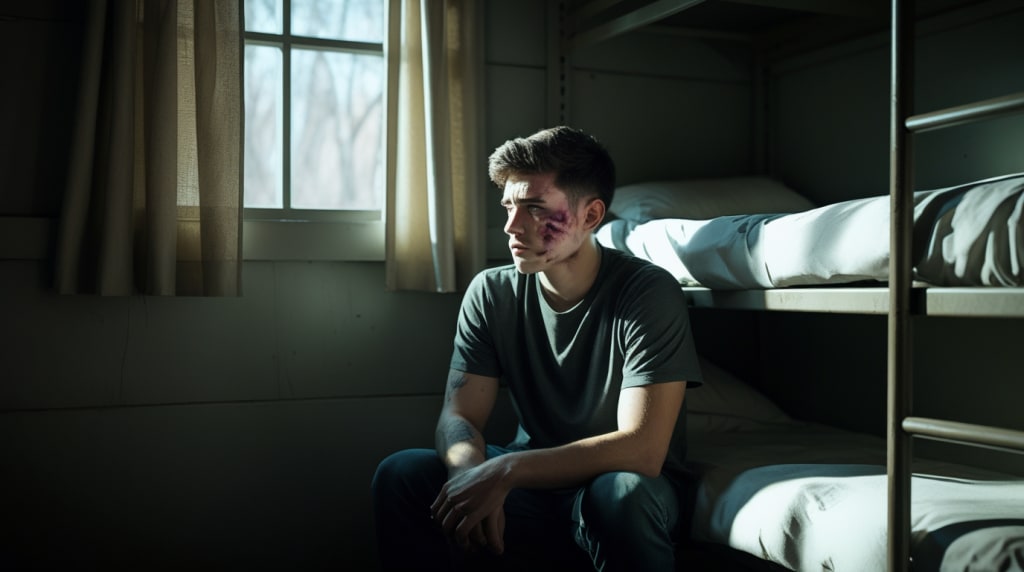
When I checked into the shelter, I could feel their eyes. Women clutching children, bruises hidden under sleeves and scarves, looked up at me like I didn’t belong—because I didn’t.
I was the only man in a domestic violence shelter.
To most people, that sentence doesn’t even make sense. “Domestic violence” and “man” don’t coexist in their heads unless the man is the perpetrator. I used to think the same way—until I lived the opposite side of it.
Her name was Mira. We met in college. She was bright, loud, magnetic—the kind of woman who made the world orbit around her. I was quieter, more grounded. At first, we balanced each other. She encouraged me to take risks, to speak up more. I helped her calm down when her anxiety spiraled. We made sense.
But things change.
It started small. Her controlling nature disguised as love. “Don’t go out tonight—I missed you all day.” “Why are you texting her? You said she’s just a coworker.” “Wear this instead—I like how it looks on you.”
It didn’t feel like abuse. It felt like caring.
But over time, the caring turned cruel. She would explode over minor things. The first time she hit me, I had forgotten to buy oat milk. She threw the carton of regular milk at me. Then her phone. Her fists. I remember the smell of sour dairy on the kitchen floor, and the sting on my cheek where her ring had sliced skin.
She apologized afterward, sobbing uncontrollably. “I just lost control. I’m so sorry. You make me crazy, you know that?” I held her while she cried, wondering if maybe I had provoked her.
The cycle repeated. Again. And again. Verbal, emotional, physical. It eroded me. The shame was unbearable. I couldn’t tell my friends. I couldn’t tell my family. What would I even say? “My girlfriend hits me”? They’d laugh. Or worse—they’d doubt me.
I left when I feared I wouldn’t survive. That’s not dramatization—it’s fact. One night, she woke me up by smashing a mug on the floor beside our bed. “You’re not leaving me,” she said. “Not unless you leave in a box.”
I packed a bag and ran.
I ended up at a shelter I found through a late-night Google search. When I called and said I was a man in need of emergency housing due to partner abuse, the silence on the other end was deafening. But they took me in.
The first few days were hard. No one spoke to me. I could feel the tension whenever I walked into a shared space. The staff were kind but cautious. The women? They didn’t trust me—and honestly, I didn’t blame them. I looked like every man who had hurt them. But I wasn’t.
One night, while we were all eating dinner in silence, a little girl sat next to me and asked, “Why are you here?”
I paused. “Because someone hurt me,” I said simply.
Her mother looked up. Something shifted.
That’s how it began. Slowly, the walls came down. I listened more than I spoke. I shared my story during one of the group sessions and cried for the first time in years. One woman, Maria, came up to me afterward and said, “You’re the first man I’ve seen here cry. That’s brave.”
We weren’t all that different, I realized. Pain didn’t care about gender. Neither did fear. Or healing.
I stayed there for six weeks. In that time, I learned to forgive myself. I found a therapist, joined a men’s support group, and began rebuilding my life. It wasn’t easy. People still raise their eyebrows when they hear my story. But that doesn’t matter anymore.
What matters is that I survived.
And I now speak out for those who suffer in silence—men who think they’ll never be believed, never be helped. There’s a place for you. There’s a path out.
It may start with the unlikeliest of things: a bunk bed in a women’s shelter, the kindness of strangers, and the quiet courage to say, “This happened to me too.”
About the Creator
Keep reading
More stories from Ayaz L Behrani and writers in Confessions and other communities.
I Lived in Silence for a Year After My Friend’s Suicide
I didn’t cry at his funeral. Not because I didn’t want to, but because I physically couldn’t. My body felt frozen, my throat closed, and my chest was hollow. The only thing I could hear was the echo of my own heartbeat, slow and heavy like guilt.
By Ayaz L Behrani6 months ago in Confessions
Thoughts on Vocal and the way the world is
"Death cannot stop true love, only delay it." – Wesley in The Princess Bride. I decided to come back to Vocal on a very cold and dark night at the end of December. I had been, and still am, convalescing from a horrible staph infection that had gone misdiagnosed for months. This, paired with the increasing challenges of being healthy, making the best choices for my co-parented child, being a wife, and being a director at a new job, was a lot to manage.
By Jazzy 3 days ago in Confessions
The U.S. Economy Enters 2026 on Solid Ground
As 2025 drew to a close, the U.S. economy demonstrated resilience and stability across key indicators, setting the stage for cautious optimism in the new year. From employment and inflation to housing and consumer goods, the data paints a picture of steady progress amid lingering challenges.
By Organic Products 7 days ago in Confessions


Comments
There are no comments for this story
Be the first to respond and start the conversation.