
I Lived in Silence for a Year After My Friend’s Suicide
Silence became a mirror, and grief taught me how to listen to myself.

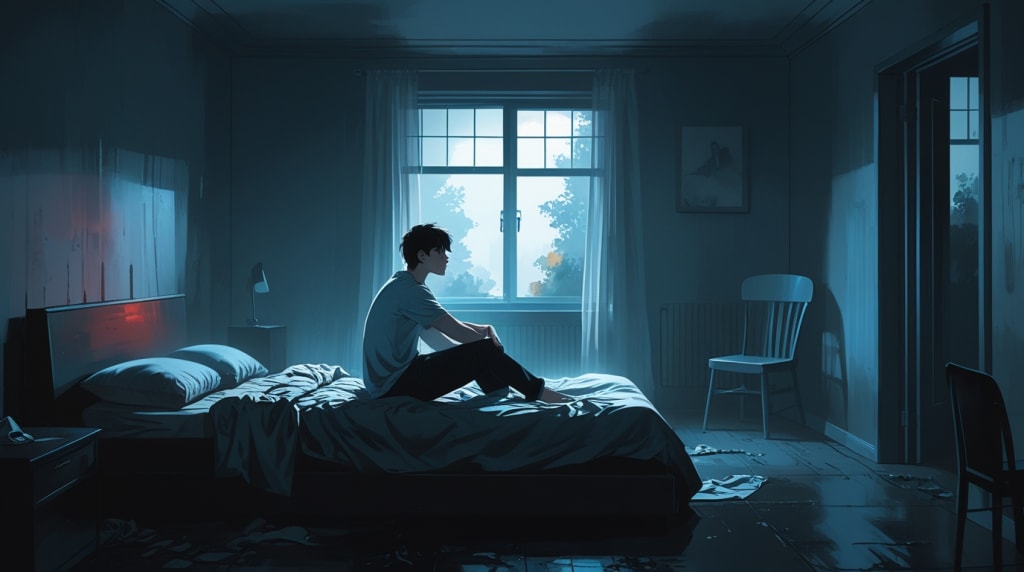
I didn’t cry at his funeral.
Not because I didn’t want to, but because I physically couldn’t. My body felt frozen, my throat closed, and my chest was hollow. The only thing I could hear was the echo of my own heartbeat, slow and heavy like guilt.
I was 19 when my best friend took his own life. He didn’t leave a note. Just vanished from the world with a silence louder than any scream.
And after that, I stopped speaking too.
Not completely — I still responded when necessary. A nod. A “yeah” or “no.” But for the most part, I withdrew. From friends. From family. From myself.
It wasn’t planned. There wasn’t a moment where I decided, “I’m going to live in silence.” It just happened. Like shutting a window during a storm. I closed the world out and stayed quiet so I wouldn’t break apart.
People noticed, of course. My parents thought I was depressed. They weren’t wrong. My professors assumed I was just going through a “rough patch.” Some friends stopped calling. Others stayed, but didn’t know what to say — and I didn’t give them anything to hold on to.
I didn’t want to explain how he was the only person who ever really got me. How we used to talk for hours about things most people were too afraid to say out loud — our fears, our pain, our weird thoughts about life and death and whether any of it actually mattered. He was the first person who made me feel like my thoughts weren’t insane. He made me feel heard.
And then, he was gone.
I kept replaying our last conversation in my mind. Looking for signs. Something I missed. Something I should have said.
But no matter how many times I rewound it, it always ended the same: with a casual goodbye and a smile I didn’t know would be his last.
I became obsessed with silence. It was the only thing that made sense. I stopped listening to music. I walked everywhere without headphones. I deleted social media. Even the sound of a microwave felt too loud sometimes. Noise reminded me that the world was still spinning, and I didn’t understand how it could keep going without him in it.
But something strange happened over time.
Silence became a mirror.
When you’re not talking, not listening, not distracting yourself — you’re forced to sit with your thoughts. And I sat with them for twelve months. Through birthdays, holidays, lonely weekends, and sleepless nights.
At first, it hurt. A constant ache. But eventually, I started to understand my pain.
I wasn’t just mourning his death. I was mourning the part of myself I had only ever shared with him. When he left, he took that version of me with him — the honest, open, seen version.
It scared me to think I’d never find that again.
But silence taught me something: I could create it for myself. I didn’t have to rely on someone else to feel understood. I could learn to hear myself.
So, after a year, I started talking again.
Softly at first. Small conversations. Coffee with an old friend. A text I’d been avoiding. I even started writing again — mostly late at night when I felt brave enough to bleed onto the page.
It didn’t bring him back. Nothing could. But it brought me back — slowly, carefully, honestly.
I still have days where I miss him so much it feels like a physical punch to the gut. Some wounds don’t heal — they just stop bleeding. But I’ve learned to live with that scar.
If you’ve ever lost someone to suicide, you know how it changes everything. The way you see people. The way you listen. The way you love.
It makes silence both unbearable and necessary.
But I’ve also learned this:
Silence can be a prison.
Or it can be a sanctuary.
It’s what you do with it that matters.
About the Creator
Keep reading
More stories from Ayaz L Behrani and writers in Confessions and other communities.
I Was Raised by My Sister, Not My Parents
I was only five when our mother fell ill — the kind of illness that steals more than time. It didn’t just take away her health; it took her presence, her laughter, her warmth. She spent most of her days in bed, and when she wasn’t sleeping, she was at the hospital, drifting in and out of treatments and tests. My father was always working — double shifts, sometimes triple — trying to keep the lights on and the bills paid. He was a good man, but survival became his only language. He wasn’t really present — not emotionally, not physically. We saw more of his tired shoes at the door than we did of him.
By Ayaz L Behrani7 months ago in Confessions
Thoughts on Vocal and the way the world is
"Death cannot stop true love, only delay it." – Wesley in The Princess Bride. I decided to come back to Vocal on a very cold and dark night at the end of December. I had been, and still am, convalescing from a horrible staph infection that had gone misdiagnosed for months. This, paired with the increasing challenges of being healthy, making the best choices for my co-parented child, being a wife, and being a director at a new job, was a lot to manage.
By Jazzy 3 days ago in Confessions
I Missed the Meeting, But the Fire Cats Stayed
I’m sitting here watching a strange video—three orange cats, neon-bright, glowing like embers. The number 333 keeps flashing on the screen, and for some reason it feels intentional, like the universe is tapping me on the shoulder instead of shaking me awake. The sound from the TV hums softly, almost like a bonfire crackling on a beach. Fire cats. That’s what they are. I don’t know why that comforts me, but it does.
By Jhon smith6 days ago in Confessions



Comments
There are no comments for this story
Be the first to respond and start the conversation.