
I Survived a Near-Death Experience—and It Changed Me
How Facing Death Gave Me a New Reason to Live

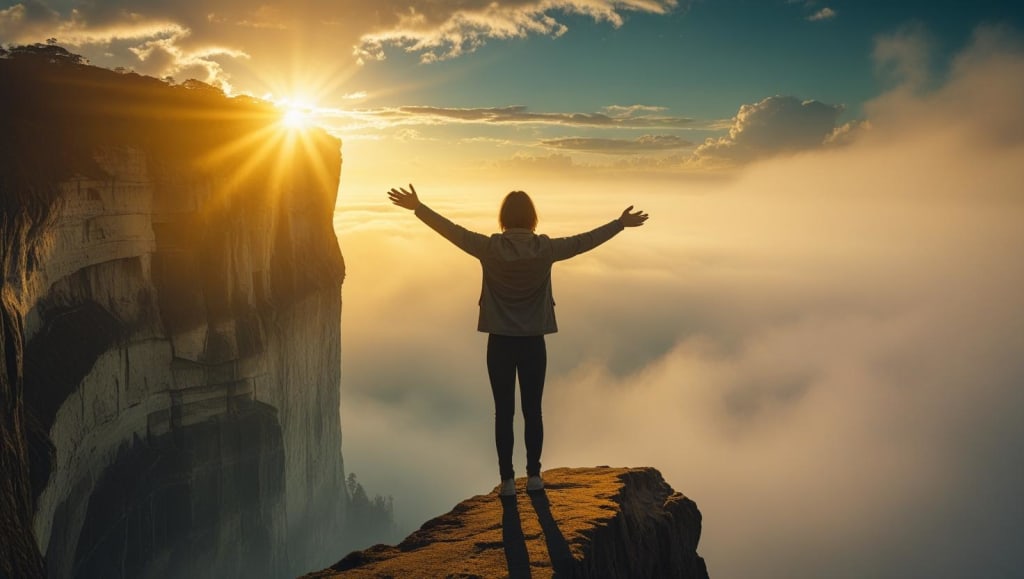
It was supposed to be just another weekend hike.
I had done the trail a dozen times before—steep, yes, but nothing I couldn’t handle. It was one of my favorite escapes from the constant buzz of emails, deadlines, and city noise. Nature had always been my reset button. But that particular Saturday morning, I made a few small mistakes—mistakes that nearly cost me my life.
The first was ignoring the weather forecast. The sky looked clear when I left, so I brushed off the chance of afternoon storms. The second was going alone. I’d done solo hikes before, but I usually left a detailed itinerary. That time, I didn’t. I just told a coworker, “I’m heading out to Eagle Peak for the day. I’ll text when I’m back.”
I didn’t text back that night.
The hike started out beautiful. The summer sun filtered through the trees, and birdsong echoed in the distance. I made it to the summit around noon, ate a sandwich, and soaked in the panoramic view. That’s when I noticed the sky darkening much faster than expected.
By the time I started descending, the storm was already upon me. Thunder rumbled like distant cannons, and rain fell in heavy sheets. The trail, usually dry and dusty, turned into a slick mess. I slipped once, then again. On the third slip, my foot caught a root, and I tumbled off the side of the trail.
I remember the fall in flashes—branches slapping my arms, a sudden pain in my ribs, and then stillness. I landed awkwardly in a rocky ravine, about fifteen feet below the trail. My leg throbbed, and when I tried to move, a white-hot pain shot through my hip. I’d dislocated it. Worse, my phone had bounced out of my backpack and disappeared into the underbrush. I was alone, injured, and without a way to call for help.
I lay there for hours. The rain stopped, the cold crept in, and fear set in hard. Not a movie-type fear, but a quiet, creeping kind—the kind that whispers, “No one knows you’re here.”
Time blurred. I drifted in and out of sleep, trying to keep warm. I rationed the half-full water bottle I still had and gnawed on the last granola bar. I shouted for help every hour or so, but the forest answered with silence.
The second night was the worst. I started to hallucinate—strange lights in the trees, phantom footsteps, even the voice of my sister calling my name. I was losing strength, both physically and mentally.
And then, just after dawn on the third day, I heard it: the unmistakable whir of a search-and-rescue drone.
It passed overhead once, then again, lower this time. I waved a torn piece of my shirt on a branch as high as I could manage, praying they’d see it. About an hour later, a team reached me. They stabilized my hip, gave me water, and airlifted me to the nearest hospital.
I spent the next four weeks recovering. Physical therapy was grueling, but the emotional recovery took longer. I had nightmares, flashbacks, and moments where I questioned why I had survived. Why me?
But slowly, something shifted.
Lying in that hospital bed, I realized how thin the line is between life and death—and how little control we truly have. I also realized how much of my life I’d been sleepwalking through. Work, deadlines, endless scrolling—I had been surviving, not living.
I started changing things.
I quit the job I hated but felt trapped in. I moved closer to my family. I began volunteering at a local wilderness safety program, teaching hikers how to prepare properly. I even began sharing my story—first in small groups, then on podcasts, and finally in writing.
The experience didn’t just change how I saw the world—it changed how I valued it. I stopped postponing the things I said I’d “get to eventually.” I started telling people I loved them. I began listening more, and talking less. I paid attention to sunsets.
And now, when people ask me how I survived three days alone, injured in the wild, I tell them this: survival isn’t just physical. It’s mental. It’s emotional. It’s spiritual. And sometimes, surviving something like that cracks you open in the best way possible.
I’m not fearless now. Far from it. But I’m deeply, unshakably grateful. Grateful for breath, for trees, for warm coffee, for my sister’s voice on the phone. For life—messy, unpredictable, fragile, and breathtaking.
I survived a near-death experience.
And yes—it changed me.
About the Creator
Keep reading
More stories from Waleedkhan and writers in Confessions and other communities.
We were perfect online but Miserable in real life
We looked perfect in pixels. Smiling in Santorini. Kissing under cherry blossoms in Kyoto. Laughing over overpriced brunches with plates we barely touched. Our followers called us “#relationshipgoals.” Brands slid into our DMs offering couple deals. Even our parents sent heart emojis on our anniversary posts.
By Waleedkhan6 months ago in Confessions
Word of the Day: 進捗
I came to school with a really heavy bag. I packed both of my computers in my backpack today. I guess I need to actually work too but I am just spending my time here for some reason. I am not getting financial aid, they keep sending me emails about that I made " changes " so I am like... ok I guess I have to handle it. It is very annoying. Hence why I am sitting here. My backpack is super heavy and I don't want to climb all those steps. I haven't eaten a lot lately. I mean I am happy I lost like 4lbs so that's good but, I am pretty miserable for the most part.
By Kayla McIntosh3 days ago in Confessions


Comments (1)
It was surprising ❣️❣️