
Hustle Culture Is a Lie
How Society Glorified Exhaustion
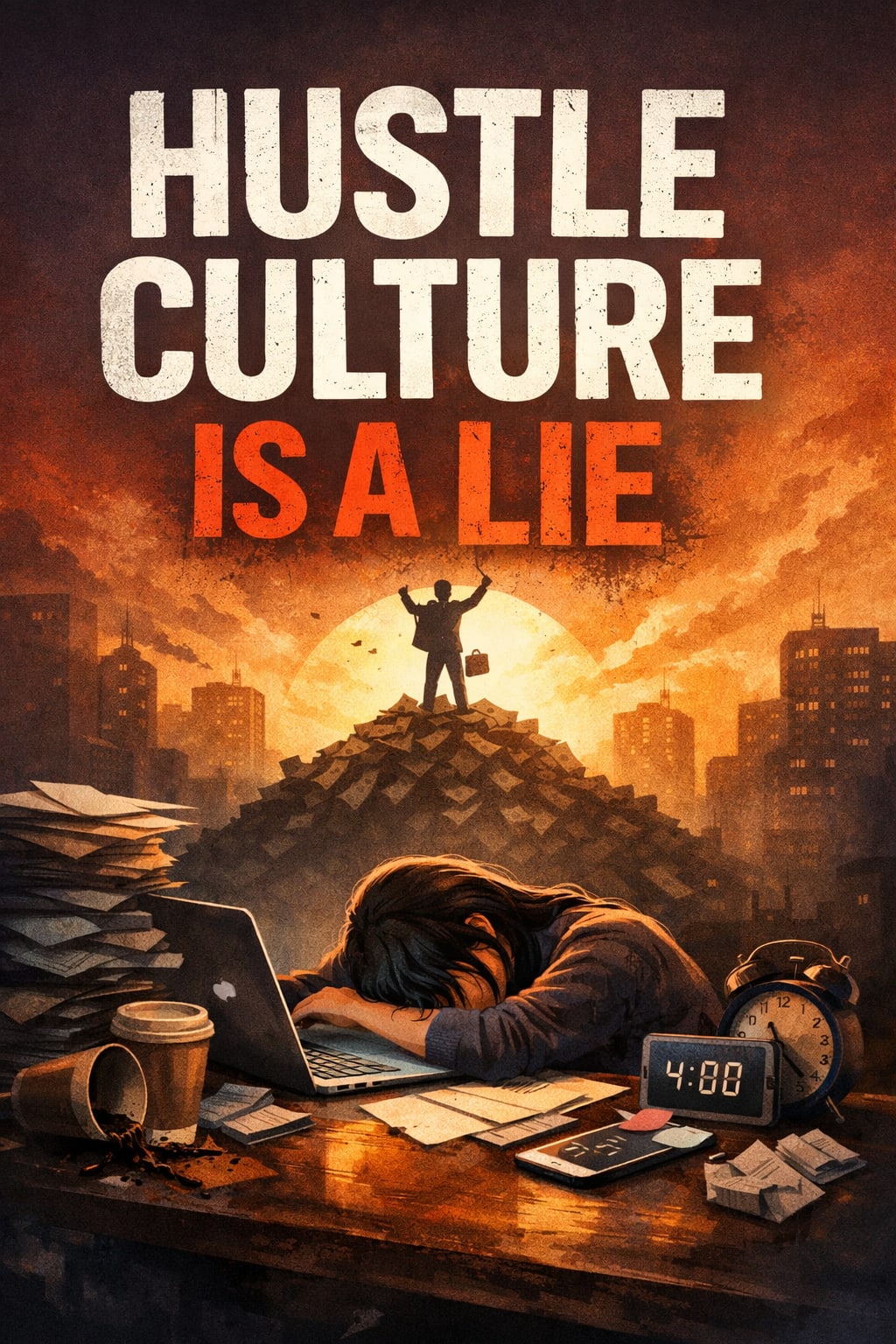
We live in a world where being tired is worn like a badge of honor.
“I only slept four hours.”
“I’m working weekends.”
“I’ll rest when I’m successful.”
Say these things out loud, and people don’t worry about you—they admire you. Somewhere along the way, exhaustion stopped being a warning sign and started being proof that you’re doing something right. This is the core promise of hustle culture: if you work harder, longer, and faster than everyone else, success will eventually reward you.
But here’s the uncomfortable truth we rarely admit—hustle culture is a lie. And worse, it’s a lie that’s costing us our health, creativity, relationships, and sense of self.
The Rise of Hustle Culture
Hustle culture didn’t appear overnight. It grew quietly, fed by economic pressure, social media, and the myth of endless opportunity. In a competitive world where job security is fragile and living costs keep rising, working more feels like the only safe option.
Social media poured gasoline on the fire. Suddenly, we were exposed to carefully curated lives of entrepreneurs waking up at 5 a.m., answering emails before sunrise, and turning burnout into motivational content. Productivity became aesthetic. Coffee cups, laptops, and late nights were framed as symbols of ambition.
The message was simple and seductive: if you’re not constantly grinding, you’re falling behind.
When Work Becomes Identity
One of hustle culture’s most dangerous tricks is convincing us that our worth is tied to our output. Instead of asking, “Who are you?” we ask, “What do you do?” And the better your answer sounds, the more respect you earn.
Over time, work stops being something you do and becomes who you are. Rest feels uncomfortable. Free time feels wasted. Saying “no” feels like failure.
This mindset doesn’t just affect careers—it reshapes how we see ourselves. If you’re not achieving, you’re not enough. If you slow down, you’re lazy. If you struggle, it’s because you didn’t try hard enough.
That belief isn’t motivating—it’s crushing.
The Productivity Trap
Hustle culture sells productivity as limitless, but human energy is not. We are not machines, no matter how many apps track our time or how many planners promise to optimize our lives.
The irony is that constant hustle often leads to less meaningful work, not more. When you’re exhausted, creativity shrinks. Decision-making suffers. Focus weakens. You may stay busy, but busy doesn’t always mean effective.
Burnout doesn’t arrive dramatically. It creeps in slowly—through chronic fatigue, loss of motivation, emotional numbness, and a sense that no matter how much you do, it’s never enough.
And when burnout hits, hustle culture blames you for it.
“If You Loved It, You Wouldn’t Be Tired”
Another popular lie is that passion eliminates exhaustion. Hustle culture insists that if you truly love what you do, you won’t need rest. But loving your work doesn’t make you immune to human limits.
In fact, passion can make burnout worse. People who care deeply about their work are more likely to overextend themselves, ignore warning signs, and feel guilty for needing breaks.
Rest doesn’t mean you lack ambition. It means you’re human.
Who Hustle Culture Really Serves
Despite its motivational language, hustle culture rarely benefits individuals. It benefits systems that profit from overwork—corporations that reward long hours without fair compensation, platforms that monetize constant engagement, and economies that normalize instability.
Not everyone starts from the same place. Hustle culture ignores privilege, access, health, and circumstance. It promotes the idea that success is purely a result of effort, conveniently overlooking structural barriers.
When someone fails under hustle culture, the blame is personal. When someone succeeds, the system takes credit.
The Cost We Don’t Talk About
The true cost of hustle culture isn’t just physical exhaustion—it’s emotional erosion.
Relationships suffer when work always comes first. Creativity dies when life becomes a checklist. Joy feels unproductive, so it gets postponed indefinitely.
Many people reach milestones they chased for years only to feel empty when they arrive. They achieved the goal, but lost themselves in the process.
What hustle culture never teaches is how to stop.
Redefining Success
Rejecting hustle culture doesn’t mean rejecting ambition. It means redefining success on your own terms.
Success can be:
Doing meaningful work without destroying your health
Earning enough while still having a life
Choosing rest without guilt
Valuing presence over constant progress
True success is sustainable. If your version of achievement requires permanent exhaustion, it’s not success—it’s survival.
Rest Is Not a Reward
One of the biggest mindset shifts is understanding that rest is not something you earn after burning yourself out. Rest is a requirement, not a luxury.
You don’t need permission to pause. You don’t need to justify slowing down. You don’t need to prove your worth through suffering.
Rest is productive because it restores what hustle culture drains—clarity, creativity, and connection.
Choosing a Different Path
Walking away from hustle culture is uncomfortable. It means questioning deeply ingrained beliefs. It means disappointing people who equate busyness with value. It means learning to sit with stillness in a world addicted to speed.
But it also means reclaiming your time, energy, and identity.
You are allowed to want more than just work. You are allowed to exist beyond your productivity. You are allowed to build a life that doesn’t revolve around constant urgency.
The Truth Behind the Lie
Hustle culture promises freedom, but delivers fatigue. It promises success, but often delivers emptiness. It tells you to sacrifice today for a better tomorrow, yet tomorrow never seems to arrive.
The truth is simple and radical: you don’t need to destroy yourself to prove your value.
A life well-lived is not measured by how exhausted you were, but by how present you felt. By the moments you enjoyed. By the balance you protected.
Hustle culture is loud. But choosing rest, balance, and intention—that’s a quiet rebellion worth making.
About the Creator
Keep reading
More stories from Aiman Shahid and writers in Confessions and other communities.
The Experiment They Tried to Bury
Science is often imagined as clean, neutral, and unstoppable—a steady march toward truth guided by logic and evidence. But history tells a messier story. Some experiments didn’t fail because they were wrong. They failed because they were dangerous to the wrong people. Dangerous to authority. Dangerous to profit. Dangerous to comfort.
By Aiman Shahid2 days ago in Confessions




Comments
There are no comments for this story
Be the first to respond and start the conversation.