
Does social media cause psychological harm to young people?
Beware, keep your children and youth away from social media.

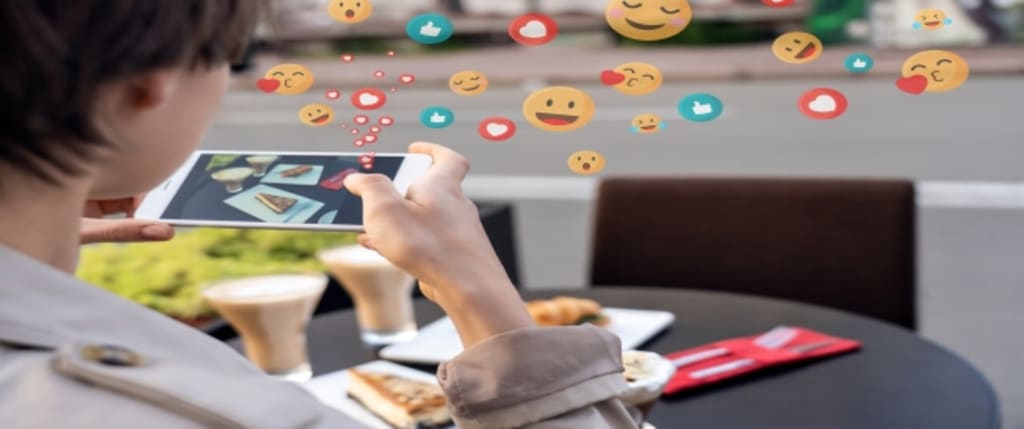
Depression rates among teens have skyrocketed since social media gained popularity in the early 2000s, with depression rates among young people reportedly increasing 52% between 2005 and 2017. Here are the details:
April Tims, a professor of psychiatry and clinical neuropsychology at the University of California, Los Angeles, Brain Research Institute and Department of Psychiatry and Biobehavioral Sciences, attributes this spike in depression to peer pressure that young people feel to be “perfect,” or at least pretend to be.
“A big part of mental illness is about feeling pressure to be perfect,” Tims said. “When you see people on these platforms constantly posting about their amazing travels and their beautiful photoshopped images, it creates a false standard for young people who are still trying to figure out who they are and where they fit in the world.”
Young brains are more susceptible to negative stimuli
Why do some people react negatively to social media? According to Dr. Tims, it all comes down to a specific area of the brain. “The prefrontal cortex doesn’t fully develop until about age 20,” she said. “It’s the part of the brain that regulates personality, decision-making, and social behavior.”
Many teens and young adults respond to stimuli they see on social media using other, more emotionally reactive parts of the brain because the prefrontal cortex isn’t fully developed in the developing brain. When people are exposed to things they don’t like or things that are negatively targeted at them on social media, it can cause intense anxiety or despair, says Dr. Tims.
A fake life on social media
According to Dr. Tims, the situation is only going to get worse because of the proliferation and expansion of social media, which makes it harder for mental health professionals to address it. Dr. Tims also predicts that Americans’ mental health will continue to deteriorate. “I’m not trying to be pessimistic, but we’re seeing an increase in anxiety and depression among young people, much of it driven by social media,” she says. “We as a community of mental health professionals need to start paying close attention to how we provide mental health services to young people.”
The problem has become so big that organizations outside the mental health field have begun exploring solutions. For example, Seattle Public Schools has filed a 91-page lawsuit against major tech companies to hold them accountable for the issue of teen mental health. The lawsuit includes the companies that run Instagram, Facebook, and YouTube.
A major cause of the crisis, according to Dr. Tims, is an overemphasis on “likes” and negative comments online. “Unfortunately, we tend to remember negative comments more than positive ones, and those negative comments stay on social media where everyone can see them,” she says.
Taking responsibility and changing perceptions
Social media can distort people’s perception of themselves, Dr. Tims explains, and it’s unfortunate that many young people hide their identities behind their online reputations. Creating more spaces on social media for teens and young adults to get support and positive feedback could help address this issue.
“What I would like to see is social media evolve, so that it becomes a space for young people to express themselves and get positive support,” Dr. Tims adds.
“Young people’s minds are still developing, so they are not able to realise the benefits of what they are going through, and it is very important that we provide them with the tools that allow them to envision themselves and the different possibilities for their future,” the doctor continues.
About the Creator
Kisama Riyo
I have always been interested in poetry and essay, especially rhyme style, so I decided to post my essay here and see if I have any talent in poetry or not.
Reader insights
Nice work
Very well written. Keep up the good work!
Top insight
Heartfelt and relatable
The story invoked strong personal emotions
Keep reading
More stories from Kisama Riyo and writers in Confessions and other communities.


Comments (1)
This article is very nice but people are addicted to social media