
The most interesting facts about artificial intelligence
The field of AI research began in the 1950s, but it wasn't until recent years that AI has made significant advancements due to advancements in technology and data availability.
AI can be divided into two main categories: narrow or weak AI, which is designed for specific tasks, and general or strong AI, which has the ability to perform any intellectual task that a human can.
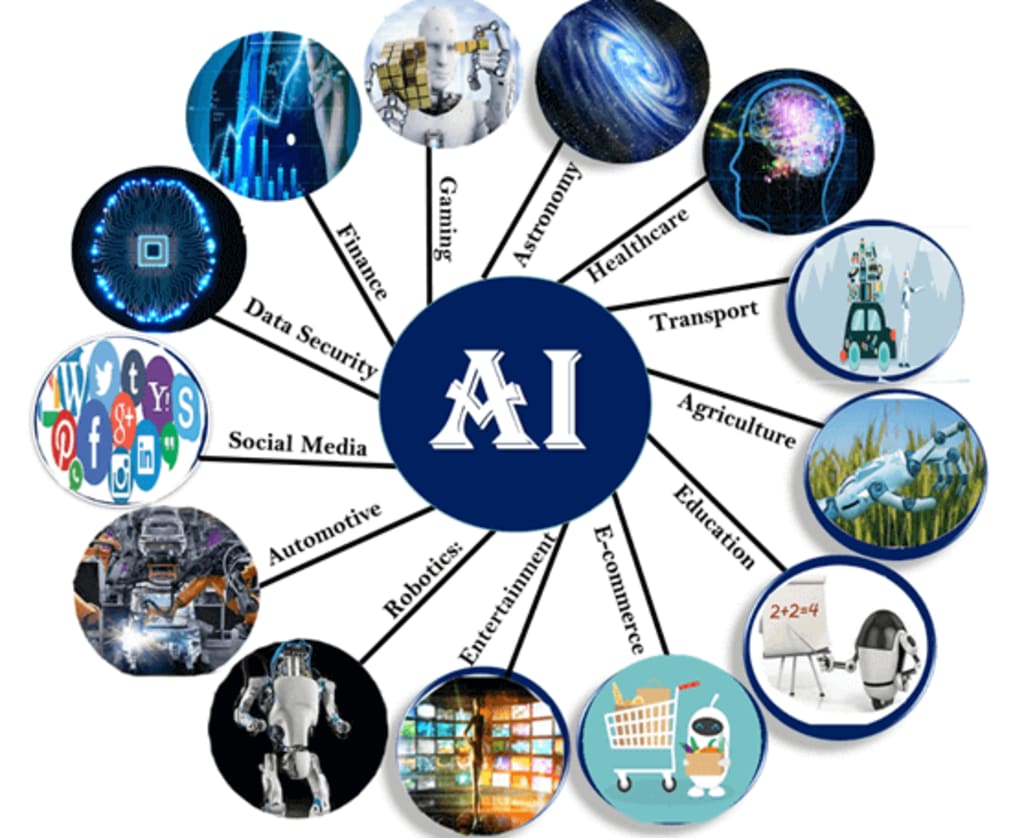
AI is being used in a wide range of industries, including healthcare, finance, and transportation, to improve efficiency and automate repetitive tasks.
One of the best-known AI systems is IBM's Watson, which beat human champions on the game show Jeopardy! in 2011.
AI is also being used to develop self-driving cars, with companies such as Tesla, Google, and Uber investing heavily in the technology.
Some experts predict that AI will be able to perform all tasks that are currently done by humans, leading to significant job displacement in the future.
AI is also being used for scientific discovery, such as in genomics research, where AI algorithms are used to analyse large amounts of genetic data.
AI is also being used in the field of education, with AI tutors and educational software being developed to personalise learning for students.
AI is being used in the field of arts, with the development of AI-generated music, paintings, and writing.
There are concerns about the ethical implications of AI, including issues related to privacy, bias, and accountability.
How does data collect artificial intelligence?
Data collection is a critical aspect of artificial intelligence (AI), as it allows systems to learn from examples and improve their performance over time. There are several ways in which data is collected for AI:
Manual data entry: Data is manually entered into the system by humans. This is a common method for small datasets.
Data scraping: Data is automatically collected from the internet or other sources using software or scripts.
Sensor data: Data is collected from physical sensors, such as cameras or microphones.
Crowdsourcing: Data is collected through the participation of a large number of people, usually through online platforms.
APIs: Data is collected through application programming interfaces (APIs) provided by other companies or organizations.
Data warehousing and Business Intelligence: Data is collected and stored in a central location, and analysed using BI tools.
Once data is collected, it is usually pre-processed, cleaned, and labelled before being used to train AI models. This process ensures that the data is of high quality and can be used effectively to train the AI system.
ARTIFICIAL INTELLIGENCE WORKING WITHOUT HUMANS' SUPPORT?
Artificial intelligence (AI) systems are capable of working without human support in certain situations. These are often referred to as "unsupervised" or "autonomous" AI systems.
For example, in the case of self-driving cars, the AI system can navigate and make decisions on its own without human intervention. Similarly, AI-powered robots can work independently in manufacturing or logistics environments.
AI systems can also work without human support in decision-making processes. For example, AI-powered fraud detection systems can analyse financial transactions and flag any suspicious activity without human intervention.
However, it's important to note that many AI systems still require some level of human oversight and monitoring to ensure their proper functioning and to make sure that they are making decisions that align with ethical and legal guidelines. Also, in some cases, the AI systems may require human supervision for maintenance and repair.
It's also worth mentioning that there are some areas that AI has not yet reached, and it's difficult to predict when these areas will be able to function without human supervision.
ARTIFICIAL INTELLIGENCE WORKING PROPERLY ANYTIME
Artificial intelligence (AI) systems are designed to work properly most of the time, but there are several factors that can affect their performance.
Data quality: AI systems rely on large amounts of data to learn and make decisions. If the data is inaccurate, incomplete, or biased, the system may not perform as well.
Algorithm design: The algorithm used to train the AI system can also affect its performance. If the algorithm is not appropriate for the task or is poorly designed, the system may not work well.
Overfitting: Overfitting occurs when an AI system is trained too well on a specific set of data, and performs poorly on new, unseen data.
Hardware limitations: AI systems require significant computational power, and hardware limitations can affect their performance.
Environmental changes: Changes in the environment in which an AI system operates can also affect its performance. For example, a self-driving car's performance may be affected by changes in weather or lighting conditions.
Human error: AI systems are often used in conjunction with human operators, and human error can affect their performance.
Despite these factors, AI systems are generally reliable, and their performance can be improved through regular monitoring and updates.
Also, as AI systems are not capable of reasoning and understanding the context of the situation as humans are, they may fail to provide a proper response or make mistakes. It's important to keep in mind that AI is not a magic solution but a tool that can assist human decision-making.
What they work for is artificial intelligence.
Artificial intelligence (AI) systems can be used for a wide range of tasks and applications; some examples include:
Image and speech recognition: AI systems can be trained to recognise and interpret images and speech and are used in applications such as facial recognition and voice assistants.
Natural Language Processing (NLP): AI systems can be trained to understand and generate human language and are used in applications such as language translation and text-to-speech synthesis.
Predictive modeling: AI systems can be trained to make predictions based on historical data and are used in applications such as stock market forecasting and fraud detection.
Robotics and automation: AI systems can be used to control robots and automate tasks in manufacturing, logistics, and other industries.
Gaming: AI systems can be used to create intelligent game opponents and to design game rules.
Self-driving cars: AI systems can be used to control autonomous vehicles, allowing them to navigate and make decisions without human intervention.
Healthcare: AI systems can be used to analyse medical images, assist with diagnoses, and develop personalised treatment plans.
Financial services: AI systems can be used for fraud detection, investment analysis, and predicting market trends.
Cybersecurity: AI systems can be used to detect and respond to cyber threats, such as malware and network intrusions.
E-commerce: AI systems can be used to personalise product recommendations and assist customers with searches and purchases.
This list is not exhaustive; AI is a rapidly evolving field, and new applications are being discovered all the time.
About the Creator
sathish kumar
hey coolers!!!!
- I am from world ....!!!!!!!
- I am writing story, artical, myths storys, and any contant write and publish
- what do u want dears????
- Love u all!!!
- Love our world !!!!
Keep reading
More stories from sathish kumar and writers in Confessions and other communities.
Thoughts on Vocal and the way the world is
"Death cannot stop true love, only delay it." – Wesley in The Princess Bride. I decided to come back to Vocal on a very cold and dark night at the end of December. I had been, and still am, convalescing from a horrible staph infection that had gone misdiagnosed for months. This, paired with the increasing challenges of being healthy, making the best choices for my co-parented child, being a wife, and being a director at a new job, was a lot to manage.
By Jazzy 3 days ago in Confessions
Watching the Clock
Today was the last day of this terrible weekend. My kids would (hopefully) be returned tonight. I know that it seems to concern people by my use of the word hopefully, but here is the deal: my ex and I have a custody order. It has a list of rules that we jointly agreed to follow. One of those rules is regarding parenting time and exchange times. But, another one of those rules is regarding safety needs that we agreed to follow in the best interests of our disabled son. Those safety needs are not getting followed. Why not? I don't have a good reason. I have offered to help purchase the needed items. I have offered to help find grants or other ways to pay for said items. I have asked why the safety needs that we agreed upon are not being utilized.
By The Schizophrenic Moma day ago in Confessions
Rachel Reviews: The Spiral Archive by Pieter Hendrik
It's difficult for me to know where to start with a review of this book as it was, for me, an entirely unique experience and one that I'll probably never have again. I don't want that to be interpreted as unenjoyable but it has left me scratching my head a little and ruminating on its content, its themes and its characters.
By Rachel Deeming4 days ago in BookClub


Comments
There are no comments for this story
Be the first to respond and start the conversation.