
Air India Plane Crashes: A Look into Past Tragedies and Aviation Safety
Understanding the Causes, Impact, and Safety Reforms Following Air India’s Major Crashes

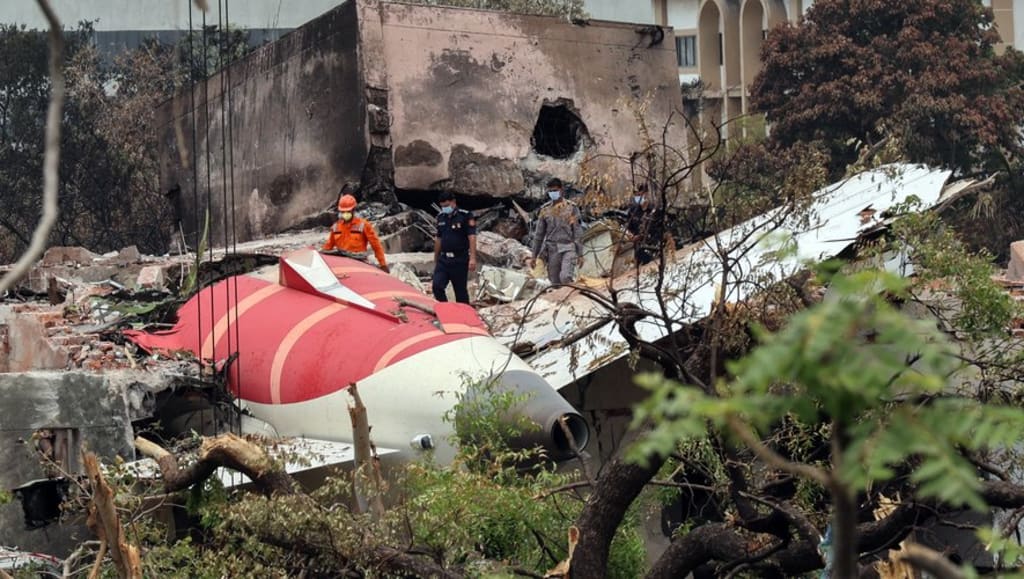
Air travel is often considered the safest mode of transportation, but when tragedy strikes, it shakes the world’s confidence and demands serious introspection. Among the airline carriers that have experienced such devastating incidents, Air India has witnessed several significant plane crashes in its history. These tragic events not only left behind grief and loss but also reshaped aviation safety standards in India and globally.
This article explores some of the most notable Air India plane crashes, their causes, aftermath, and how they have influenced aviation safety over time.
Air India Express Flight 1344 (2020) – Kozhikode Tragedy
One of the most recent and devastating Air India-related crashes occurred on August 7, 2020, involving Air India Express Flight 1344. The flight was part of the Vande Bharat Mission, repatriating Indians stranded abroad during the COVID-19 pandemic. The Boeing 737 aircraft was traveling from Dubai to Kozhikode (Calicut), Kerala.
While attempting to land during heavy rain, the plane overshot the runway and plunged down a steep slope, breaking into two. The crash claimed 21 lives, including both pilots, and injured over 100 others.
Causes:
Runway conditions: Kozhikode International Airport has a tabletop runway, which can be dangerous during poor weather.
Pilot decision-making: Investigations indicated the pilot attempted to land despite low visibility and tailwind.
Weather and infrastructure: Heavy rainfall contributed to poor braking action, and the lack of proper arrestor beds raised concerns.
Aftermath:
The crash led to renewed discussions around the safety of tabletop runways.
The Directorate General of Civil Aviation (DGCA) implemented stricter landing protocols in adverse weather.
Recommendations were made to improve runway safety infrastructure at high-risk airports.
Air India Flight 182 (1985) – The Kanishka Bombing
The worst disaster in Air India’s history—and one of the deadliest aviation terror attacks—was the bombing of Air India Flight 182 on June 23, 1985. The Boeing 747 was en route from Montreal to London when a suitcase bomb exploded mid-air over the Atlantic Ocean, killing all 329 people on board, including 268 Canadians.
Causes:
The attack was linked to Sikh extremist groups based in Canada, seeking revenge for the Indian government’s Operation Blue Star in 1984.
Security lapses at Canadian airports allowed the bomb to be checked in without the passenger boarding the flight.
Aftermath:
It exposed major weaknesses in international aviation security at the time.
Canadian authorities came under immense pressure, leading to the creation of Canada’s Air India Inquiry in 2006.
The incident led to reforms in passenger screening, baggage handling, and international intelligence sharing.
Air India Flight 855 (1978) – Crash off the Coast of Mumbai
Another tragic incident occurred on January 1, 1978, when Air India Flight 855, a Boeing 747 named “Emperor Ashoka,” crashed into the Arabian Sea just minutes after takeoff from Mumbai. All 213 people on board perished.
Causes:
Investigators concluded the crash was likely due to instrument failure and spatial disorientation of the captain.
The aircraft banked steeply and lost altitude rapidly before crashing.
Aftermath:
The accident brought attention to the importance of instrument cross-checking and proper crew coordination.
It also emphasized the need for better training in handling instrument failure scenarios.
How These Crashes Have Shaped Aviation Safety
Each Air India crash has played a role in improving global and national aviation safety. These include:
Enhanced pilot training for weather-related and instrument failure emergencies.
Upgraded airport infrastructure, especially at tabletop and high-risk airports.
Better baggage and passenger screening for terrorism threats.
Emphasis on cockpit resource management (CRM) and decision-making protocols.
Improved black box recovery procedures and transparent investigation processes.
In India, the DGCA and Airports Authority of India (AAI) have worked to implement global safety standards, often in collaboration with the International Civil Aviation Organization (ICAO). Airlines are now subject to more frequent safety audits and operational checks, especially following any incident.
The Role of Media and Public Awareness
Every Air India crash has also triggered intense public interest and scrutiny, particularly in a country with a large population dependent on air travel for domestic and international transit. While media coverage can sometimes be sensationalized, it also plays a crucial role in pressuring authorities to act quickly, transparently, and responsibly.
Public awareness campaigns, especially following the Kozhikode crash, have helped educate passengers about safety protocols and emergency procedures.
Final Thoughts
Air India’s plane crashes, though tragic, have served as turning points in the history of aviation safety. These incidents remind us that air travel, while statistically safe, is never immune to risk. Through technological improvements, stricter safety regulations, and international cooperation, the industry continues to evolve.
The memories of those lost in these crashes serve as a solemn reminder of the importance of vigilance, preparedness, and continued innovation in aviation.
About the Creator
Asad Ali
I'm Asad Ali, a passionate blogger with 3 years of experience creating engaging and informative content across various niches. I specialize in crafting SEO-friendly articles that drive traffic and deliver value to readers.
Keep reading
More stories from Asad Ali and writers in Confessions and other communities.
Andrea Gibson: The Voice of Vulnerability, Activism, and Poetic Power
Andrea Gibson stands as one of the most influential spoken word poets of the 21st century, weaving deeply personal experiences with powerful political commentary. Known for their emotionally raw performances and fearless exploration of identity, mental health, love, and justice, Gibson has become a beloved figure in both literary and activist circles.
By Asad Ali6 months ago in Confessions
I Missed the Meeting, But the Fire Cats Stayed
I’m sitting here watching a strange video—three orange cats, neon-bright, glowing like embers. The number 333 keeps flashing on the screen, and for some reason it feels intentional, like the universe is tapping me on the shoulder instead of shaking me awake. The sound from the TV hums softly, almost like a bonfire crackling on a beach. Fire cats. That’s what they are. I don’t know why that comforts me, but it does.
By Jhon smith3 days ago in Confessions




Comments
There are no comments for this story
Be the first to respond and start the conversation.