
The Munich Air Disaster
A Tragic Chapter in Football and Aviation History
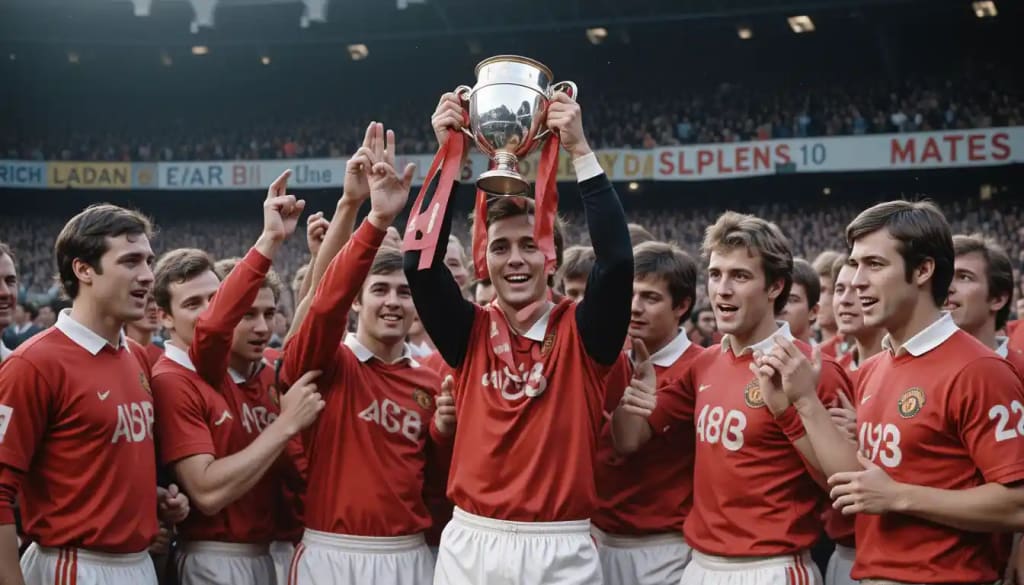
In the aftermath of World War 2, under the guidance of Scottish manager Matt Busby, Manchester United emerged as one of the most dazzling football teams in England. They were pioneers, becoming the first English club to compete in the European Cup, a testament to their growing stature on the international stage. However, their rise was tragically interrupted by one of the darkest days in the history of sports. On February 6, 1958, a plane carrying the Manchester United team, staff, and journalists crashed in Munich, Germany, claiming 23 lives and leaving an indelible scar on the world of football. This is the story of that fateful day, the events that led to the disaster, and the decade long struggle to uncover the truth behind one of the most devastating tragedies in sports history.
The Rise of Manchester United
By the mid-1950s, Manchester United had become a symbol of excellence in English football. Under the visionary leadership of Matt Busby, the team had transformed into a powerhouse, blending youth talent with experienced players. Known as the "Busby Babes," the squad was celebrated not only for their skill on the pitch but also for their camaraderie and sportsmanship. Their participation in the European Cup in 1957 marked a new era for English football, as they became the first club from the country to compete in the prestigious tournament.
The team's journey in the 1957-58 European Cup was a testament to their resilience and talent. After a hard-fought match against Red Star Belgrade in Yugoslavia, which ended in a 3-3 draw, Manchester United secured their place in the semifinals. The mood was jubilant as the team boarded a British European Airways (BEA) Airspeed Ambassador aircraft, nicknamed the "Elizabethan," for their return flight to England. Little did they know that this journey would end in tragedy.
The Flight and the Crash
The aircraft, carrying 44 passengers and crew, departed from Belgrade and made a refueling stop in Munich, West Germany. The weather in Munich was far from ideal, with light snow and temperatures hovering around freezing. Despite the challenging conditions, the crew, led by Captain James Thain and co-pilot Captain Kenneth Rayment, prepared for takeoff. Both pilots were highly experienced, with distinguished military backgrounds. Thain, a former Royal Air Force flight lieutenant, had an impeccable service record, while Rayment was a decorated World War II flying ace.
The first two attempts to take off were aborted due to technical issues. The boost pressure gauge fluctuated during the first attempt, and the engines were running on an overrich mixture during the second. With time running out before the takeoff window closed, the crew decided to make a third attempt. This decision would prove catastrophic.
As the aircraft accelerated down the runway, it reached V1, the speed at which takeoff can no longer be safely aborted. However, just as the plane approached V2, the speed required for liftoff, it suddenly lost momentum. The Elizabethan failed to gain altitude, crashing through a fence and into a house 300 meters beyond the end of the runway. The impact was devastating.
The Aftermath of the Crash
Within minutes, rescue teams from the airport and nearby farms rushed to the scene. The wreckage was scattered across the snow covered field, and the survivors were in critical condition. Kenneth Rayment, the co-pilot, was pulled from the wreckage but succumbed to his injuries the following day. Of the 44 people on board, 23 lost their lives, including eight Manchester United players: Geoff Bent, Roger Byrne, Eddie Colman, Duncan Edwards, Mark Jones, David Pegg, Tommy Taylor, and Liam Whelan. Club secretary Walter Crickmer, trainer Tom Curry, and coach Bert Whalley also perished in the crash.
Matt Busby, the team's beloved manager, was gravely injured and fought for his life in the days following the crash. The football world was in shock. Manchester United, a team that had captured the hearts of millions, had been decimated in an instant.
The Investigation and the Blame Game
In the hours following the crash, German authorities launched an investigation to determine the cause of the disaster. The initial findings pointed to ice buildup on the wings, which could have disrupted the aircraft's aerodynamics. Witnesses reported seeing snow on the wings, and investigators concluded that the crew had failed to deice the plane before takeoff. This conclusion placed the blame squarely on Captain James Thain, who was accused of negligence.
Thain, however, vehemently disputed these findings. He argued that the wing deicing heaters had been activated during the descent into Munich and that the temperature at the time of the crash was not cold enough for ice to form. He also pointed to another potential factor: slush on the runway. Thain believed that the aircraft's wheels had become bogged down in the slush, causing the sudden loss of speed that prevented takeoff.
Despite Thain's protests, the German investigation released its official report in March 1959, holding him solely responsible for the crash. The report also criticized the decision to switch seats, as Thain had allowed Rayment to take the left-hand seat, contrary to company policy. This decision, the investigators argued, may have caused confusion during the critical moments of the takeoff.
A Decade Long Fight for Justice
The German report marked the beginning of a long and arduous battle for James Thain to clear his name. Stripped of his reputation and career, Thain returned to farming but remained determined to prove his innocence. He launched his own investigation, gathering evidence to challenge the official findings. His efforts gained traction in 1965 when German authorities agreed to review the case. New research conducted by Britain's Royal Aircraft Establishment supported Thain's theory about slush on the runway, but the German investigators remained unconvinced.
In 1967, British Prime Minister Harold Wilson publicly expressed his belief that Thain had been wrongfully accused, reigniting public interest in the case. The following year, British investigators conducted a comprehensive study that cast further doubt on the German reports. They concluded that the amount of ice on the wings would not have been sufficient to prevent takeoff, lending credence to Thain's slush theory.
Finally, in March 1969, more than a decade after the crash, the British government formally exonerated James Thain. However, the victory was bittersweet. BEA refused to reinstate him, and German authorities never officially cleared his name. Thain never flew again, but his relentless pursuit of the truth ensured that his side of the story was heard.
The Munich Air Disaster left an indelible mark on Manchester United and the world of football. The loss of the "Busby Babes" was a devastating blow, but the club's resilience in the face of tragedy became a defining chapter in its history. Under Matt Busby's leadership, Manchester United rebuilt the team and, in 1968, became the first English club to win the European Cup a triumph dedicated to the memory of those who perished in Munich.
The disaster also sparked significant changes in aviation safety protocols, particularly regarding deicing procedures and runway conditions. While the crash remains a somber reminder of the fragility of life, the courage and determination displayed by those affected continue to inspire generations.
About the Creator
Keep reading
More stories from writers in Cleats and other communities.
Top 5 Biggest Controversies in BBL History
The Big Bash League, commonly known as the BBL, is one of the most watched T20 cricket leagues in the world. Since its launch in 2011, the tournament has delivered high-scoring matches, packed crowds, and strong performances from Australian and overseas stars. The league is played during the December–January period and has become an important part of Australia's cricket calendar.
By Sports Record and Stats a day ago in Cleats
Top 5 Highest Successful Chases by New Zealand Against India in ODIs
New Zealand has always been a strong team when it comes to chasing big totals in One Day Internationals (ODIs). Over the years, they have produced some unforgettable performances against India. In this article, we explore the top 5 highest successful chases by New Zealand against India in ODIs. These matches highlight New Zealand's batting depth, strategic approach, and ability to handle pressure against a strong Indian bowling attack.
By Sports Record and Stats 3 days ago in Cleats
Silver Screen Magic with Mae West
American actress and singer Mae West became a popular film actress during the Great Depression. She started entertaining in vaudeville, then performed on Broadway, and finally went to Hollywood. She signed up with Paramount Pictures and made her debut in the 1932 film “Night After Night.” She also starred in musicals, comedies, and crime dramas. The American Film Institute named her one of the best classic Hollywood actresses.
By Rasma Raisters5 days ago in Geeks


Comments
There are no comments for this story
Be the first to respond and start the conversation.