
Manchester United's lack of physicality
Reducing the red devils flaws

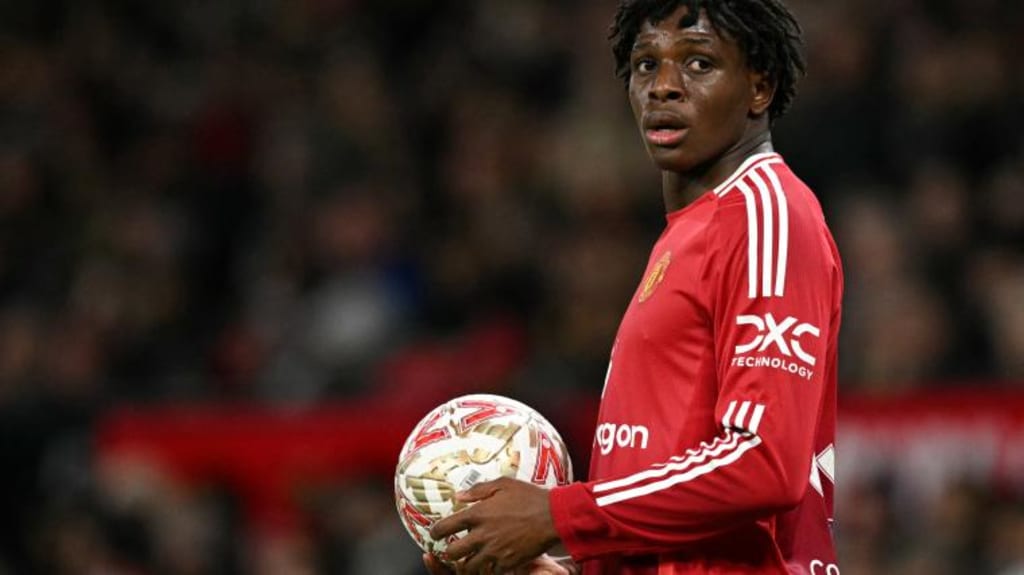
Last time, I’ve addressed some tactical concerns on Amorim’s structure and what could hurt Manchester United’s development in the long run. However, these problems can be fixed or even turned to strengths in United’s game plan if they’re probably addressed, but most of that requires improving the overall teams’ physical ability.
If Amorim wants to keep his back 5 structure (and we are to believe that is the case), there will always be problems which are transversal to these kind of systems: when defending, the players won’t be in proper position to win duels or initiate counters, hence, lacking pressure on the ball; this allows their opponents to pin them in their own half and, even if they make a mistake, they’ll be in better position to regain the ball, recycle and play from there.
Nevertheless, Amorim isn’t the first or the last manager to use these kinds of systems and succeed with them, meaning that these problems can be attenuated, mostly, by having a physical and duelist collective. To further understand this, let’s remember Amorim’s Sporting side: after four seasons, Amorim had built the (near) perfect squad for his playstyle and, before joining Manchester United, Sporting was at cruising speed to a top 8 finish in the Champions League and a clean win in the Portuguese League. This team, especially from the midfield backwards, was very physical and even one of the wingbacks was a pure duelist-oriented player, having their defensive core in players like Hjulmand, Diomande and Maxi Araujo. Even though Sporting lacked pressure on the ball at times, especially when up against teams that enjoy having the ball and have the quality to do so, these core players would carry the piano for the artists Trincão and Gyökeres to play and find a way to the goal on the counter.
Ruben Amorim, however, isn’t looking for strictly physical players, but rather to find a balance between the technical and the physical level on the team, on certain areas of the field and even on some player profiles. Taking a look at past Amorim’s midfield duos at Sporting, we can see that the physicality of the duo was progressively adjusted:
- -João Palhinha and João Mário (20/21)
- -Ugarte and Matheus Nunes (21/22)
- -Hjulmand and Morita (23/24)
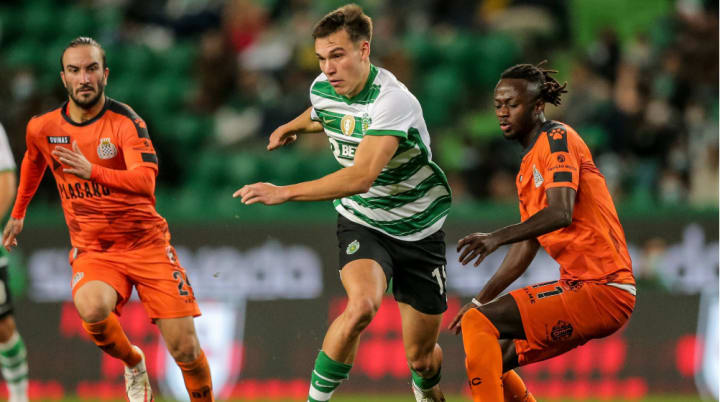
When Amorim arrived at Sporting, in 2020, his chosen midfield was one of a pure ball winning midfielder (Palhinha) and a technical profile #8 to accompany him (João Mário). In the next year, Ugarte and Matheus Nunes were paired to a much more physical duo than the latter one. However, the latest midfield duo was the perfect balance between technique and physicality, since Hjulmand is a #6 that likes to build from the back with a high defensive action area, while Morita is a more technical #8 who likes to get in between the lines in the build-up, but has a high defensive commitment. Believing the board wants to see profit on their Ugarte’s investment, I find it unlikely for United to look for new players in that area of the field, leaving the question of who’s going to be his partner: Mainoo? Bruno? A new signing?
Furthermore, the portuguese manager usually prefers strikers who can drop deep to link the play, which has been challenging for Højlund, who likes to receive the ball behind the defense. Zirkzee, on another thought, has the technical ability and field intelligence to do so, but lacks the physique and duel propension to stand his ground against Premier League aggressive defenders- this too can be a headache for United: recover the investment on those two strikers or go shopping? Gyokeres did it all for Amorim, linking up the play and looking for through balls whenever he could, however, the sweden is still recovering from a knee injury and Sporting would require a large amount of money to let their super-striker go.
When it comes to United’s defense, work has already started in January, as Dorgu’s signing is a massive upgrade to United’s left side physicality and has a similar profile to Maxi Araújo, one of Sporting’s signings this season. However, Dalot has given more questions than answers during Amorim’s spell and there are tactical concerns regarding United’s center backs.
Overall, this is one of the key points that Amorim needs to succeed at Manchester United: to raise the overall team’s physical ability. Unfortunately for Amorim, Manchester United’s previous manager, Ten Hag, preferred technical and good on the ball players, hence, the overall team’s physical ability is not good enough for Premier League or Ruben Amorim standards. With so many areas and room for improvement, it remains to be seen what will be Amorim’s priority(ies).
About the Creator
Rui Gonçalves
Freelance writer, aspiring author.
I mostly talk about sports and politics.
Find me on all my socials: https://linktr.ee/ruiwrites
Keep reading
More stories from Rui Gonçalves and writers in Cleats and other communities.
Eredivisie: how Netherlands is building a top-5 league
Eredivisie was considered a non interesting league that was no match against UEFA’s top 5. This, however, has changed in the last years and the Netherlands project is both exciting and intimidating for other european countries.
By Rui Gonçalvesabout a year ago in Cleats
Shadow Fist: A Gritty Independent MMA Drama From Andreas Szakacs Productions
At first glance, Shadow Fist appears to be a gritty mixed martial arts drama set in the underground fight scene of Mexico City. But beneath the punches, bruises, and adrenaline of the ring lies a deeper story—one about resilience, identity, and the difficult journey toward redemption.
By Andreas Szakacs6 days ago in Cleats
Living on Just a Few Spoonfuls a Day: The Woman Who Still Traveled to 28 Countries
For most people, traveling the world requires energy, stamina, and the ability to keep up with the physical demands of long journeys. But for one remarkable woman, even eating a normal meal is impossible. She can consume only three to four spoonfuls of food in an entire day. Yet despite this severe limitation, she has managed to travel to 28 countries, inspiring thousands with her determination and courage.
By Irshad Abbasi 4 days ago in Cleats




Comments (1)
Nice work. I enjoyed this very much. Keep up the good work!!!