
World War 3: The Day the World Stood Still
A chilling timeline of the first 48 hours if World War 3 began tonight — from silent cyberattacks to the terrifying nuclear shadow.


“What if World War 3 began tonight? This chilling scenario walks you through the first 48 hours — from cyberattacks and blackouts to nuclear warnings — and reveals how quickly the world could come to a standstill.
- Inside the first 48 hours of World War 3: how blackouts, chaos, and nuclear fear could change life forever.
- If World War 3 began tonight, here’s how the world’s first two days would unfold — hour by hour.
- From cyberattacks to nuclear standoffs, this is the chilling reality of what the first 48 hours of World War 3 could look like.
History often warns us that wars don’t always begin with a loud explosion. Sometimes, they start with silence, uncertainty, and small sparks that spiral into chaos. If World War 3 were to begin tonight, the first 48 hours would change the course of humanity forever.
This is not a prediction but a chilling scenario — one that experts, analysts, and citizens alike fear might one day become reality. Here’s how those first hours could unfold.
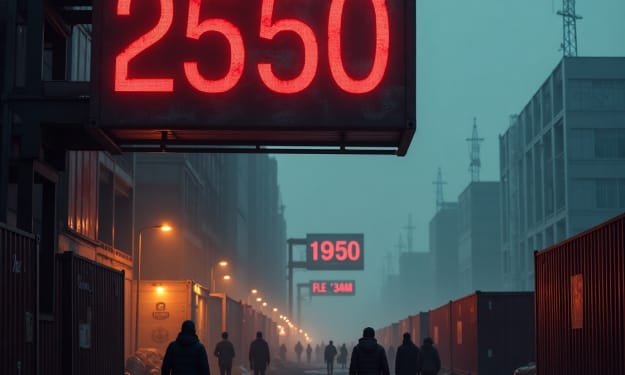
Hour 1: The World Holds Its Breath
The night begins with confusion. World leaders receive classified intelligence: a cyberattack on critical infrastructure, missile systems being moved into position, borders closing. No declaration of war is made — but everyone knows what it means.
Markets respond instantly. Stock exchanges crash, wiping out billions in value within minutes. Oil and gold prices skyrocket. Citizens scrolling through their phones see strange outages, warning messages, and whispers of something bigger happening behind the scenes.
Ordinary life — dinners, late-night study sessions, families sleeping — suddenly feels fragile. The world senses a storm is about to break.
Hour 6: Skies on Fire
Before dawn, sirens echo across multiple countries. Fighter jets scramble into the skies. Satellites detect missile launches — some are tests, others are real. Nobody knows the difference at first.
In Europe, NATO mobilizes. In Asia, nuclear-armed nations place submarines on high alert. Across the Middle East, governments brace for spillover violence.
Civilian airports shut down. Commercial flights vanish from radar as airspace is closed. People who were traveling to weddings, vacations, or work find themselves stranded in terminals filled with fear.
For the first time since the Cold War, humanity stares directly into the face of nuclear escalation.
Hour 12: The Nuclear Shadow
Half a day in, the world feels transformed. Television anchors struggle to deliver updates while rumors flood social media.
In bunkers deep underground, leaders weigh impossible choices: Should they launch preemptive strikes, or wait and risk being destroyed first? Military strategists argue about limited nuclear strikes — “tactical” weapons designed to destroy armies without leveling cities. But every move risks triggering global annihilation.
Ordinary families in cities like New York, London, Moscow, Beijing, and Islamabad receive emergency alerts. Some are told to prepare shelters; others are urged to evacuate. Supermarkets are overrun as people rush to grab whatever supplies they can.
In those tense hours, humanity hovers between fear and survival instinct.
Hour 24: Borders Collapse
The first full day of World War 3 turns the world upside down. Refugees pour across borders, desperate to escape potential blast zones. Neighboring countries struggle to handle the chaos.
Power grids fail in multiple regions. Blackouts cover entire cities. Hospitals, already overwhelmed by panic, are pushed to their limits. Some regions witness riots as food and medicine shortages begin.
Social media, the lifeline of billions, becomes both a tool and a weapon. False reports of nuclear strikes spread faster than the truth. Propaganda fills timelines. For many, the phone in their hand is both their only source of hope and their biggest source of fear.
Hour 48: The World Stands Still
Two days into the nightmare, the global community faces its most fragile moment.
Nuclear weapons are armed, but not yet launched on a massive scale. Some countries have suffered localized strikes, but humanity has not yet crossed the point of no return. Behind closed doors, world leaders attempt emergency negotiations, knowing that one wrong word could unleash irreversible destruction.
For ordinary people, life has already changed. Families huddle together in basements. Highways are jammed with cars fleeing cities. Children ask parents questions they cannot answer.
The world is no longer thinking about victory or defeat. The question is survival.
The Chilling Lesson
This scenario isn’t fantasy. Military analysts agree that any modern global conflict would escalate with terrifying speed. Unlike past wars, which dragged on for years before reaching full intensity, a World War today could spiral into chaos within days — or even hours.
The phrase “The Day the World Stood Still” is not just dramatic. It captures the reality that once the first domino falls, the entire system of peace we take for granted could stop functioning overnight.
Final Thought
The hope, of course, is that this day never comes. That diplomacy, reason, and restraint win over fear and aggression. But imagining these first 48 hours reminds us of the fragile balance our world depends on — and why preventing such a war is humanity’s greatest responsibility.
Because if the day the world stood still ever arrives, history may not record who fired the first shot… only whether humanity survived to tell the story.
About the Creator
Wings of Time
I'm Wings of Time—a storyteller from Swat, Pakistan. I write immersive, researched tales of war, aviation, and history that bring the past roaring back to life
Keep reading
More stories from Wings of Time and writers in Chapters and other communities.
World War 3:and the Collapse of Global Economy
World War 3 and the Collapse of Global Economy Wars are never confined to battlefields. They ripple into homes, cities, and the very foundations of society. If World War 3 were to erupt, the destruction would not stop at bombs and missiles. The collapse of the global economy could be just as devastating—leaving nations powerless, trade frozen, and everyday survival tied to what little people could hold in their hands.
By Wings of Time 6 months ago in Chapters
REEEEEEEEE!
I'm on a low road right now. There are a literal million things to do and not one of them worth my time. I would rather sit in place and burn but the orbit takes me on its inevitable route 'round the center; and I a center in my own right, around which others orbit, and so on and so forth, ad infinitum, ad nauseum.
By C. Rommial Butler5 days ago in Poets


Comments
There are no comments for this story
Be the first to respond and start the conversation.