
the berserker's tale - part III
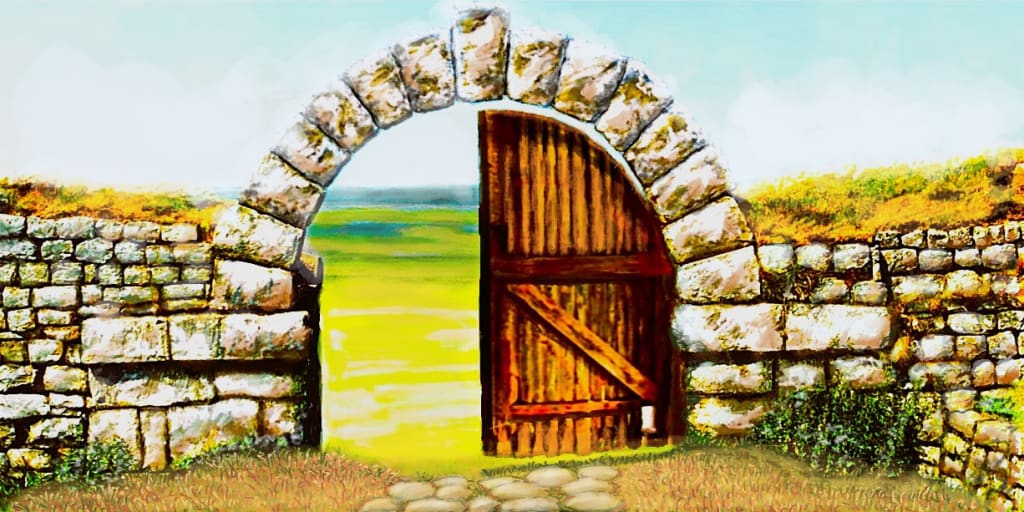
at the ruins of the gate

In case you missed parts I and II, I have provided links below:
the berserker’s tale - part II
…
I laid awake long into the cold night, distressed in my very soul. The last, living warrior who fought at Mon Badonicus seemed more pagan than Christ-like and I wondered if I had taken a wrong turning on my journey or misunderstood the angel's command.
Many people in Carmarthen spoke with the Saxon speech and clothed themselves with Saxon garments and jewelry. A single generation had passed since the victory at Mon Badonicus and yet the further south that I travelled the more the former native tongue of Briton and Celt seemed swallowed up by pagan darkness.
I spent many years among my own peoples and the Irish sowing the fertile seed of Christ while the south languished under the heel of tyrants. And I remembered in the darkness my great sadness when I passed through a milecastle gate in Hadrian's once mighty wall, grieved to see how many stone were missing, plundered for homes and the surrounding walls for many farms.
No warriors guarded the gate; the turrets of the fort lay in wrack and ruin. Turning to look back the way I had journeyed, I wept for its loss and for Rome’s failure to answer Britain when it pled for help to cast off the pagan horde.
What am I called to do in these dark days that I have not already done? I have built many churches and brought thousands to the faith, the words of the Lord of grace ever upon my lips.
In great anguish, I prayed long into the night for a vision that visited me not. In the early morning I finally succumbed to a deep and dreamless slumber and did not waken till the matin shown brightly through the windows of my lodging.
After rising, I wrote in Latin, as is my custom, continuing my recording of the history of the ruin of Britain if for no other reason than to testify to the light and drive out the darkness of this age.
For this reason, I write to you, foolish king, thou who wear a crown of lies and pretend to rule with what little power and grace thy pagan lord has granted you. The taxes, duty and obedience thou collect from thy squalid kingdom fills the wicked coffers of our enemy. For this sin thou stand condemned by God and will surely suffer for it at the last trump when the dead rise on the Day of Judgment and the Book of Life is opened and thy name appeareth not.
I am reminded of the prophesy that the Saxon who came at our foolish bidding to drive out the Picts and Scots would instead occupy our cursed isle for three hundred years, in half of which they have proved themselves crueler than our prior overlords, tearing our nation asunder with devastation after devastation.
For Britain’s sins, God’s wroth blazed forth from sea to sea and once kindled burned the whole of our cursed land, the fire from its terrifying maw licking even the great western seas.
For a brief history only, a few men called and consecrated by God faced down the savage Saxon foe. And while their ranks stayed righteous and true, they pushed our enemy's backs against the sea where their cruel ships first beached and the people began to turn their wicked hearts again toward Christ.
But their final victory thy remember not, false king. I was born on that glorious day and have endeavored for most of my forty-three years to return both the heart of Britons and pagans to the Lord our God.
Closing my eyes, I remembered the light of the angel who appeared to me and set down my pen, tardily rising to seek the ancient one, the only man yet living who might tell me what truly happened at Mon Badonicus.
I found him leaning upon a staff at the edge of a field, it's soil dark under a bright sun, freshly turned, the sowers moving slowly along its furrows dropping seed into the raw earth. I saw among them his granddaughter stooping to spread soil over the freshly sown seed and marveled at the olde woman's stamina.
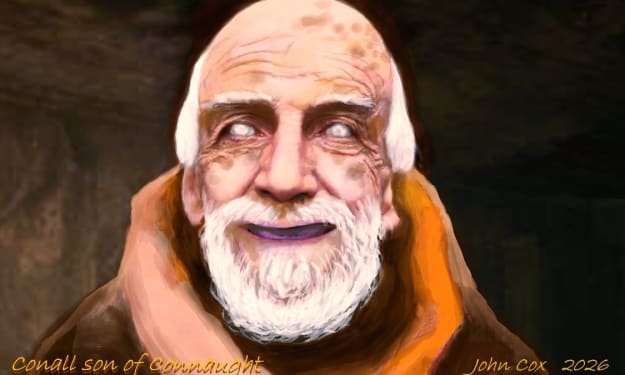
Though I stood near to him, he seemed far away, lost to some forgotten time in his youth and we stood together for a long time without him making any sign that he was aware that I had joined him in his solitude. When he finally looked up at me, he nodded briefly but kept his counsel.
Brave Conall, I began, how did fortune win the battle of Aylesford?
No one the namen his father give him knew, nor thee mather who nursed him at her bosm. Claimed him not, no tribe nor nation, he call’d no hovel home.
At Mon Badon wit strangripe held he a halberd bright and sharp, and cleaved moneg a Saxon helm, boot at Aylesford he swung a bicwide hamor and so dared thee foe they fled his hearty blows.
Fortune was a man? I exclaimed.
Healf-man, healf-God, he replied with tears in his eyes. And I shut mine own at the horror of his revelation.
About the Creator
John Cox
Twisted writer of mind bending tales. I never met a myth I didn't love or a subject that I couldn't twist out of joint. I have a little something for almost everyone here. Cept AI. Ain't got none of that.
The Cave Part 6
If you have ever heard a tale about yourself that you cannot remember and doubtless think is made up, you will know how I felt when Tharkin related all that the eagle had seen of me before my memories were scattered. Of far distances and traveling companions that I did not recall, camping out under the stars and making our way to the mountains with deliberate purpose. The great bird had lost contact with my party once we entered the forests, and the seven other members were not seen again by him or his brethren since.
By Jamye Sharp14 days ago in Chapters
Understanding the Pre-IPO Investment Process for Maximum Returns
Investing in companies before they go public has become one of the most compelling strategies for capturing early growth and unlocking long-term wealth. Pre-IPO opportunities allow investors to purchase shares before a company lists on a public exchange, often at valuations significantly lower than what the market may later assign.
By Michael Christopher Venturino5 days ago in Chapters


Comments (2)
That ending felt so sad. Looking forward to the next part!
A bit of Scottish lore you have in this story. Great work and can't wait for part 4. Good job.