
"World Towards Modernism"
"How the Past Shapes Our Modern Future"
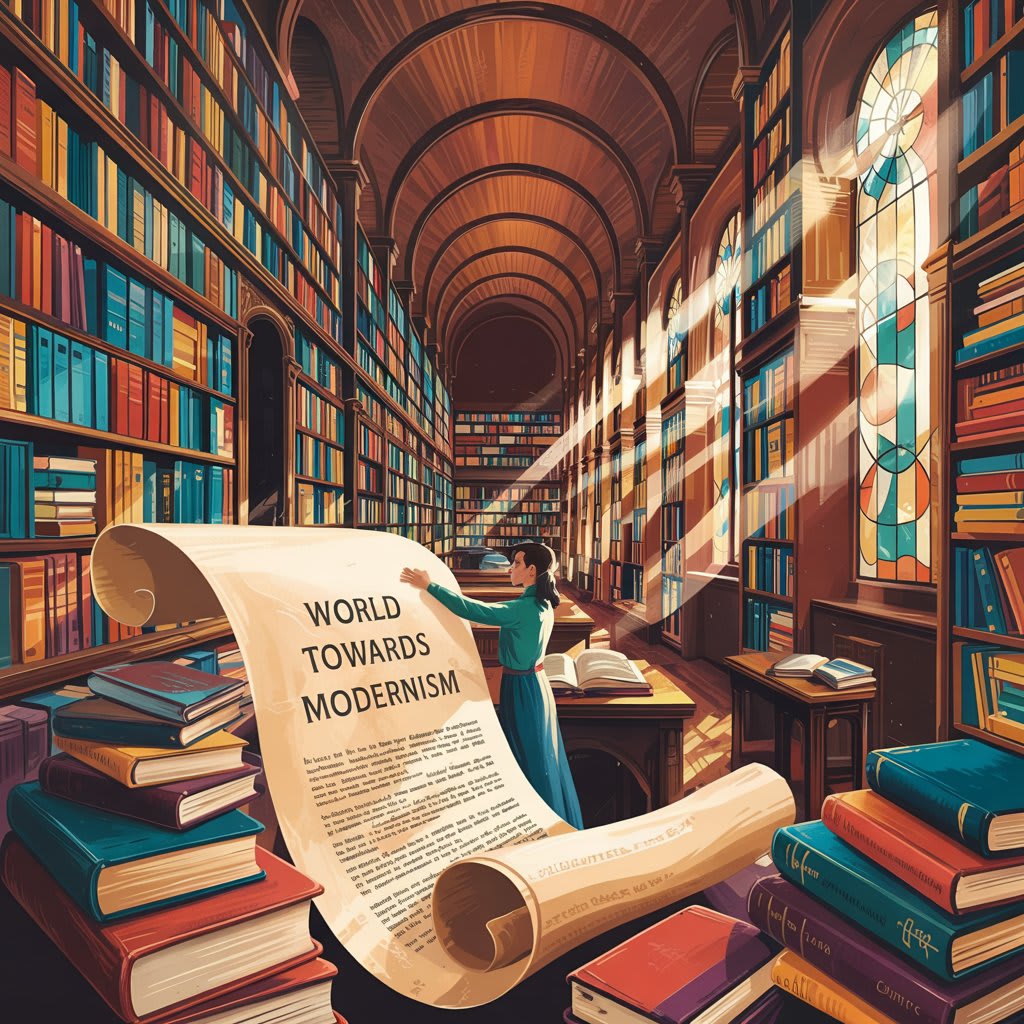
World Towards Modernism: How the Past Shapes Our Modern Future
The evolution of the world toward modernism is not merely a break from the past but a transformation built upon its very foundations. The technological innovations, political ideologies, social reforms, and cultural shifts of the modern world all trace their origins to the lessons, mistakes, and achievements of previous generations. In understanding how the past shapes our modern future, we come to see that progress is not a sudden leap but a continuous journey fueled by the experiences of history.
Modernism, often associated with rapid technological development, scientific discovery, and changing social structures, began gaining momentum in the late 19th and early 20th centuries. However, its roots extend further back, through the Enlightenment, the Industrial Revolution, and even classical antiquity. The Enlightenment emphasized reason, individual rights, and critical thinking—principles that continue to influence modern democratic societies and educational systems. The Industrial Revolution introduced mechanization and mass production, laying the groundwork for today’s global economy and digital revolution.
Each historical period, whether marked by advancement or turmoil, contributes something to the future. For instance, the devastation of the World Wars led to the establishment of international organizations like the United Nations, designed to maintain peace and promote cooperation. The Cold War, though a period of tension, spurred innovations in space exploration and computing that later benefited civilian life. Even painful chapters—such as colonialism, slavery, and systemic discrimination—have influenced modern movements for human rights, social justice, and global equality.
In technology, the transition from steam engines to electricity, and later to digital systems, illustrates how each generation builds on the knowledge of the previous one. The internet, arguably the most transformative invention of the 21st century, wouldn’t exist without earlier developments in telecommunication, coding, and network theory. Artificial Intelligence, space exploration, renewable energy—all rely on principles and discoveries from the past, refined and reimagined by today’s thinkers.
Socially and culturally, the shift toward modernism has been driven by the struggle for inclusion and representation. The feminist movements of the 19th and 20th centuries, the civil rights movement, decolonization efforts, and LGBTQ+ advocacy all drew from earlier ideas of liberty, dignity, and equality. These movements remind us that progress often requires looking back critically at history to identify what must change and what must be preserved.
In education and philosophy, the Socratic method, the Renaissance’s revival of classical learning, and the scientific method all illustrate the past’s influence on how we approach knowledge today. Modern curricula around the world often integrate global historical perspectives to teach critical thinking and cultural awareness, showing that understanding the past is crucial for building an informed future.
Modernism also challenges us to reinterpret tradition rather than discard it entirely. Architectural designs today often blend modern materials and technology with traditional aesthetics. Contemporary literature and art frequently revisit themes from mythology, history, and past literature. This synthesis of old and new keeps cultural identities alive while making them adaptable to contemporary life.
Crucially, the past offers cautionary tales. Economic crashes, authoritarian regimes, and environmental degradation have shown us the dangers of unchecked power, greed, and neglect. Modern governance systems, environmental policies, and economic regulations are increasingly shaped by a desire to avoid repeating such failures. The growing emphasis on sustainability is itself a response to industrial practices of the past that prioritized growth over ecological balance.
About the Creator
nasrullah khan
ITS ABOUT LIFE OF MANS AND THERE STRUGGLES ON EARTH
Keep reading
More stories from nasrullah khan and writers in Chapters and other communities.
Man vs. Jungle
Man's Struggle Against the Raw Power of Nature Part 1: Into the Wild Jack McAllister was always drawn to the wilderness. A seasoned survivalist, he'd conquered mountains, braved deserts, and crossed freezing tundras. But nothing prepared him for what awaited in the heart of the Amazon. It wasn’t just a journey for him—it was a test of his very essence. A test against the raw, untamed power of nature itself.
By nasrullah khan9 months ago in Art
Scientists Call for Urgent Action as Dangerous Amoebas Spread Globally
Scientists around the world are sounding the alarm about a largely unseen threat creeping into water systems, soil, and freshwater habitats: dangerous free‑living amoebae. These microscopic organisms have long existed in nature, but new research suggests that environmental shifts, inadequate monitoring, and weakened infrastructure are helping some species spread into regions once considered low‑risk, posing serious public health challenges.
By Salaar Jamaliabout 11 hours ago in Chapters



Comments
There are no comments for this story
Be the first to respond and start the conversation.