
Why does our breath smell bad and how can we get rid of it?
Correct Way to Brush Your Teeth: Dentist-Approved Technique

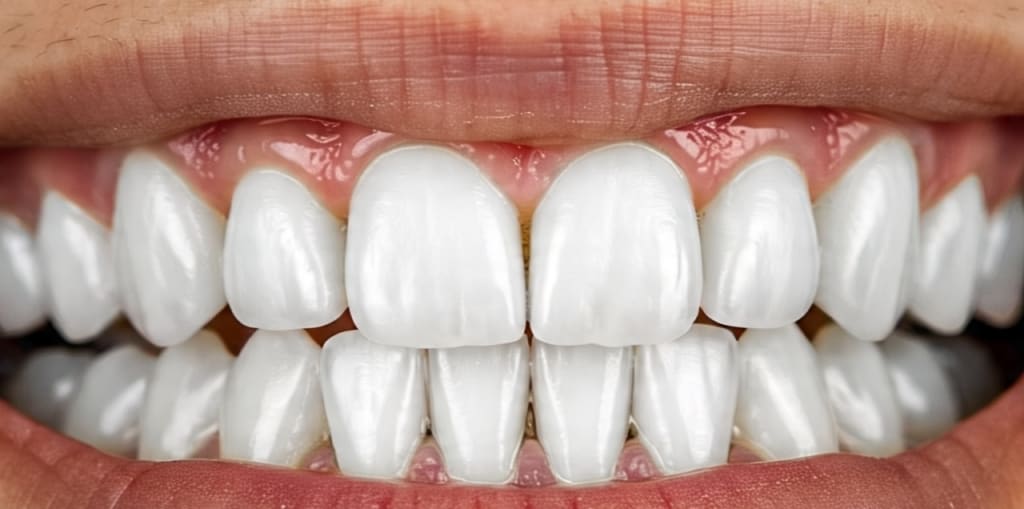
Bad Breath Keeping You Away from People? Here's What You Can Do
Do you also hesitate to get close to people because of bad breath?
If yes, don’t worry — it’s a common issue and thankfully, there are effective solutions.
Maintaining oral hygiene is like fighting a constant battle against bacteria. These microorganisms live between your teeth, on your tongue, and around your gums.
If not cleaned properly, they can multiply rapidly, causing bad breath and leading to serious gum diseases۔
What Causes Bad Breath?
One of the most common global causes of bad breath is a condition called periodontitis, where the tissues around the gums begin to deteriorate.
Dr. Praveen Sharma, Associate Professor at the University of Birmingham's School of Dentistry, explains:
Most young people suffer from some form of gum disease, and about 90% of bad breath originates in the mouth while the remaining 10% comes from other causes.
He adds that uncontrolled diabetes can cause a distinct smell in the mouth.
Likewise, issues such as acid reflux or digestive problems can also result in bad breath.
In fact, several underlying health conditions first manifest through oral odor.
For example, those suffering from gastric reflux may experience a sour smell in their breath.
If bacteria hiding between the teeth and gums are not removed, they can lead to tiny wounds and eventually cause the gums to bleed early stage of gum disease, which is treatable if caught in time.
Signs of Gum Inflammation
According to Dr. Sharma , if your gums appear red, swollen or bleed during brushing you may be experiencing gingivitis a mild gum disease.
If left untreated, this can progress to periodontitis, a serious infection that weakens the bone structure supporting your teeth, causing them to loosen or even fall out.
But there’s good news early intervention can stop the disease from worsening.
Many people mistakenly stop brushing when they see blood, thinking they're harming their teeth.
In reality, bleeding is a sign of insufficient cleaning, not a reason to stop brushing.
The Right Way to Brush Your Teeth
Dr. Sharma advises brushing with full attention avoid multitasking while brushing.
Stand in front of a mirror and focus entirely on the task.
Right-handed people tend to brush the left side longer, and left-handed people tend to focus more on the right. This often leads to uneven cleaning making one side more prone to inflammation.
Be conscious of which hand you're using and aim to clean both sides equally and carefully.
Golden Rules for Brushing
Start by cleaning the inner surfaces of your teeth.
Use a good interdental brush to remove debris between the teeth.
Clean all three surfaces of every tooth: inner, outer, and the biting surface.
Spend at least two minutes brushing.
Most people hold the brush at a 90-degree angle to the tooth surface and brush back and forth with pressure but this can harm the gums.
Instead, hold the brush at a 45-degree angle.
On upper teeth, brush upwards towards the gum line.
On lower teeth, brush downwards from the gum line.
This technique helps dislodge hidden bacteria under the gumline.
When and How Often Should You Brush?
Contrary to popular belief, brushing before breakfast is more beneficial than brushing afterward.
Dr. Sharma explains:
Brushing immediately after acidic food can soften tooth enamel and dentin increasing the risk of damage.
Enamel is the hard outer layer of the tooth, rich in minerals, while dentin lies beneath it and forms the bulk of the tooth. Enamel is hard and rough; dentin is softer and supports it.
If you prefer brushing after breakfast, rinse your mouth first and wait a little before brushing.
The best practice is to brush twice daily for at least two minutes
Since saliva production slows down during sleep, bacteria can cause more damage at night. That’s why brushing before bed is the most crucial
Expensive Toothpaste? Not Necessary
Dr. Sharma clarifies:
As long as your toothpaste contains fluoride I’m satisfied expensive brands are not required.
Fluoride strengthens teeth and protects against cavities.
After brushing, spit but don’t rinse, so fluoride stays in your mouth and continues to protect your teeth.
If you're showing early signs of gum disease, a mouthwash can help reduce plaque and bacteria
but don’t use it immediately after brushing, as it can wash away the fluoride.
When to Take It Seriously
If gum inflammation worsens, you may notice:
Gaps forming between teeth
Teeth becoming loose
A persistent unpleasant odor
If these symptoms appear, see a dentist immediately because once the supporting bone weakens beyond a point, tooth loss becomes likely
About the Creator
Keep reading
More stories from Real content and writers in Chapters and other communities.
Potential Role of Pakistan Army in the Gaza Peace Force: Benefits and Drawbacks
t Potential Role of Pakistan Army in the Gaza Peace Force: Benefits and Drawbacks Officials at Pakistan’s Foreign Office in Islamabad have stated that “Pakistan is also evaluating the possibility of joining this force; however, discussions are still at an initial stage, and much remains to be finalized.”
By Real content3 months ago in Chapters
Fair Exchange, No Robberies
Dark Memoirs - Index There are at least two kinds of people in the world: those who write this half-arsed kind of intro to a story that looks to separate the rare and the norm, and those who realise it's an overused framing device and don't.
By Paul Stewart13 days ago in Chapters
The Future of Computing
In the ever-evolving world of technology, quantum computing stands as one of the most promising frontiers. Traditional computers, which rely on bits as the fundamental unit of data, are reaching the limits of their processing power. Quantum computers, on the other hand, leverage the principles of quantum mechanics to process information in ways that were once thought impossible. This article explores the fundamentals of quantum computing, its potential applications, and the challenges that must be overcome to unlock its full potential.
By Gustavo Woltmanna day ago in Chapters


Comments
There are no comments for this story
Be the first to respond and start the conversation.