
The Future of Computing
An Introduction to Quantum Computers

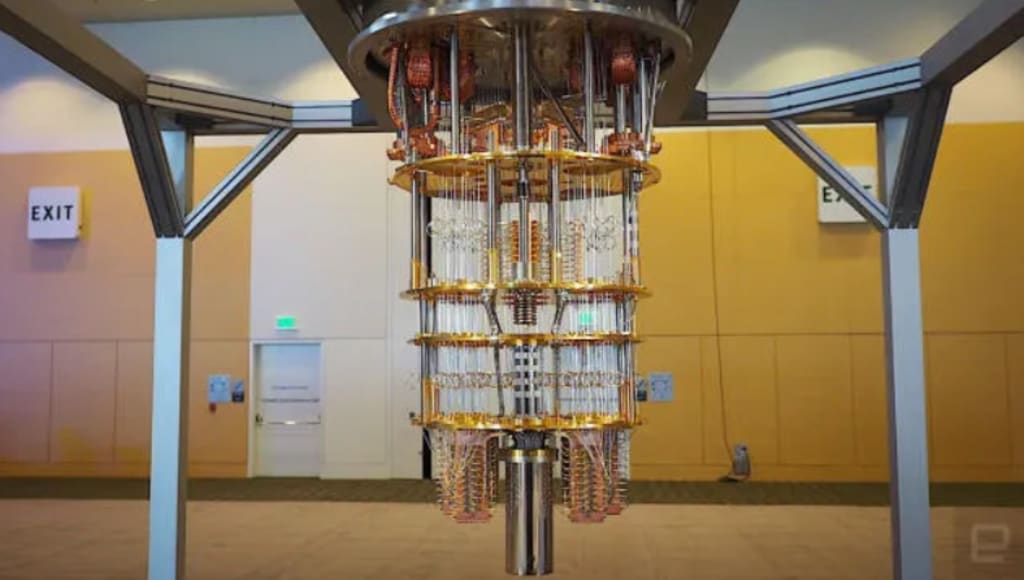
In the ever-evolving world of technology, quantum computing stands as one of the most promising frontiers. Traditional computers, which rely on bits as the fundamental unit of data, are reaching the limits of their processing power. Quantum computers, on the other hand, leverage the principles of quantum mechanics to process information in ways that were once thought impossible. This article explores the fundamentals of quantum computing, its potential applications, and the challenges that must be overcome to unlock its full potential.
Understanding Quantum Computing
Unlike classical computers, which use bits that can be either 0 or 1, quantum computers utilize quantum bits, or qubits. Thanks to two key properties — superposition and entanglement — qubits can exist in multiple states simultaneously and be linked across vast distances, enabling computations that are exponentially more powerful than classical methods.
1. Superposition: A qubit can exist in a state that is both 0 and 1 at the same time, allowing quantum computers to process multiple possibilities simultaneously.
2. Entanglement: When qubits become entangled, the state of one qubit is instantly correlated with another, regardless of distance. This enables incredibly fast and complex problem-solving capabilities.
Potential Applications of Quantum Computing
Quantum computing has the potential to revolutionize various fields, including:
1. Cryptography: Quantum computers could break traditional encryption methods while also enabling ultra-secure quantum cryptography.
2. Drug Discovery: Simulating molecular interactions at the quantum level can accelerate pharmaceutical research and the development of new medicines.
3. Optimization Problems: From logistics and supply chain management to financial modeling, quantum computing can solve complex optimization problems significantly faster than classical computers.
4. Artificial Intelligence: Machine learning algorithms can benefit from quantum speedups, leading to more efficient AI models.
5. Climate Modeling: Quantum simulations can improve climate predictions and help in developing sustainable solutions.
Challenges in Quantum Computing
Despite its potential, quantum computing faces significant hurdles:
1. Hardware Stability: Qubits are extremely delicate and require ultra-cold temperatures to function properly.
2. Error Correction: Quantum systems are prone to errors due to decoherence and noise, requiring advanced error correction techniques.
3. Scalability: Building large-scale quantum computers remains a significant engineering challenge.
4. Cost: The infrastructure needed for quantum computing is currently expensive, limiting widespread adoption.
The Road Ahead
Major technology companies, including Google, IBM, and Microsoft, are investing heavily in quantum computing research. While practical, large-scale quantum computers are still years away, rapid advancements in the field suggest that they could become mainstream sooner than expected. Governments and private organizations are also fostering quantum research to ensure breakthroughs that could redefine computing as we know it.
Quantum computing represents the next great leap in computational power. Although challenges remain, the potential benefits are too significant to ignore. As researchers and engineers continue to push the boundaries, quantum computing may soon transition from theoretical promise to real-world impact, transforming industries and scientific research in ways we have yet to fully imagine.
About the Creator
Keep reading
More stories from Gustavo Woltmann and writers in Chapters and other communities.
The Art and Science of Clockmaking
Clockmaking is a centuries-old craft that combines engineering, precision, and artistry. From ancient sundials to modern atomic clocks, the evolution of timekeeping devices has been instrumental in shaping human civilization. This article explores the history, mechanics, and craftsmanship involved in making clocks.
By Gustavo Woltmann2 months ago in Chapters
The Bone: Why is the American bomber arriving in the UK for a possible major attack on Iran considered so dangerous?
The Bone: Why is the American bomber arriving in the UK for a possible major attack on Iran considered so dangerous? A large U.S. Air Force bomber aircraft capable of carrying 24 cruise missiles has landed on British soil.
By Real content2 days ago in Chapters




Comments
There are no comments for this story
Be the first to respond and start the conversation.