
The Secret Code of Mona Lisa: Unraveling the Hidden Mysteries Behind Leonardo da Vinci’s Masterpiece
From secret societies to encrypted messages, the Mona Lisa continues to captivate the world 500 years after it was painted. What was Leonardo da Vinci really trying to tell us?

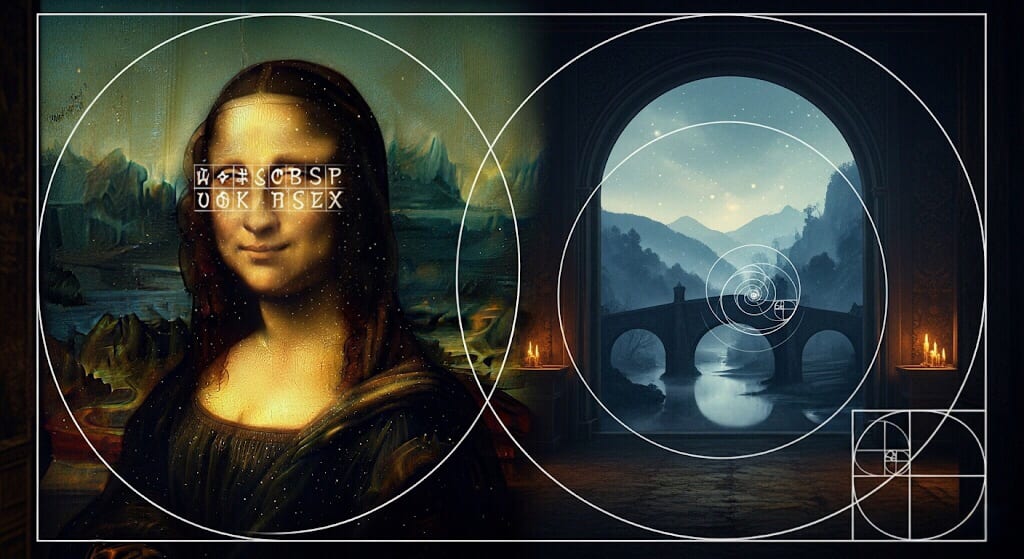
More than five centuries ago, a man painted a portrait of a woman that would go on to become the most iconic artwork in history. The man was Leonardo da Vinci—artist, engineer, inventor, and visionary. The painting: Mona Lisa. While many admire it for its enigmatic smile and artistic mastery, the Mona Lisa is far more than just a beautiful painting. It is a puzzle—one layered with hidden meanings, mysterious symbols, and secret knowledge that may have been too dangerous to express openly at the time.
In this article, we delve into the deep and captivating mystery surrounding the Mona Lisa, explore Leonardo da Vinci’s extraordinary life, and ask the questions that continue to fascinate scholars, art lovers, and conspiracy theorists alike: Who was the woman in the painting? What was Leonardo hiding? And could this portrait really be the key to unlocking secrets forbidden by the Church?
The Enigma Begins: Who Was the Mona Lisa?
Painted in the early 16th century, the Mona Lisa is widely accepted to be a portrait of Lisa Gherardini, a noblewoman from Florence and the wife of wealthy silk merchant Francesco del Giocondo. The name “Mona Lisa” is derived from “Monna Lisa,” which translates to “My Lady Lisa.” The alternate title, La Gioconda, reflects both her husband’s surname and the Italian word for “happy,” a nod to her subtle smile.
Yet, despite the widespread agreement, this identification is far from certain. The portrait was never delivered to its supposed patron and instead remained in Leonardo’s possession until his death—fueling centuries of speculation about its true subject and deeper meaning.
A Work Obsessed Over
Leonardo began the Mona Lisa in 1503 and continued working on it for 16 years, right up until his death in 1519. For a painting measuring just 53 by 77 centimeters, this level of dedication is extraordinary. What was it about this image that so consumed Leonardo?
Some believe the answer lies in the secret knowledge Leonardo was believed to possess. Not merely an artist, Leonardo da Vinci was an inventor, anatomist, and philosopher—a man who pursued knowledge beyond the bounds of traditional science and religion. He was rumored to be a member of secret societies such as the Priory of Sion, believed to protect sacred and forbidden knowledge, including the secrets of the Holy Grail.
Leonardo’s Hidden Life and Secret Lineage
Little is known about Leonardo’s mother, a peasant girl named Caterina. Some speculate that she was initiated into esoteric teachings, possibly of the Cathars—a Christian sect considered heretical by the Catholic Church. Could it be that Leonardo inherited not just talent, but forbidden knowledge through her?
Some theories even suggest that the Mona Lisa might be a disguised portrait of his mother. Supporters point to the physical similarities between Leonardo and the woman in the painting, suggesting a mother-son resemblance. If true, this would give the artwork a far more personal meaning than previously imagined.
Theories Beyond the Obvious: Is Mona Lisa a Man?
Another theory proposes that the painting depicts not a woman at all, but a man—or even Leonardo himself. A prime candidate is Gian Giacomo Caprotti, better known as Salai, Leonardo’s assistant and rumored lover. Salai worked with Leonardo for over 20 years and is believed to have inspired several of his works, including Saint John the Baptist.
Some believe Leonardo encrypted Salai’s name into the title. If you rearrange the letters of “Mona Lisa,” you get “Mon Salai,” French for “My Salai.” Could the Mona Lisa be a hidden tribute to a forbidden love in a time when same-sex relationships were punishable by death?
The Hidden Symbols in Her Eyes
One of the most compelling discoveries came in 2010 when researchers using high-magnification technology uncovered previously unseen letters and numbers in Mona Lisa’s eyes. In the right eye: the letters “L” and “V,” possibly for Leonardo da Vinci. In the left, faint traces of “C,” “E,” or “B.”
Could these be initials? If “C” stood for Caterina, might this support the mother-portrait theory? Or are these letters a cipher meant to reveal the identity of the model only to those who understand Leonardo’s code?
The Mysterious Landscape and the Number 72
The background of the Mona Lisa has sparked nearly as much intrigue as her smile. Some believe the landscape is imaginary, while others argue it is a real location in Italy. Art historian Carla Glori claimed that the bridge seen in the background belongs to the town of Bobbio in northern Italy. Below one of the arches, researchers found the numbers 7 and 2, which might refer to the year 1472—when a major flood swept through the region.
If true, this would mean Leonardo embedded a geographic and historical marker in the painting, further reinforcing the theory that every inch of the Mona Lisa holds intentional meaning.
The Golden Ratio and Divine Proportion
Leonardo’s obsession with mathematics and proportion is no secret. He studied the Divine Proportion—also known as the Golden Ratio—and illustrated Luca Pacioli’s treatise on the subject. This mathematical ratio appears in nature, architecture, and art, and is said to create visual harmony.
When applied to the Mona Lisa, the Golden Ratio aligns perfectly with key compositional elements—her head, hands, and overall proportions. This use of sacred geometry could explain why the painting is so visually compelling and psychologically engaging to viewers.
Mirror Writing and Extraterrestrial Imagery
Leonardo was known for his use of mirror writing—a technique he employed both to protect his ideas and to add layers of meaning to his work. Some researchers believe this concept was also applied to the Mona Lisa. When the painting is mirrored and aligned at specific points (like the positioning of her hands), a new image appears—one that some claim resembles a creature with large, dark eyes and an unusually shaped head.
Even more bizarre: similar images have been “discovered” in other Leonardo paintings, including St. John the Baptist and Madonna of the Rocks. Could Leonardo have encoded extraterrestrial imagery into his work? Or were these simply abstract forms interpreted through modern conspiracy lenses?
The Church, Heresy, and Coded Knowledge
Leonardo da Vinci lived during a time when the Church had immense power—and little tolerance for dissent. Some believe Leonardo was forced to encode his beliefs and discoveries in his art to avoid persecution. His possible affiliation with secret societies only adds fuel to this theory.
From hidden initials and codes to mathematical harmonies and mysterious figures, the Mona Lisa may very well be a vessel for knowledge that challenged the orthodoxy of its time.
Conclusion: A Puzzle That Endures
The Mona Lisa is not just a portrait—it is a portal. A riddle in oil and pigment, created by a man whose genius transcended art. Whether it's a depiction of a Florentine woman, a secret lover, his own mother, or a mirror of hidden truths, the Mona Lisa continues to defy explanation. And perhaps that is precisely what Leonardo intended.
He once said: “There are three classes of people: those who see, those who see when they are shown, those who do not see.” Which one are you?
Keep your eyes open, your mind curious, and next time you gaze upon the Mona Lisa—ask yourself not what you see, but what you are meant to find.
About the Creator
Taimoor Khan
Hi, I’m Taimoor Khan. Writing is my way of capturing the quiet moments of life that often go unnoticed.
Keep reading
More stories from Taimoor Khan and writers in Chapters and other communities.
The Rise of Artificial Intelligence: How Machines Are Changing Our World
Imagine someone showing you a video in which you appear to be doing something—but you know with absolute certainty that you were never there. What if someone sends you a photo of a person claiming to be themselves, and it looks completely real, but that person doesn’t exist at all? Or you upload a picture of your late grandfather into an app, and it starts talking back in his voice and style. These may sound like scenes from a sci-fi movie, but they are very real—and powered by one thing: Artificial Intelligence (AI).
By Taimoor Khan6 months ago in Chapters
Search for a Sister, Chapter Two
4-H-N heard not a word about her secret mission around Headquarters over the following days, so had to conclude either Mini-Flash Phytolith hadn’t been listening in after all, or she’d misjudged him. She hoped it was the latter, as she wanted the pair of them to get on, even if he wasn’t going out of his way to make it easy for her.
By Doc Sherwood19 days ago in Chapters




Comments
There are no comments for this story
Be the first to respond and start the conversation.