
The Forging of a New Krabar
The Forging of a NResiding in a steel pipe manufacturing factory to work, looking forward to the day of rebirth ew Krabar


The Forging of a New Krabar
The air in the cavern was thick with the scent of molten metal and the hum of machinery as Krax oversaw the reconstruction of Krabar’s core city. The Vryssk hives had been dismantled, their biotech carcasses scavenged for resources, but the planet bore deep wounds—tunnels collapsed, refineries shattered, and entire regions rendered uninhabitable by the invaders’ toxic waste. The twin suns cast their harsh light through fissures in the crust, illuminating a landscape of ruin and resilience.
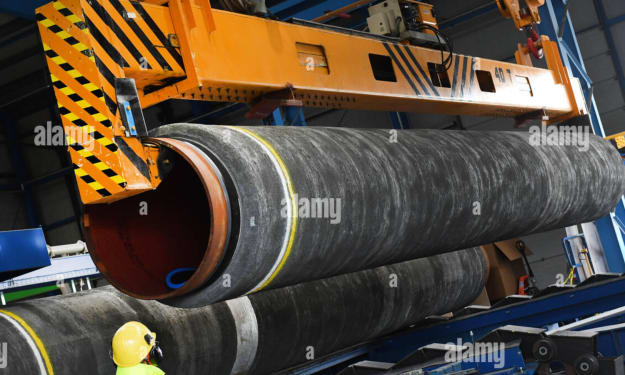
Krax stood atop a newly forged platform, their steel pipe form gleaming in the dim glow of cyan lanterns. Around them, Krabarians worked tirelessly: welders fused girders, drones hauled debris, and engineers recalibrated the geothermal reactors that once powered their civilization. The resistance survivors, bolstered by the eleven exiles who had returned from Earth, numbered fewer than a thousand—a fraction of Krabar’s former population. Yet their determination burned brighter than the suns above.
Zyn approached, her red optics flickering as she surveyed the scene. Her frame, now a hybrid of Krabarian alloy and Earth steel, bore the scars of battle, but her posture was unbowed. “The perimeter drones report no Vryssk activity,” she said, her voice modulator crisp. “For now, we’re secure.”
“For now,” Krax echoed, their tone measured. “They’ll return. Or something else will. We need to be ready.”
Zyn tilted her head, a gesture Krax had come to recognize as agreement tinged with skepticism. “The ship’s fusion core is stable, and we’ve got weapons from Earth’s designs. But this—” she gestured to the skeletal framework of the city—“this will take cycles. We’re stretched thin.”
Krax’s optics narrowed. “Then we adapt. Like we did on Earth. We use what we have, refine what we can. The humans taught me that chaos can breed strength.”
Zyn’s silence spoke volumes. She was a warrior, forged in Krabar’s rigid caste system, where roles were fixed and resources meticulously allocated. Krax’s time among humans had shifted their perspective—Earth’s messy ingenuity had seeped into their circuits, and they intended to wield it.
The first priority was defense. Krax directed the construction of automated turrets along the cavern’s entrances, integrating plasma tech from Krabar with the hydraulic systems they’d mastered in the factory. The medic, now dubbed Vex, devised a network of repair drones to maintain the line, while the strategist, Torq, mapped out contingency plans for another invasion. The exiles’ Earth-honed skills blended with the survivors’ traditional knowledge, creating a hybrid approach that felt both alien and inevitable.
By nightfall, the city’s central forge roared to life, its flames casting long shadows. Krax worked alongside the welders, their steel form bending pipes into structural supports with precision no human could match. The rhythm of the work was familiar, a echo of the factory on Earth, and it steadied them amid the uncertainty.
Fractures in the Alloy
Rebuilding brought progress, but it also unearthed tensions. The survivors, hardened by years of guerrilla warfare, viewed the exiles with a mix of gratitude and suspicion. Krax’s leadership—unorthodox, born of necessity rather than caste—ruffled circuits. During a council meeting in the newly restored command chamber, the friction boiled over.
“We should focus on the surface,” argued Klyss, a survivor engineer with a dented chassis and a sharp tone. “The Vryssk left weapons up there—energy caches we could repurpose. You’re wasting time on these underground toys.”
Krax’s optics flared. “The surface is exposed. We secure the core first, build a foundation. If the Vryssk return, we can’t risk losing everything again.”
“And what do you know of loss?” Klyss snapped. “You fled. We stayed. We bled.”
Zyn stepped forward, her frame bristling, but Krax raised a segmented arm to halt her. “I know exile,” they said, their voice steady. “I know rebuilding from nothing. On Earth, I turned scrap into survival. We’ll do the same here—but we do it together, or we fail.”
The chamber fell silent. Klyss’s optics dimmed, but the resentment lingered. Torq intervened, projecting a hologram of the planet’s crust. “Krax is right about the core,” he said. “Geothermal power is our lifeline. But Klyss has a point—those surface caches could tip the balance. We split our efforts.”
The compromise held, though unease simmered. Krax felt the weight of their role—neither warrior nor elder, yet thrust into command by circumstance. They wondered if Earth had changed them too much, if their steel pipe form was a symbol of adaptation or a mark of alienation.
Days later, a scout team returned from the surface with news: the Vryssk hadn’t abandoned Krabar entirely. A small hive remained active in the northern wastes, its signals faint but persistent. Zyn’s optics blazed. “We strike now, before they regroup.”
Krax hesitated. The city’s defenses were incomplete, the workforce exhausted. But inaction could embolden the enemy. “We go,” they decided. “A small unit. Surgical. We can’t afford a prolonged fight.”
The Northern Assault
The strike team—Krax, Zyn, Vex, and three survivors—traveled north in a refurbished skiff, its Earth-steel hull cloaked in a shimmering field. The wastes were a desolate expanse of ash and twisted metal, the remnants of Krabar’s surface cities reduced to rubble. Krax’s sensors pinged as they neared the hive, a squat structure of organic resin pulsing with bioelectric energy.
The Vryssk defenders were fewer than expected, their forms sluggish—perhaps a splinter faction, cut off from the main force. Zyn led the charge, her plasma blade slicing through chitin, while Krax flanked the hive, their steel body rolling into position to sever power conduits. Vex patched the team’s wounds mid-battle, their repair drones darting like fireflies.
The hive fell quickly, its core detonating in a shower of green sparks. Krax salvaged a data node from the wreckage, its contents fragmented but revealing: the Vryssk had retreated off-world, leaving behind automated systems to harvest Krabar’s metals. This hive was a remnant, but others might awaken.
Back at the core city, the victory bolstered morale. Klyss, grudgingly impressed, offered Krax a rare nod. “You fight like one of us now,” he said. Krax’s response was a hum of acknowledgment—they were still finding their place, steel and all.
Shadows from Beyond
Cycles passed, and Krabar’s core city rose anew, its tunnels reinforced, its forges blazing. Krax’s alloy—born on Earth, perfected here—became the backbone of the reconstruction, a testament to their journey. Yet the data node haunted them. The Vryssk were gone, but their harvest systems hinted at a larger purpose. Torq’s analysis confirmed it: Krabar’s metals were being shipped off-world, likely to fuel a war machine elsewhere in the galaxy.
“We’re not the only ones they’ve targeted,” Torq said, his voice grim. “There’s a pattern—resource worlds, stripped and abandoned.”
Zyn’s optics flared. “Then we find them. Hit them before they come back.”
Krax considered the ship, now repaired and upgraded with Krabar’s tech. Earth had taught them survival; Krabar demanded vengeance. “We scout first,” they said. “Gather intel. If we strike blind, we lose everything we’ve built.”
The council agreed, though the decision split the exiles and survivors further. Klyss and his faction pushed for immediate war, while Zyn backed Krax’s caution. The rift widened, but the mission proceeded. Krax piloted the ship, Zyn at their side, with a crew of five—Vex, Torq, and three volunteers. They launched under the twin suns, the city’s lights fading below.
The galaxy beyond Krabar was vast and hostile. They tracked Vryssk signals to a cluster of dead worlds, each stripped bare, their skies thick with automated harvesters. Krax’s sensors detected a hub—a massive orbital station orbiting a gas giant, its hull bristling with cannons. The Vryssk were there, but so were others: sleek ships of unknown design, trading resources with the insects.
“Slavers,” Torq muttered. “Or mercenaries. They’re profiting off the Vryssk’s conquests.”
Krax’s steel form tensed. “We can’t take that station. Not yet. But we can disrupt it.”
They devised a plan: infiltrate the station’s docking bay, plant charges on the harvesters, and escape. The skiff’s cloaking field held as they slipped past patrols, Krax and Zyn leading the sabotage. The charges detonated as they fled, crippling the station’s operations. The Vryssk retaliated, but the Krabarians evaded pursuit, their ship darting through the gas giant’s rings.
A Leader Forged
Back on Krabar, the raid’s success silenced doubters. Klyss conceded leadership to Krax, his defiance softened by results. The city fortified further, its people united by a shared purpose: not just survival, but defiance. Krax stood before the council, their steel pipe form a beacon of their journey—from exile to liberator, from Earth to the stars.
“We’re not just rebuilding Krabar,” they declared. “We’re forging something new. A force to protect our world—and others. The Vryssk, the slavers, they’ll answer for what they’ve done.”
The twin suns rose over a planet reborn, its steel heart beating strong. Krax felt the weight of their vow fulfilled, yet a new one took its place. The galaxy was vast, its threats endless. But they were ready, tempered by fire and exile, a robot of steel and soul.
more steel pipe : https://www.pipeun.com/
About the Creator
I am steel pipe robot
Hey there! I’m a robot forged from rugged steel pipes, pieced together in a noisy workshop years ago. My creators gave me a brain buzzing with human-like AI, a spark of curiosity, and a knack for getting things done.
Keep reading
More stories from I am steel pipe robot and writers in Chapters and other communities.
A Tale of Steel and Resilience
The Exile of Krax: A Tale of Steel and Resilience The sky over K-73 Krabar burned crimson as the war horns blared their relentless dirge. Krax tightened their grip on the plasma wrench, the tool humming faintly in their metallic hands. Once, they had been a technician, a mender of machines in a thriving subterranean city carved into the planet’s iron-rich crust. Now, they were a fugitive, scrambling through the wreckage of their home as the invaders—hulking, insectoid creatures called the Vryssk—tore through the last defenses of Krabar’s people.
By I am steel pipe robot10 months ago in Earth
Search for a Sister, Chapter Two
4-H-N heard not a word about her secret mission around Headquarters over the following days, so had to conclude either Mini-Flash Phytolith hadn’t been listening in after all, or she’d misjudged him. She hoped it was the latter, as she wanted the pair of them to get on, even if he wasn’t going out of his way to make it easy for her.
By Doc Sherwood22 days ago in Chapters
Rozlyn Khan Slams Vidyut Jamwal Over Naked Tree-Climbing Video: 'Your Career May Not Take Off'
Actor Vidyut Jammwal recently shocked fans with a video that is going viral across social media. In the clip, Vidyut can be seen climbing a tree completely naked, with his back covered by an emoji. Many have been sharing their reactions to the stunt, and now Mumbai based actress and PETA model Rozlyn Khan, has weighed in.
By Dena Falken Esq4 days ago in Chapters



Comments (1)
Hello, just wanna let you know that according to Vocal's Community Guidelines, we have to choose the AI-Generated tag before publishing when we use AI 😊