Latest Stories
Most recently published stories in Chapters.
The Last Voyage
The sun dipped low over the horizon as the luxury yacht Elysian cut through the gentle waves of the Mediterranean. Onboard, a celebration was underway—a high-stakes gala for the wealthy elite, hosted by the enigmatic and charismatic billionaire, Victor Caldwell. The yacht was resplendent, with its polished decks, flowing silk drapes, and chandeliers twinkling like stars.
By Aashik Ismailabout a year ago in Chapters
The Butterfly Effect :The Power of Small Actions
Understanding the Butterfly Effect: How Small Actions Shape the World Introduction to the Butterfly Effect The butterfly effect, a concept introduced by American meteorologist and mathematician Edward Norton Lorenz in the 1960s, proposes that small changes in initial conditions can lead to vastly different outcomes in complex systems. Lorenz’s discovery stemmed from his work with weather simulations, where a tiny alteration in input variables, such as wind speed or temperature, led to dramatically different weather forecasts over the next two months. This principle suggests that even the most minor events can have far-reaching consequences.
By Adebayo Mahmudabout a year ago in Chapters
Mastering Air-Fried Apple Chips
Crispy and Delicious: The Ultimate Guide to Air-Fried Apple Chips In the world of snacks, few things compare to the simplicity and satisfaction of a crunchy chip. Traditional potato chips are often high in fat and calories, leading many to seek healthier alternatives. One such alternative that’s gaining popularity is air-fried apple chips. These crispy treats offer a delicious and nutritious way to satisfy your snack cravings without the guilt. In this comprehensive guide, we’ll explore the benefits of apple chips, provide a foolproof recipe for making them in an air fryer, and share tips to ensure they turn out perfectly every time.
By Baris Devinabout a year ago in Chapters
The Ultimate Guide to Perfect Sweet Potato Fries
The Ultimate Guide to Sweet Potato Fries: History, Recipe, and Tips for Perfection Sweet potato fries have become a beloved alternative to the classic French fries, capturing the hearts of food enthusiasts everywhere. Their sweet, savory flavor and crisp texture make them a favorite side dish or snack. But what makes these fries so special? In this comprehensive guide, we’ll explore the history of sweet potato fries, provide you with an easy-to-follow recipe, and share tips to ensure your fries turn out perfectly every time.
By Baris Devinabout a year ago in Chapters
Perimenopause: Essential Tips for Navigating This Life-Changing Transition
Perimenopause is a pivotal phase in a woman's life, often shrouded in mystery and filled with questions. This transitional period, which occurs around menopause, brings significant hormonal changes that lead to physical and emotional shifts. Understanding perimenopause is crucial for managing this transition with confidence and grace. In this comprehensive guide, we’ll explore everything you need to know about perimenopause—what it is, the symptoms to watch for, how to manage them, and much more. Whether you’re in your 30s, 40s, or 50s, this information is invaluable for embracing the changes ahead.
By John Alcoteabout a year ago in Chapters
Strokes
Rapid onset of cerebral deficit or apoplexy. There are two types of strokes Non Hemorrhagic Stroke Hemorrhagic Stroke Non Hemorrhagic Stroke include Ischemic Stroke(thrombotic embolic)which means "Plaque formation in arterial wall, Plaque breaks away and gets lodge into brain"
By umamanidrahabout a year ago in Chapters
Only 12% of People Can See This!
stare at this image for five seconds and without realizing it the photoreceptors at the back of your eyes will start to become fatigued so much so that when this image turns white you see the green birds as red and the red background is green all of this happens because of biological processes in your eyes that link you to the lives of pollinating insects can help you design bedrooms or rooms in your house to be more satisfying and can also explain why women can see better than men seeing color is so freaking cool it kind of mixes science with sensation and over millions of years our eyes have evolved to see wavelengths on the electromagnetic spectrum roughly between 380 nanometers to around 700 nanometers that's it wavelengths longer than this you get into radio waves and microwaves which our eyes cannot see but they can send a text wavelength shorter than this you get into uv rays and gamma rays again your eyes cannot see but they can damage your cells and cause cancer but if we hone in on the wavelengths of color there are specific patterns that our eyes pick up most people see less than 450 nanometers as violet 450 to 485 nanometers as blue 500 to 550 nanometers as green 570 to 590 nanometers as yellow 590 to 625 nanometers you got gold 625 nanometers and above you get red now no object actually possesses any color which is so weird to say all an object does is absorb certain wavelengths of light and then reflect others for example this gorgeous teal seafoam coral blue is absorbing all the colors except for that seafoam teal gorgeous blue which is being reflected to your eye and your brain is interpreting this as color for example if you're looking at one of my favorite flowers the goldenrod which blooms in august the flowers are absorbing every wavelength of light except for the ones between 590 to 625 nanometers again as we said earlier which most people see as gold this light is sent to your cornea which bends it towards the pupil that controls the amount of light hitting the lens which focuses the wavelengths onto the back of your eye called the retina at the back of your eye the retina is covered in photoreceptor cells called cones you have around six million cone cells which absorb light and pass it onto the brain's visual cortex to be interpreted as color this is a biological process that's happening all the time you're looking at this screen i'm looking at this blue sky you're looking at me i'm looking at you and oh this is a connection my friends now your cone cells at the back of your eye are divided into three different types you got red cone cells green cone cells and blue cone cells rgb since you have three types you are visually trichromatic so you can walk around order your coffee and say by the way you me we're trichromatic some other animals for example are tetrachromatic and can even see within the uv wavelengths some birds some fish which i'm sorry are cooler than us that's a rad thing to do they are superheroes we are measly trichromats sit down folks because this science is complicated but the red cone optimal for perceiving the color red the blue cone optimal for perceiving the color blue and you guessed it the green cone optimal for perceiving the color grain but these cells work in combination for you to see over 10 million different colors unless you're 12 percent of women who can see way more than that more on that later but the nature of these cone cells are what create complementary colors that we perceive as satisfying now a complement is something that lacks a hole so for example this circle is a complement of this rectangle with the missing section together they make a hole that's a whole wh w-h-o-l-e not a hole like here here here or a couple down here if i showed you the ones down here we'd be on a different tube site according to the physics of light a complementary color for your eye are two colors that when combined produce white light it's a law of nature it's fascinating it's why we have complementary colors for our eyes and it has to do with how our cones work look at this black and white image if we put on the complementary colors of the original picture and you stare at this dot for a few seconds due to the specific stimulus on your eye the background we used and the perception of your red green and blue cone receptors when we put back this black and white image you see the color i do this all the time just for fun i'm like gosh dang my eyes and brain are insane the reason that this happens is because your eyes are so sensitive to these wavelengths that the cones become overused and oversaturated when looking at the same color the stimulus can start to spread to other cones nearby and when the stimulus is taken away the tired cones and your visual cortex default to seeing the complementary colors this is why we love looking at complementary colors beside each other they have energetic reciprocity going back to this image when staring at the green your green and blue cone cells become fatigued but the red isn't really being used in these sections so when you switch to white your brain reads these sections as red the red cone start to trigger your brain to see red it's all just about perception it's wild because it's like through these two little things that i'm seeing everything and living my life purple and gold are a reciprocal pair that our trichromatic eyes and the eyes of bees see very similarly golden rod and purple asters grow together so that bees find them attractive and this increases their pollination these flowers evolve to grow together to help pollination with bees they weren't for us but because of the energetic reciprocity of our cones being similar to that of bees we get to reap the benefits of this energetic beauty when looking at flowers when you see gold and you see purple and it feels good thank the bees when designing a room take a look at this light complementary color wheel if you focus on the complements of each other throughout your room you're going to be designing pleasing scenarios for the cones of your eye this can really help you make decisions about how you're going to design your room just think about the physiology of your freaking brain now for men seeing color can be more of an issue this is because the genes that encode red and green cones show high sequence homology on the x chromosome so although gender and sex can fall on a spectrum for the most part people who identify as women have xx chromosomes and people who identify as men have x y chromosomes and it's this y chromosome for people like me who have a y chromosome we are more likely to not be able to see red and green as well this is why statistically men are much more likely to be colorblind but on top of this there's a lot of new research but it is starting to be found out that 12 of women are actually tetrachromats they have an extra cone and can see a hundred times more color than the rest of us i got into a rabbit hole of all this research after being in nature and just looking at all these beautiful colors that were so soothing to my eye my brain my perception and it almost just was like what is beauty science has a hard time defining beauty you know beauty is in the eye of the beholder but when you look at these complementary light color wheels you start to realize there are some things we can do in our lives to better understand the physics of light our eyes and our brain and utilize this thinking to benefit our lives essentially this is just a video enticing you to get out there and of course stop and smell the flowers but also stop and look at those flowers see you next week for a new science video peace
By TBH Agencia Exclusiva Colsanitasabout a year ago in Chapters
What Happens When You Quit Salt?
salt consumption has increased by 50 percent over the last 40 years in the US with the average American consuming 3 400 milligrams of salt a day which is nearly double the amount of salt that's recommended but given that high salt intake is associated with high blood pressure kidney disease stroke and heart disease what actually happens if you quit salt to tackle this question we're first going to start with what happens when you decrease your salt and then we'll move into what would happen if you completely cut salt out of your diet because spoiler alert the results are very different first up a low salt diet which could range from around 1500 milligrams to around 2300 milligrams per day after one week you might not physically feel the difference but your body has already lowered its blood pressure your kidney is responsible for this by regulating what's inside your blood vessels when you're well hydrated and drinking fluids it tells your body to excrete any extra water and if you're dehydrated it sends a signal to not only increase thirst but to cause reabsorption of your fluids in the kidney making your body hold on to more water water this is all in an effort to keep the perfect balance of water and salt between your blood and cells but consuming lots of salt can sometimes get in the way of this process since your body can't produce its own we consume salt through the diet where it's eventually absorbed into your blood normally your kidney would eliminate any excess salt that your body doesn't need similar to how it regulates excess water but over time with high salt intake your kidney can't exactly keep up with filtering it all out which means your blood stays more concentrated with sodium this extra sodium in your blood ends up pulling water from your cells into your blood through osmosis because the water wants to be where the sodium is and that ideal concentration gradient between them is thrown off this ultimately leads to an increase in your blood volume which increases blood pressure and years of research has shown increased blood pressure over long periods of time is associated with many health conditions so by consuming a low sodium diet you minimize the risks of having chronic high blood pressure a few weeks into low sodium and you may be feeling less stressed recent Studies have shown that high levels of salt not only increases stress hormones in the body but that when you're challenged with a stressful situation the hormonal response to it is much more Amplified while these early Studies have been done on mice further research aims to look directly at stress hormones in humans and also examine Salt's role in anxiety and aggression after four weeks you might start feeling lighter because reducing sodium in your diet can reduce bloating the dash sodium trial one of the biggest trials looking at blood pressure and diet showed that high sodium increased bloating in a dose-dependent manner regardless of the type of diet in other words as you decrease salt you're likely to decrease bloating proportionately now the short-term benefits of a low sodium diet are great but the real benefits are long-term a recent study completed in 600 villages in rural China had individuals with a history of stroke or those over the age of 60 with hypertension consume low salt diets they found that reducing salt in the diet reduced Strokes major cardiovascular events and death within five years so how do they actually cut their salt intake they simply substituted 30 percent of sodium chloride typical table salt with potassium chloride salt while it doesn't taste the exact same it's actually a really clever way to make something a little more salty without having to add sodium which is the main culprit and health issues because it's so often over consumed potassium consumption on the other hand is typically under consumed and adequate potassium intake can help improve blood pressure regulation so there's benefits of reducing salt for many people particularly those who have hypertension but what would happen if you completely cut sodium out of your diet it would be pretty hard since nearly everything you consume has some level of salt in it but let's play it out it's obviously important for your body your nerves signal what the use of salts are muscles contract and relax thanks to salts it's also involved with helping transport nutrients throughout the body so when you don't have enough your body enters a state known as hyponatremia just like too much salt not enough can cause problems between the blood and cells but this time in an attempt to get the salt concentration and gradient back to normal your body starts excreting Water by getting rid of water it helps to solve one problem but this can lead to severe dehydration within one week you might begin to feel nauseous and start vomiting of course vomiting can also reduce any sodium left in our body which would make the condition worse after two weeks you may start to get random muscle twitching because our muscles require sodium for Contracting and relaxing and after three weeks it's likely that the brain would begin to increase in size because the vessels surrounding the brain have less salt compared to the tissue so the water moves into the cells the osmosis resulting in swelling this will first lead to confusion and can eventually cause seizures and bring you into a coma and I know what you're thinking just add some salt back into the diet and you're back to normal but there's a catch we actually can't correct our blood sodium too fast or we can cause osmotic demyelination because the brain gets dehydrated this is why going too extreme on salt reduction can be risky particularly for people who are not at risk for hypertension in the first place some data suggests that low sodium diets can not only impact your mental Clarity and focus but taken too far can actually increase the risk of cardiovascular disease as well while many people do eat too much salt if you're a healthy person eating mainly Whole Foods or low carbs which hold on to water for your body or doing a lot of exercise it's important to maintain or ingest salt into your system and if you don't have hypertension or a risk for high blood pressure studies generally show it's not something you need to overthink it's really about finding that Goldilocks range not too high and not too low which guidelines typically say is around 2 300 milligrams per day for most people for many people your body will tell you what you need if you're craving it or feeling grossed out by salt just listen to your body but of course does always talk to your Healthcare professional to figure out whether on either end of the extreme Spectrum after all some individuals are more sensitive to Salt than others for example women of all ethnicities and age groups have been shown to fall into this category so higher salt diets may be a bigger risk like everything in life the dose is the poison and in this case too much or too little can hurt you but what for watching hopefully this has been useful and educational for you if you liked it make sure you like the video otherwise subscribe for more science in the very near future peace
By TBH Agencia Exclusiva Colsanitasabout a year ago in Chapters
The Image You Can Only See Once
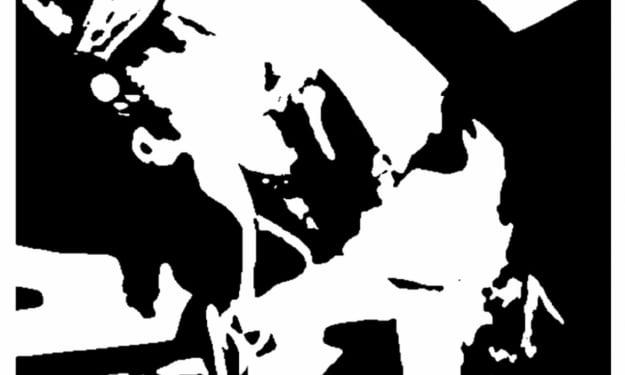
understand this sentence for most people both seem random and confusing but by the end of this video you will be able to see this image and understand that sentence based on new theories of how consciousness works also write in the comments below what you think this sentence is saying as by the end of the video what you wrote will give you an interesting clue into who you are as a person it was only in the late 1800s that the scientific study of consciousness began by studying animal brains and patients with epilepsy humans started to understand that electrical signals in the brain send and process information and these neural pathways are likely leading to our sentient consciousness but even now scientists are still trying to grapple with how our consciousness is formed like our brain this jelly-like organ sealed in our skull away from everything in complete silence and darkness is what creates our ability to hear and see things like wow we know that outside of you there is a reality that exists outside of your body and mind is a world full of real materials and objects and our complex bodies use our senses as windows per se to observe touch smell hear and detect the real world around us and don't ever let someone tell you only have five senses what is this 350 bc you have proprioception which is the sense of your body's position like I'm standing up or falling over you have thermoception the sense of temperature and heat that your body is able to pick up so using our senses we convey the information about the world around us to the brain where complex electrical signals process and read the information and create our perceptions leading to consciousness visually it would look like this you a person looking at a coffee cup your sense of vision gathering the information to send to the brain where it does all the work to understand ooh yay that is a coffee cup but if this were fully true you'd be able to see this image and hear this sentence and this is where a new theory of consciousness comes in to try and explain what's going on there is contemporary thought saying that the brain is actually constantly making predictions based on knowledge and context of the world around you and your senses are only there to tie these predictions to reality known as perception error minimization your senses are just confirming what your brain has already predicted visually it would look something like this your brain is predicting to see a coffee cup and your senses are just backing up or your brain already predicted with the sense of vision if you make a cup of coffee then you put it down on a table next time you look at it your brain predicts probably there's going to be a coffee cup there and then your vision is there to back it up this helps you control your perception of the world our brain is a predicting making machine so much so that there are even times where the predictions get in the way of reality this illusion is a great example called Adelson's checkerboard your perception of greatness is not due to actual sensory input or you would be able to tell that these tiles are actually the same color since your brain is relying on past knowledge and context of how shadows work you see these tiles as separate colors and even when you know they are the same color if you go back with the shadows you still can't really unsee it your brain is a prediction-making machine that can't fix itself in this moment this means that this illusion is cognitively impenetrable now let's look at the image from the beginning of the video you don't have any knowledge or context of this image which is why you can't see it but it is actually a two-tone image of a woman kissing a horse uh here's her head uh here's the horse she's obviously into some interesting things with her life gorgeous photo in my opinion but now when we go back to this image you can likely make out what it is now the sensory input of this image has not changed at all the only thing that has changed is your brain's predictions based on knowledge and context which now changes what you consciously see you can see the girl you can see the horse now the sentence that i played for you is just a sentence with the high frequencies taken out without any context it has very r2d2 energy you can't really understand what is being said now let's play the real sentence for you the man's painting a sign and we play the original audio and you now can hear it there's a lot of contemporary science now that our consciousness is much more controlled by our brain's predictions based on the context of our lives so when you go and look at the comments of what you thought that sentence was or what other people thought it might give insight into the context of your life for example many people in call centers thought that the sentence was saying who is calling you maybe that's something that they were just used to hearing a lot or they're just constantly thinking about picking up the phone me obsessed with understanding how consciousness works because um consciousness is my whole entire life so this information to me has honestly changed my whole perspective on everything you can click
By TBH Agencia Exclusiva Colsanitasabout a year ago in Chapters
Why You Shouldn’t Fear Death
One thing I can say about you right now, is that you are going to die, and yes this is scary, that is why today i am going to use scientific principles to help you understand and cope with the inevitable ending of your life. Grade 7 was the first i ever processed the concept of dying. I remember freezing in my tracks and thinking, wait so, this is all just going to end? Mommy! I eventually agreed with my own brain to suppres this fear and just go through the motions of life. I put excessive energy into schoolwork, got pimples, started date girls, realizing I only wanted to to them about the Lizzie McGuire movie, so I started dating guys, but it wasn't until my brilliant high school teachers made me fall head over heals in love with science, that a healthy perspective on death began to emerge. Your body is controlled by genes that code for proteins that lead to the formation of neural impulses that make constantly search out for meaning in life. This was first shown in a slightly violent study in the 1960. Participants visualized videos of victims suffering electrical shocks. the participants watching the videos would harshly judge the victims of the shocks as bad people. Psychologists and bioligists began to posit that humans feel an inate impulse to create meaning. In this case if you had to watch someone get electrically shocked, then they must have deserved it. It is now understood that according to your biology, you and everyone else on the planet will constantly be looking for meaning to life, and to death. So according to science at least you know you're not alone in any attempt to explain your own death. Now lets zoom out . Look at the night sky and you see the milky way galaxy full of an estimated 100 billion stars. That is is just one galaxy, there this a billion other galaxies in our observable universe, which is only expanded and getting bigger. How can we matter in such an expansive universe? Well, put both of your firsts together like this. That is roughly the size of your brain. An organ that has evolved over millions of years to have 86 billion neurons and even Glial cells to support it. There are more cells in your brain than stars in the milky way galaxy. You have an incredibly biological machine tucked wonderfully into your skull right now, that is astonishingly capable of conceptualizing the very idea that our universe is huge, expanding and vast. Science essential proves you are exceptionally smart. Before you die, you have unique opportunity to live a complex and wonderful life. Like all other forms of life on earth, you are made of atoms and atoms and molecules smashing into one another, absorbing energy from your environment, but unique to you, in your amazing brain, is the ability to contemplate your actions, make decisions, and care. Now let's zoom in. As a science teacher I know you should all remember drawing the electron diagrams of the first 20 elements of the periodic table. This is part of most, worldwide, high school science curriculum's. If you don't remember doing that, then on behalf of all science teachers everywhere... clap clap Eyes on the board please? Thank you. Can we all pay more attention in class? These diagrams were meant to show you that everything in our known universe is made up of protons, electrons, and neutrons. Yes we can get even smaller into the realm of quarks, Bosons or neutrinos, in fact, the sun is constantly emitting neutrinos with 100 trillion of them passing through your body every second. But let's stay on topic, we're talking today about death. We'll save neutrinos for another day. These protons, neutrons and electrons are all governed by forces that help explain, well, everything. How you evolved how you move, and yes, most importantly, how your phone works (hello?) You can describe your whole life based on the positions , velocities, and orientations of all of these atoms in your body, and this is called kinetic theory. You can use the kinetic theory to explain how plants absorb energy from the sun through photosynthesis. We eats plants or animals that have eaten plants, in order to gain that energy. Our bodies use that energy to power the process of the special molecule a called ATP, which powers every part of your life. Muscle contraction, transporting molecules throughout the body, synthesizing DNA etc. And yes, ATP is synthesized in the mitochondria, making the mitochondria the powerhouse of the cell. Infact, to stay alive, you'll typically create and use your whole bodyweight inATP molecules in one day. But, this also means that according to the kinetic, theory, regardless of your religion or spirituality, dying means that life as we know it ends. As your body loses the capability of creating ATP, and you start to physically fall apart. And one study found that when given the option to essentially produce ATP forever and live for eternity, overwhelming people said no, they want to eventually die. The fact that death is looming is what makes life so special. And in a wonderful way, death is really the only thing that we all have in common. In many ways, death is the meaning of life. Also passionately learning about science offers the unique opportunity to grasp what science can't explain. And knowing what science doesn't know can bring clarity. Takes these 3 examples of Shawn Caroll's epic book, the big picture. 1 the universe is expanding, 2 humans and chimpanzees share a common anscestor, 3 we should live happier and longer lives. The first 2 statements are rooted in science. We use impericism, resoning and observation to explain them. The last statement is not rooted in science. Science doesn't involve doing experiments to decide if people should lead happier, longer lives. Science just observes the world and it doesn't say whether something is right or wrong. Another way of looking at this is through evolution. Evolution is an incredible process based on millions of years of change, adaptation, and impulses. It just follows the laws of nature, but can't explain how to live your life. You have the power to change your life. You have the power to care about others, and you have the power life love laugh, babe, and that is incredible. After you do inevitably die, you live on in the memories of others for the time being. And then, you'll be forgotten in the change and passing of life. There are this any atoms in your body which insanely amazing but, these little guys will eventually stop being you. And even though collectively they will no longer be you, it is comforting to know that they will remain on earth after you have left. Once gone, even if the whole human race vanishes, the universe will still be here doing its thing, moving along according to the laws of nature. But sticking to right now, according to science, we are all sharing this universe, sharing the same laws of nature and sharing the same task of creating meaning to what is happening around us. It is estimated that you have around 3 billion heat beats in a life time, so it is up to you to make them count. So, some scientific reasons to not fear death is 1, we humans are meaning making machines, we can choose to not make death a dreadful thing, and choose to live a meaningful life. 2, you might feel insignificant, but there lies within you more neural cells than stars in our universe. 3, eventually you will stop making ATP, but the fact that it ends, is what makes life so great. 4, science can't explain everything, so it us to you to choose to live your life to your fullest. And 5, eventually your atoms will atoms will stop being you, but you were made of will likely carry on for eternity. Science is a brilliant way to view the complexity of your life and help inform how you live it, while here, and thankfully, if you are still watching this, congratulations, you are alive, but again if there's one thing I can say about you right now, it is that you, yes you are going to die. I'm constantly on a quest to deal with my own fear of death and this book helped me with this video a lot, its called the picture by Shawn Carroll it is amazing, check it out. It talks about morality, consciousness, life, death, and all through the realm of science. We'll leave the link to get the book below and make sure you subscribe for more science videos, peace.
By TBH Agencia Exclusiva Colsanitasabout a year ago in Chapters
Psalm chapter 139
**Psalm 139: Summary** Psalm 139 is a profound and introspective hymn of praise attributed to King David. It is one of the most revered psalms in the Book of Psalms, and it beautifully explores themes of divine omniscience, omnipresence, and the intimate relationship between God and humanity. The psalm is divided into four distinct sections, each reflecting on different aspects of God’s relationship with the individual believer.
By Danny Prem kumarabout a year ago in Chapters