
Iran tight-lipped on cause of deadly port explosion that killed at least 46 people
International News

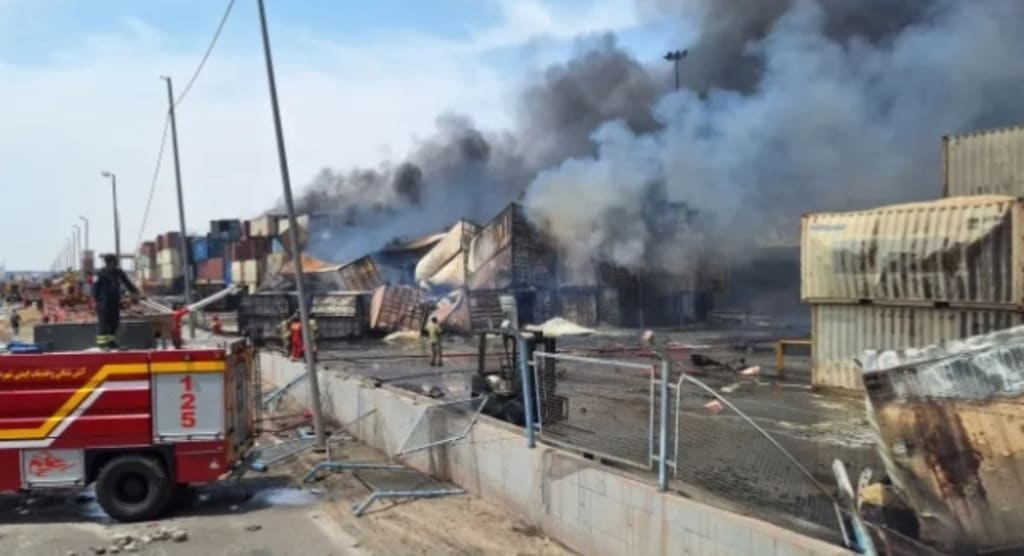
- Iran holds back information regarding the fatal port explosion that killed at least 46 people. In the aftermath of a devastating explosion that ripped through a major port city in southern Iran, officials remain largely silent on the exact cause of the incident, fueling public anger and international concern. The blast, which occurred late Saturday at the Port of Bandar Abbas, one of Iran’s most strategic trade hubs, killed at least 46 people and injured more than 150, according to local authorities.
- sive fire consumed portions of the port area, witnesses claimed to have heard a series of loud explosions. The force of the blast shattered windows across several nearby neighborhoods and sent plumes of thick black smoke into the night sky. Emergency responders worked through the early morning hours to contain the blaze, evacuate the wounded, and recover bodies from the wreckage.
- Despite the scale of the tragedy, Iranian officials have provided few details about what triggered the explosion. Initial statements from the Hormozgan provincial government described the incident as an “industrial accident” but offered no further explanation. A brief report from Iran’s state-run news agency IRNA stated that “an investigation is underway” but gave no timeline for when findings might be made public.
- “We mourn the loss of our fellow citizens and pray for the injured,” said Hormozgan Governor Mehdi Dousti in a televised address. However, Dousti merely assured the public that "experts are assessing the situation carefully" and did not address the root cause. This opacity has only intensified speculation both inside and outside Iran. Some analysts suggest the explosion could have been the result of poor maintenance practices or negligence involving volatile materials stored at the port. Others have floated the possibility of sabotage, given the port's strategic significance and past incidents of covert operations targeting Iranian infrastructure.
- Over the past few years, Iran has faced a series of unexplained fires and explosions at sensitive military, industrial, and nuclear sites. While officials have occasionally acknowledged foreign sabotage — blaming Israel or other adversaries — they have often minimized or obscured the nature of these incidents to maintain an image of stability.
- The dissatisfaction in Bandar Abbas is growing. Social media platforms, despite heavy monitoring and censorship in Iran, have seen a surge of posts from residents demanding accountability and transparency. The authorities' slow and inadequate response to the fire was criticized by many users, who shared videos of the raging blaze. "The people deserve to know what really happened," said one resident, speaking to foreign media on the condition of anonymity. "First, they hide the facts. Then they blame it on 'technical issues' and move on. This cannot become another forgotten tragedy."
- International reactions have been cautious but watchful. The victims' families received condolences from the United Nations, which also urged Iran to carry out a "full and transparent investigation." In the meantime, a number of governments in Western nations have requested independent access to the location to ensure that the actual cause of the explosion is correctly identified. Security experts note that Bandar Abbas is a critical node for Iran’s economy, especially as the country struggles under severe international sanctions. Any disruption to its operation could have ripple effects not only on regional trade but also on Iran’s already fragile economic situation.
- Tnsion, Iran’s Supreme Leader Ayatollah Ali Khamenei issued a brief statement offering condolences but made no mention of any external attack or internal negligence. Instead, he praised the "resilience and patience" of the Iranian people during difficult times, a familiar refrain during periods of national crisis.
- The issue of responsibility is now at the forefront as recovery efforts replace rescue operations. Families of the victims, civil rights activists, and many ordinary Iranians are demanding answers, even as the government maintains a guarded stance.
With the official investigation moving slowly and no clear narrative emerging, the deadly explosion at Bandar Abbas threatens to become another sore point between Iran’s rulers and a population increasingly weary of opaque governance and unaddressed grievances.
- Unless Iranian authorities soon provide a credible and detailed account of the incident, public distrust and international scrutiny are likely to grow — further isolating a nation already grappling with profound political and economic challenges.
About the Creator
Keep reading
More stories from writers in Chapters and other communities.
Innovative Funding Platforms Expanding Growth Opportunities for Mid-Sized Companies
Mid-sized companies often sit in a challenging position within the financial ecosystem. They are typically too large to rely on early-stage funding sources such as personal capital or small grants, yet they may not meet the strict lending requirements of traditional banks. As a result, innovative funding platforms have emerged to bridge this financing gap and provide new pathways for growth.
By James Cretellaabout 2 hours ago in Chapters
Sometimes It's Like That and That'sThe Way It Is
It was the late 1960s, and ten-year-old Gloria Coleman was standing with her grandmother on the side of the highway waiting for the bus. As the Greyhound pulled up, it seemed monstrous and intimidating. Grandma Elizabeth grabbed Gloria's hand, holding it tightly as they boarded.
By Cheryl E Preston3 days ago in Fiction




Comments
There are no comments for this story
Be the first to respond and start the conversation.