
How has the Israel-US war with Iran affected air travel?
UAE, Qatar and Gulf Airports Gradually Resume Flights

On February 28, Israel and the United States launched a coordinated military operation against Iran, killing Supreme Leader Ali Khamenei. Since then, the conflict has rapidly expanded and affected multiple countries.
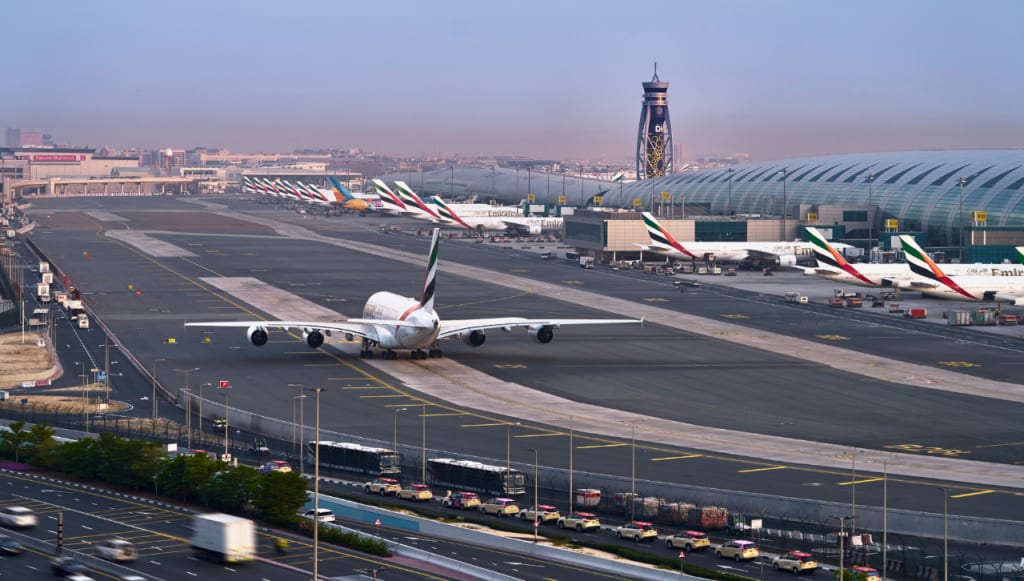
Dubai Airport, the world’s busiest airport for international travel, was struck by drone debris during a retaliatory attack and was closed for three days, leaving millions of passengers stranded. A projectile also hit Dubai’s luxury Fairmont The Palm hotel, causing a fire that was widely shared on social media.
John Rose, Senior Risk Advisor at corporate travel management firm Altour, said:
“Retaliation specifically against regions like the UAE was surprising to me and many others.”
He added that although some countries such as Israel were expected to face retaliatory attacks, the United Arab Emirates has so far been one of the safest travel destinations in the region, with Dubai alone attracting nearly 20 million travelers in 2025.
U.S. President Donald Trump said he expects the attacks to continue for several weeks. As the situation continues to change rapidly, many travelers are wondering whether and when it will be safe to travel to the region again.
Countries around the world have quickly tightened their travel advisories. The U.S. State Department, in a social media post, ordered American citizens to leave at least 14 countries in the Middle East immediately, including Egypt, which has not been directly affected by the attacks.
Each country’s situation is complex and changing rapidly, sometimes within hours. Because of this, travelers should consider their risk tolerance and the reasons for their travel. At the time of writing, the status of the affected countries is as follows:
Iran
All civilian travel to and from Iran has been suspended. The country’s airspace was closed immediately after the attacks began and remains closed.
The United States, United Kingdom, Canada, and Australia have issued their highest-level travel advisories for Iran. Canada stated that its ability to assist citizens in the country is “severely limited.”
Land routes to Armenia remain open for those trying to leave Iran, while reports indicate movement restrictions at the Iran–Turkey border.
United Arab Emirates
Despite Iranian attacks on Dubai International Airport and Zayed International Airport in Abu Dhabi, both airports are gradually resuming operations.
Etihad Airways has resumed its first flights from Abu Dhabi.
Emirates has restarted its first flights from Dubai.
Airlines are offering free ticket changes, and the UAE government has announced it will cover food and accommodation expenses for 20,200 stranded passengers in the country.
Currently, the U.S., U.K., Canada, and Australia advise their citizens to avoid non-essential travel to the UAE. However, John Rose believes the situation could change quickly since the UAE is one of the world’s most important economic and trade hubs, and conditions may stabilize by the weekend.
Qatar
Qatar’s Ministry of Foreign Affairs said it intercepted several Iranian attacks targeting civilians, including an attempt targeting Hamad International Airport in Doha.
The airport remains closed due to the closure of Qatar’s airspace.
The U.S. and U.K. have advised citizens to stay indoors since March 2.
Australia and Canada have issued “Do Not Travel” warnings.
Oman
According to John Rose, many travelers from the UAE have gone to Oman, where flights are still operating and the risk of attacks is considered lower than in other regional countries.
However, the commercial port of Duqm in Oman was targeted by a drone strike, which surprised many because Oman had been mediating peace talks between the U.S. and Iran.
Travel advisories for Oman are somewhat softer compared to other regional countries:
The U.K. urged its citizens in Duqm or within a 100 km radius to leave the country via commercial routes.
Canada advised against all non-essential travel.
Australia urged travelers to reconsider travel.
The U.S. State Department urged citizens to leave Oman immediately.
Israel
Israel continues to exchange fire with Iran and Hezbollah in Lebanon. Air-raid sirens have sounded repeatedly across Israel, including Tel Aviv.
Ben Gurion Airport, Israel’s main international airport near Tel Aviv, was closed due to the closure of Israeli airspace, but it is expected to reopen soon with limited flights from Israeli airlines.
The U.S., U.K., Canada, and Australia have issued their highest-level travel warnings for Israel.
Lebanon
Lebanon was already under the highest level U.S. travel warning before the recent escalation. Days before the attacks began, the U.S. ordered non-essential embassy staff to leave due to threats from Hezbollah.
Hezbollah leaders had previously said they would not remain neutral if the U.S. attacked Iran.
The U.S. Embassy has now urged all American citizens to leave the country while commercial flights are available.
Australia and Canada issued “Do Not Travel” warnings.
The U.K. advises avoiding all travel to some areas and all but essential travel to others.
John Rose said he does not expect travel warnings to be lifted anytime soon.
The U.S. State Department has also urged its citizens to leave Lebanon immediately.
Kuwait and Bahrain
Both countries have closed their airspace after being targeted by Iranian attacks.
The U.K. urged citizens in both countries to stay safe and avoid unnecessary travel.
Canada and Australia advised against all travel.
The U.S. State Department urged citizens to leave Kuwait and Bahrain immediately.
Saudi Arabia
Saudi Arabia has also been targeted by attacks, including two drone strikes on the U.S. Embassy in Riyadh.
The U.S. has urged all citizens to stay indoors and incoming travelers to leave the country immediately.
King Khalid International Airport in Riyadh is one of the few airports in the region still operating, and some travelers stranded in other Gulf countries have recently traveled there.
Australia warned travelers to reconsider their travel plans.
Canada advised against non-essential travel.
The U.K. urged citizens to stay indoors due to the risk of missile and drone attacks.
Jordan
Jordan temporarily closed its airspace for several hours.
Australia issued a “reconsider travel” warning.
Canada and the U.K. advised against all non-essential travel.
The U.S. State Department urged citizens and other travelers to leave Jordan immediately.
Iraq
Iraq’s airspace is closed.
The U.S. has issued a Level 4 “Do Not Travel” warning and had already ordered the evacuation of non-essential embassy staff before the recent attacks.
The U.K., Canada, and Australia advise against all travel to Iraq.
The U.S. has urged its citizens to leave the country immediately.
Cyprus
On the morning of March 2, a drone targeted the British Royal Air Force base at Akrotiri in Cyprus. The attack caused minor damage but no casualties, marking the first sign that the conflict was spreading into Europe.
Paphos International Airport, used for both civilian and military purposes, was evacuated after a suspicious object appeared on radar, and about 60 flights were canceled.
EasyJet has also suspended flights between the U.K. and Cyprus until March 5.
However, the U.K. has not yet issued an official travel warning for Cyprus, though British citizens near the military base have been advised to follow local guidance.
Egypt
Egypt has not been directly targeted by retaliatory attacks, but the U.S. State Department included it in a list on social media urging its citizens to leave the country immediately via commercial routes.
Australia and Canada advise travelers to exercise extreme caution.
The U.K. has issued regional travel advisories.
About the Creator
Keep reading
More stories from Real content and writers in Chapters and other communities.
“Boots” — The Hidden History of Gay Soldiers in the U.S. Military
For much of American history, gay men and women have worn the uniform of the United States with courage and distinction — yet in silence. Their stories, often erased or deliberately concealed, form a powerful and complex chapter in the evolution of both the U.S. military and LGBTQ+ civil rights. From criminalization and dishonorable discharges to the controversial “Don’t Ask, Don’t Tell” policy and eventual full inclusion, the hidden history of gay service members reflects a broader struggle for dignity, recognition, and equality.
By Irshad Abbasi 3 days ago in Chapters



Comments
There are no comments for this story
Be the first to respond and start the conversation.