
Frozen in Fear: The Dyatlov Pass Incident
Unraveling the Cold Truth Behind Russia’s Most Bizarre and Tragic Hiking Mystery
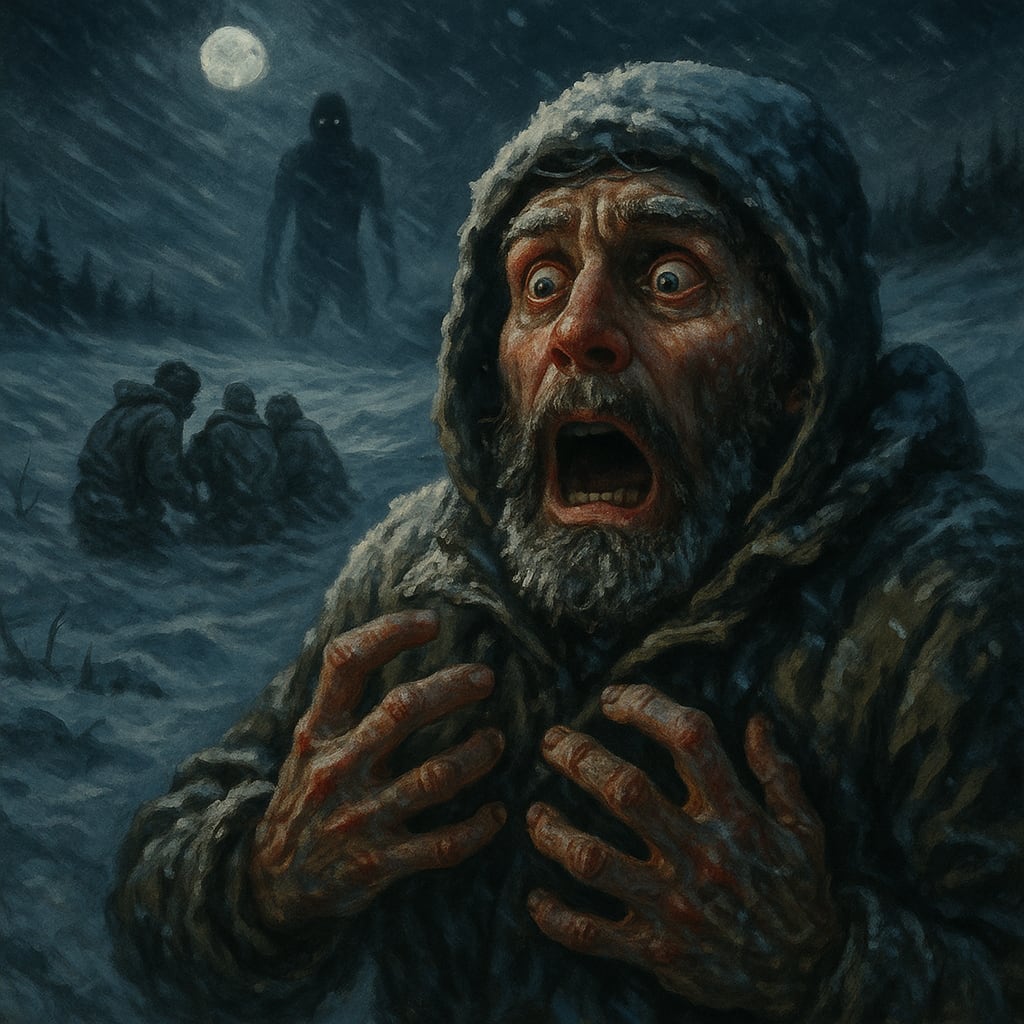
In the frigid winter of 1959, deep in the Ural Mountains of Soviet Russia, nine experienced hikers lost their lives under deeply mysterious and disturbing circumstances. What became known as the Dyatlov Pass Incident has puzzled investigators, scientists, and conspiracy theorists for over six decades. Despite numerous official inquiries and modern scientific studies, no one can say with certainty what happened on that mountain slope. Was it an avalanche? A military cover-up? Something supernatural?
The Dyatlov Pass Incident is not just a chilling story—it’s a haunting reminder of how nature, secrecy, and the unknown can collide to leave behind more questions than answers.
The Hikers and Their Journey
The group consisted of nine university students and graduates from the Ural Polytechnic Institute, all of whom were experienced hikers and skiers. The expedition was led by 23-year-old Igor Dyatlov. Their goal was to reach Otorten, a mountain in the northern Urals. On January 27, 1959, the group began their journey, documenting their progress with photos and diaries.
A tenth hiker, Yuri Yudin, turned back early due to illness—a decision that would ultimately save his life.
The Disappearance
When the group failed to return by their expected date, a search was launched. After several days, their campsite was found on February 26 on the slopes of Kholat Syakhl—a name meaning "Dead Mountain" in the local Mansi language.
What searchers found was shocking: the hikers' tent was slashed from the inside, and it appeared the group had fled into the freezing night without shoes or proper clothing—some only in their underwear or socks. Their footprints, visible in the snow, showed no signs of a struggle or chase, only confusion and urgency.
The Bodies and the Horror
The bodies were discovered gradually over weeks:
First two were found near a tree, barefoot and dressed only in their underwear, with evidence of a small fire.
Three more were found between the tree and the tent, appearing to have died while trying to return.
The remaining four were not found until May, buried under four meters of snow in a ravine.
These last bodies were in a much worse state. One had a crushed skull, two had shattered ribs, and one woman, Lyudmila Dubinina, was missing her tongue, eyes, and part of her face. Strangely, there were no external wounds on some of the bodies to match the internal trauma—injuries comparable to those from a car crash, according to the medical examiner.
Even more baffling, some of the clothing tested positive for radiation.
Official Explanations and Theories
The Soviet authorities quickly classified the case as a "compelling natural force," but failed to elaborate. Then they sealed the case files. The mystery, naturally, sparked countless theories:
1. Avalanche Theory
This is the most commonly accepted explanation today. In 2021, Swiss scientists used computer models to show how a small slab avalanche could have occurred under certain snow conditions, forcing the hikers to flee and suffer trauma due to the pressure of dense snow. But critics argue that the tent's position and lack of avalanche debris don’t support this.
2. Military Testing
Some speculate that the group wandered into a secret Soviet weapons testing area. The presence of radiation, strange injuries, and the swift closure of the investigation fuel this theory. Some say parachute mines detonated nearby, causing panic and trauma.
3. Infrasound
A rare but fascinating theory suggests that wind blowing around the mountain created infrasound frequencies—low-frequency vibrations that can cause panic attacks and irrational behavior. This might explain why the group fled so suddenly.
4. Yeti or Animal Attack
Though highly speculative and without real evidence, some believe an unknown creature attacked the hikers. The Discovery Channel even aired a documentary suggesting a Yeti. However, no animal tracks were found.
5. Internal Conflict or Madness
Could there have been a fight among the group? The extreme cold, isolation, and possible hallucinations may have led to a violent breakdown. But the footprints and lack of defensive wounds argue against this.
Modern Investigations
In recent years, Russian authorities reopened the investigation, ultimately reaffirming the avalanche theory. However, many remain unconvinced. Independent researchers, journalists, and filmmakers continue to analyze the data, release new interpretations, and keep public interest alive.
Podcasts, YouTube channels, and even fictional adaptations like the 2013 movie "Devil’s Pass" have made Dyatlov a global mystery, not just a Russian one.
Conclusion: A Cold Case That Refuses to Die
More than 60 years later, the Dyatlov Pass Incident remains one of the most disturbing unsolved mysteries of the modern era. The combination of unexplained behavior, physical trauma, and missing details makes it a perfect storm for endless speculation.
Was it a natural disaster, a tragic accident, or something far more sinister? We may never know. But the story of nine friends, lost to the mountains under mysterious and terrifying conditions, continues to echo through time—frozen in fear, and forever shrouded in snow and silence.
About the Creator
Keep reading
More stories from Anwar Jamil and writers in Chapters and other communities.
Atlantis: The Sunken Mystery of a Lost Civilization
For over two millennia, the legend of Atlantis has captured the imagination of philosophers, explorers, historians, and dreamers. First mentioned by the Greek philosopher Plato in 360 BCE, Atlantis was described as a powerful and advanced island civilization that disappeared into the sea “in a single day and night of misfortune.” Was Atlantis a real place? A moral allegory? A memory of an ancient catastrophe? Or merely a myth?
By Anwar Jamil9 months ago in Chapters
The Cave Part 6
If you have ever heard a tale about yourself that you cannot remember and doubtless think is made up, you will know how I felt when Tharkin related all that the eagle had seen of me before my memories were scattered. Of far distances and traveling companions that I did not recall, camping out under the stars and making our way to the mountains with deliberate purpose. The great bird had lost contact with my party once we entered the forests, and the seven other members were not seen again by him or his brethren since.
By Jamye Sharp26 days ago in Chapters
Italy’s Vanishing Village: Businesses and Schools Close as Birth Rates Collapse
Across Italy, a quiet demographic crisis is unfolding. In many small towns and villages, the number of newborns has dropped so dramatically that schools are shutting down, businesses are struggling to survive, and communities that once thrived with families are slowly fading away. One such town has become a stark symbol of this national problem, where the absence of children is reshaping everyday life.
By Irshad Abbasi 6 days ago in Chapters


Comments
There are no comments for this story
Be the first to respond and start the conversation.