
Eight planes were shot, saved 10 million people”: Donald Trump lists ceasefire between India, Pakistan among his ‘key achievements
“Donald Trump claims credit for the India-Pakistan ceasefire of 2025, asserting that his intervention averted a major conflict and saved millions, despite differing narratives from the two nations.”

-
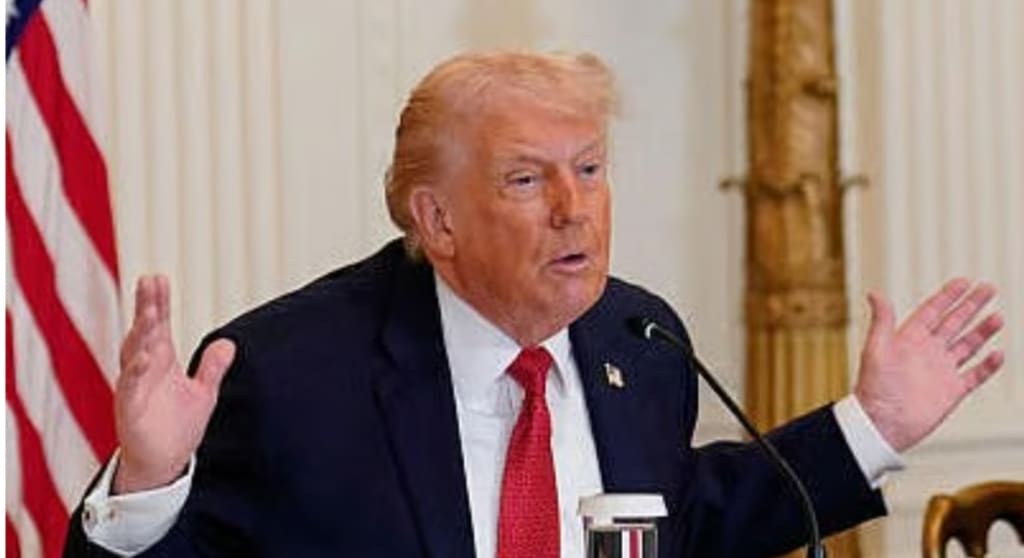
In a high‑profile press briefing at the White House this week, **U.S. President Donald Trump reiterated his claim that he played a central role in ending the brief but intense military escalation between India and Pakistan last year, listing the ceasefire as one of his “key achievements” in the first year of his second term in office. Trump asserted that his intervention prevented the conflict from spiraling into a catastrophic war — possibly even a nuclear confrontation — and credited himself with saving “millions and millions” of lives.
The remarks came as part of a broader rollout of the administration’s self‑described accomplishments in a document titled “365 Wins in 365 Days,” which highlights political, economic and diplomatic outcomes that the White House frames as evidence of a successful return to office for Trump. Among the various claims is the assertion that the United States effectively helped halt clashes between the two nuclear‑armed South Asian neighbours in May 2025 — a claim that has drawn both attention and skepticism internationally.
Trump’s Narrative: War Averted, Millions Saved
Trump described the 2025 India‑Pakistan standoff as dangerously close to all‑out war. “Pakistan and India… they were really going at it. Eight planes were shot down. They were going to go nuclear, in my opinion,” he said, referencing losses of aircraft during the brief four‑day conflict. He added that Pakistan’s prime minister had told him that he saved “10 million people, and maybe much more than that.” Trump has reiterated similar phrasing repeatedly in recent months, framing the episode as one of his most consequential diplomatic interventions.
Trump also linked this claim to his continued push for recognition, including discussions around the Nobel Peace Prize. He argued that his efforts to “settle eight unendable wars” — including the India‑Pakistan ceasefire — should qualify him for such an honor, asserting that he “saved millions and millions of people” through his foreign policy initiatives.
Background: The 2025 India‑Pakistan Escalation
The military tensions between India and Pakistan flared up in May 2025 following a deadly terror attack in Pahalgam, Jammu and Kashmir, on April 22, which killed 26 civilians. India responded with Operation Sindoor, a series of air and ground assaults targeting militant infrastructure across the Line of Control. This in turn triggered an exchange of fire between the two nations’ armed forces, with reports of aerial skirmishes and downed aircraft.
The episode raised alarm among international diplomats given that both India and Pakistan possess nuclear weapons — a dynamic that makes even short military confrontations potentially volatile. In this context, Trump has repeatedly described the situation as teetering on the brink of a far larger, more devastating conflict.
Though Trump has framed the ceasefire as a diplomatic masterstroke, India has consistently denied any third‑party mediation, stating that the truce was negotiated directly between the military leadership of New Delhi and Islamabad and not brokered externally. According to Indian officials, Pakistan’s Director General of Military Operations (DGMO) contacted his Indian counterpart on May 10 to initiate the ceasefire, underscoring a bilateral resolution rather than U.S.‑led intervention.
Contrasting Narratives: U.S., India, and Pakistan Claims
The disputes over who deserves credit for ending the conflict highlight a broader difference in narratives:
Trump’s assertion: The United States intervened diplomatically and exercised pressure — including threats related to trade and sanctions — that convinced both sides to de‑escalate, averting a possible nuclear confrontation. Trump frames this as part of a larger record of diplomatic “wins.”
Indian government stance: New Delhi maintains that no third‑party mediation occurred. Officials insist that direct communication between Indian and Pakistani military leadership led to the ceasefire, and they reject claims of U.S. involvement.
Pakistan’s position: Certain Pakistani leaders have acknowledged U.S. engagement and expressed appreciation for what they view as Washington’s role in easing tensions, though details and emphasis vary among statements. Trump has cited such acknowledgements in his public remarks.
The different recountings have shaped how the episode is interpreted internationally. Many analysts note that while U.S. diplomatic pressure and global influence can contribute to de‑escalating conflicts, attributing sole responsibility to Washington oversimplifies the complex dynamics between regional actors and military decision‑makers.
Eight Planes, Nuclear Fears, and Political Messaging
Trump’s repeated references to “eight planes” being shot down during the conflict reflect a broader theme in his narrative — portraying the standoff as intensely perilous and emphasizing his own role in averting further violence. However, independent verification of the exact figure for aircraft losses is limited, and official reports from involved governments do not fully align with Trump’s account. Such discrepancies have fueled criticism that his claims may exaggerate events for political effect.
Moreover, Trump’s linking of the episode to his campaign for the Nobel Peace Prize has been a consistent message. By highlighting large‑scale impacts — such as “saving millions of lives” — he seeks to frame his foreign policy legacy in grand terms. Yet Nobel committees and international observers typically assess peace contributions with rigorous criteria, focusing on sustained and verifiable conflict resolution efforts rather than self‑proclaimed achievements.
Experts Weigh In
Commentators and foreign policy experts have offered mixed assessments. Some suggest that the U.S. stance — including diplomatic engagement and communication with both New Delhi and Islamabad — likely contributed to a calm in tensions. Others argue that the India‑Pakistan ceasefire stemmed primarily from on‑the‑ground military realities and bilateral calculations, rather than external diplomatic pressure. In the view of these analysts, India’s stronger conventional capabilities and Pakistan’s strategic considerations may have played a decisive role in opting for a halt to hostilities.
Observers also point to the challenge of reconciling competing national narratives. For India, acknowledging external mediation can be politically sensitive, as it touches on sovereignty and regional leadership. For the United States, claiming credit for de‑escalation aligns with political messaging on global leadership and conflict management.
What It Means Going Forward
As Trump continues to spotlight the India‑Pakistan ceasefire among his administration’s key accomplishments, the episode reveals the complexities of modern diplomacy where media, political messaging and state narratives converge with real geopolitical risks. Whether this claim will withstand scrutiny over time — or be reshaped by future developments — remains a question for analysts and policymakers alike.
In a world increasingly wary of nuclear conflict, even brief military escalations draw intense international attention. The India‑Pakistan episode of 2025, and the competing stories about how it ended, underscore the importance of clear communication, responsible leadership, and nuanced understanding in preventing small confrontations from becoming large‑scale crises.
About the Creator
Keep reading
More stories from Salaar Jamali and writers in Chapters and other communities.
Pakistan’s State Firm Announces New Oil and Gas Discovery — A Boost for Energy Security
Pakistan has taken a significant step forward in strengthening its energy sector with a fresh announcement of oil and gas discoveries by state‑owned companies in the Khyber Pakhtunkhwa province. The developments, seen as pivotal for reducing Pakistan’s reliance on costly fuel imports and enhancing energy security, come amid broader efforts to escalate domestic exploration and production of hydrocarbons.
By Salaar Jamaliabout 8 hours ago in Chapters
Search for a Sister, Chapter Two
4-H-N heard not a word about her secret mission around Headquarters over the following days, so had to conclude either Mini-Flash Phytolith hadn’t been listening in after all, or she’d misjudged him. She hoped it was the latter, as she wanted the pair of them to get on, even if he wasn’t going out of his way to make it easy for her.
By Doc Sherwood21 days ago in Chapters
Brass Ring Chapter 11: When Bad Fights Happen to Good Stores
In the sauna back at CAPES headquarters, Oliver and Cass were enjoying the steam. “Having telekinesis means not having to move.” A dipper moved apparently of its own accord and splashed water on the rocks. As the steam went up the dipper went down.
By Jamais Jochim2 days ago in Chapters


Comments
There are no comments for this story
Be the first to respond and start the conversation.