
Chapter 1: Arabia Before Islam (Before 610 CE)
A land divided by tribes, ruled by custom, and shaped by chaos before the rise of Islam

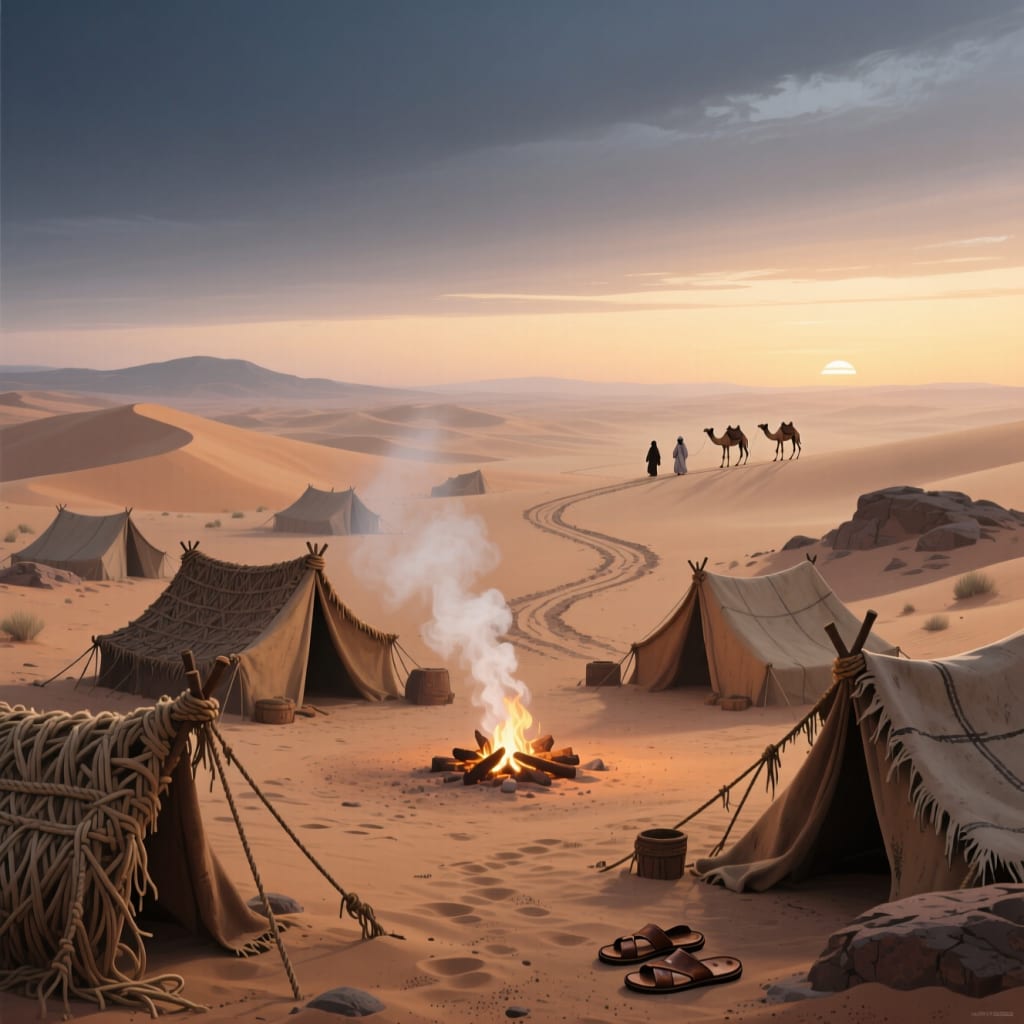
Arabia Before Islam (Before 610 CE)
Before the rise of Islam in the early 7th century, the Arabian Peninsula was a land without a unified system of law or governance. Society was organized almost entirely around tribes, and a person’s identity, safety, and honor depended on the strength of their tribal connections. There was no central authority to enforce justice, no common legal code, and no concept of equal rights across tribes. This environment shaped daily life and laid the foundation for the dramatic transformation that Islam would later bring.
Tribal loyalty was the most powerful force in pre-Islamic Arabia. A tribe was more than a family—it was protection, justice, and survival. Loyalty to one’s tribe came before morality, truth, or fairness. If a member of a tribe committed a crime, the tribe would defend them regardless of guilt. Justice was not based on right or wrong, but on who belonged to which tribe.
Because there was no central government, conflict was constant. Small disputes often escalated into long-lasting wars between tribes. These conflicts could begin over water rights, grazing land, trade routes, or even insults. Once blood was shed, revenge became an obligation. A killing demanded retaliation, and retaliation demanded more blood. This cycle could continue for generations, creating wars that lasted decades.
Revenge killings were not seen as cruelty—they were considered honor. If a tribe failed to avenge one of its members, it was viewed as weak. Weakness invited attack. As a result, peace was fragile and temporary. Even treaties between tribes were unstable and easily broken.
In this society, the weak had little protection. Orphans, widows, slaves, and the poor were especially vulnerable. Without a powerful tribe to defend them, their lives and property were at constant risk. Slavery was widespread, and slaves were treated as property rather than human beings. There were no universal moral rules requiring mercy or compassion toward them.
Women also faced severe injustice. In many tribes, women had no inheritance rights and were considered part of a man’s possessions. One of the most tragic practices was female infanticide, where newborn girls were buried alive because they were seen as a burden or a source of shame. Although not practiced by all tribes, its existence reflects the harsh moral environment of the time.
Religion in pre-Islamic Arabia was largely polytheistic. The Kaaba in Mecca, which would later become the center of Islamic worship, was filled with idols representing different gods and goddesses. Each tribe often had its own deity. These gods were believed to offer protection, success in war, or prosperity in trade. However, religious belief did not translate into moral accountability. Worship was ritualistic, not ethical.
Despite this chaos, Arabia was not entirely isolated. Trade routes passed through the peninsula, connecting the Roman and Persian empires with Africa and Asia. Mecca became an important commercial center, and some tribes grew wealthy through trade. However, this wealth was unevenly distributed, increasing inequality between powerful clans and the poor.
Power in Arabian society came from numbers and strength, not from character or justice. A large tribe could dominate smaller ones regardless of fairness. Leadership was inherited or seized, not earned through moral authority. Decisions were often made to preserve honor rather than human life.
This environment created a society that was strong in survival but weak in justice. Courage, loyalty, and poetry were admired, but mercy, equality, and accountability were rare. The constant fear of attack shaped behavior, making people defensive, proud, and suspicious of outsiders.
It is important to understand this context to fully grasp the significance of what came next. Islam did not emerge in a peaceful or morally stable society. It arose in the middle of chaos, injustice, and deep social division. The message of one God, moral accountability, protection for the weak, and equality before the law directly challenged the foundations of tribal Arabia.
The Arabia before Islam was not evil, but it was unbalanced. It valued strength over justice, loyalty over truth, and survival over compassion. This imbalance created suffering—but it also prepared the ground for transformation.
When Islam appeared in 610 CE, it did not enter a neutral world. It entered a society desperately in need of order, ethics, and unity. Understanding this background is essential to understanding why Islam spread so rapidly and why its message resonated so deeply with those who had lived under tribal chaos for generations.
About the Creator
Wings of Time
I'm Wings of Time—a storyteller from Swat, Pakistan. I write immersive, researched tales of war, aviation, and history that bring the past roaring back to life
Keep reading
More stories from Wings of Time and writers in Chapters and other communities.
World War 3: Fear, Power, and the Dangerous Language of Our Time
World War 3: Fear, Power, and the Dangerous Language of Our Time The phrase “World War 3” has become one of the most searched and shared terms in recent years. It appears in headlines, political speeches, social media posts, and everyday conversations. Some people treat it as an inevitable future, while others dismiss it as fear-mongering. The truth, however, lies in a more complex and serious space—one that demands caution, context, and responsibility.
By Wings of Time 2 months ago in Chapters



Comments
There are no comments for this story
Be the first to respond and start the conversation.