
From Pahalgam to Ceasefire: The Untold Story of the 2025 India-Pakistan Conflict"
An in-depth look at the deadly attack in Kashmir, the military escalations that followed, and the global diplomacy that narrowly avoided a full-scale war between two nuclear neighbors."

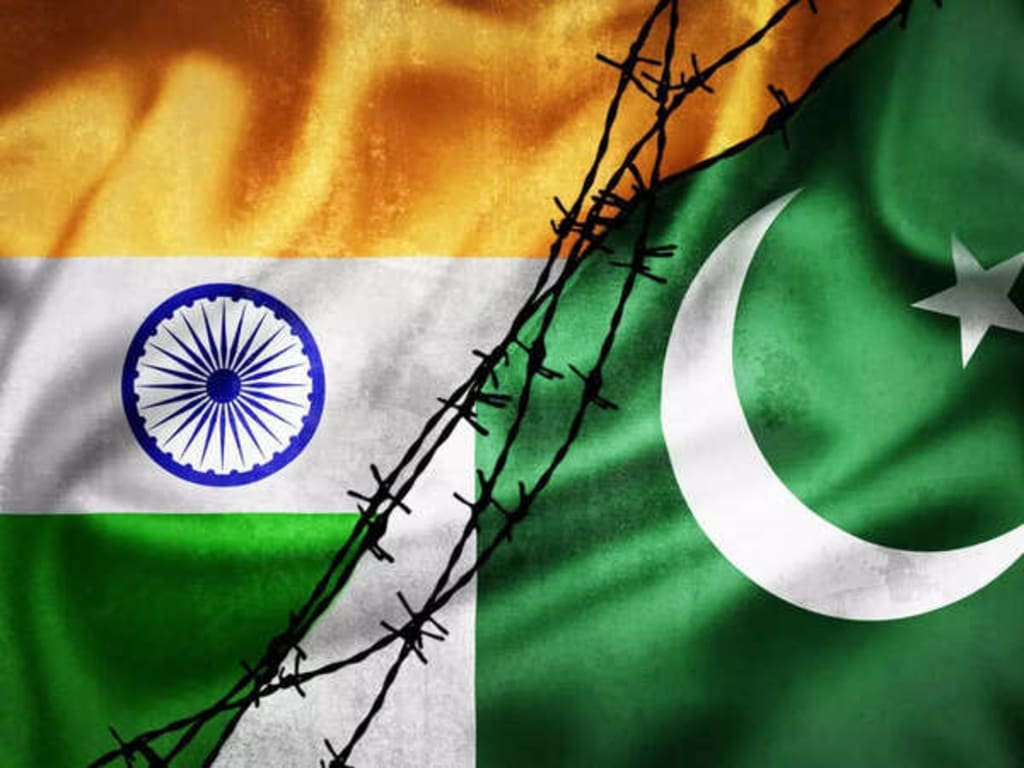
The dawn of May 5, 2025, was not like any other in the South Asian subcontinent. What began as whispers of border skirmishes between India and Pakistan quickly erupted into a regional crisis that captured global attention. Over the course of just a few days, tensions flared, military operations escalated, international reactions poured in, and eventually, a fragile ceasefire was announced. This story covers the conflict from the first shots fired to the international mediation that led to temporary peace.
The initial trigger came from the Line of Control (LoC) in Kashmir. Reports emerged that Indian forces had conducted a targeted strike on suspected militant camps near the Neelum Valley. The Indian government claimed it was a preemptive counter-terror operation after receiving intelligence about an impending attack. Pakistan, however, declared it a blatant violation of its sovereignty and responded swiftly with artillery fire in retaliation.
As the situation deteriorated, both nations ramped up their military presence along the LoC. Indian Air Force jets were seen flying low near the border, while Pakistan scrambled its air defenses in response. Social media platforms like Twitter and Facebook became battlegrounds for information warfare, with hashtags like #IndiaStrikesBack and #PakistanResponds trending worldwide.
By May 6, civilian casualties were reported on both sides, particularly in border towns. Images of destroyed homes, displaced families, and wounded children flooded news channels. The international community began to express concern. The United Nations called for immediate de-escalation, urging both countries to show restraint. Meanwhile, the United States, under President Donald Trump's administration, closely monitored the developments.
The third day of the conflict saw a dramatic turn. Indian media reported that Pakistani drones had been shot down in Indian airspace. Pakistan denied these claims but showed footage of downed Indian UAVs near their territory. As both nations traded accusations, cyberattacks reportedly disrupted infrastructure systems, adding a new layer of tension to the crisis.
Turkey, China, and Saudi Arabia issued statements calling for peace and offered to mediate. Russia remained cautious but emphasized regional stability. The Organization of Islamic Cooperation (OIC) expressed solidarity with Pakistan, while France and Germany urged India to prioritize diplomacy.
On May 8, the world witnessed one of the most intense exchanges in recent years. Pakistani fighter jets reportedly conducted a low-level flyover near the Indian-controlled Siachen Glacier, prompting Indian forces to lock radar and prepare missiles. For several hours, it appeared a full-scale war was imminent.
In the midst of this escalation, the U.S. President tweeted a crucial message. Donald Trump posted: “India and Pakistan must cease all military activity immediately. The world is watching. We urge both leaders to sit at the table. Peace must prevail.” His tweet gained over 2 million interactions in an hour and set the stage for back-channel diplomacy.
The diplomatic pressure began to work. That same evening, Indian Prime Minister Narendra Modi and Pakistani Prime Minister Shehbaz Sharif were reported to have spoken via secure communication channels. Under the mediation of the U.S. and Qatar, both nations agreed to a temporary ceasefire, effective midnight of May 9.
The ceasefire, though fragile, was welcomed by citizens on both sides who had lived in fear for days. Schools reopened, and displaced families began to return. Relief organizations mobilized to assist affected communities.
This conflict served as a reminder of the volatility of South Asia and the importance of diplomacy over aggression. While the ceasefire is in place, questions remain about the future. Will peace talks follow? Will there be accountability for the casualties? Can trust ever be restored?
What’s clear is that the world is no longer a passive observer. Global leaders, social media, and grassroots movements now play a role in shaping the course of such conflicts. The India-Pakistan crisis of 2025 is not just a tale of territorial disputes; it is a warning of how quickly political tensions can spiral into humanitarian disasters.
Thank you for watching this story.
About the Creator
Abutalha
Passionate writer sharing real stories with heart. I write to inspire, heal, and connect. Follow my journey where every word carries meaning and truth.
Search for a Sister, Chapter Two
4-H-N heard not a word about her secret mission around Headquarters over the following days, so had to conclude either Mini-Flash Phytolith hadn’t been listening in after all, or she’d misjudged him. She hoped it was the latter, as she wanted the pair of them to get on, even if he wasn’t going out of his way to make it easy for her.
By Doc Sherwood19 days ago in Chapters
Businesswoman 359
A trail of vodka like a transparent blood line on the floor. Socialista picked up the bottle and chugged. “We’ve gotta hit them with the idea that we’re prepared to knock over their rocket. It’s against the environment and the welfare of the Earth,” Socialista swallowed and announced.
By Skyler Saunders2 days ago in Chapters



Comments
There are no comments for this story
Be the first to respond and start the conversation.