

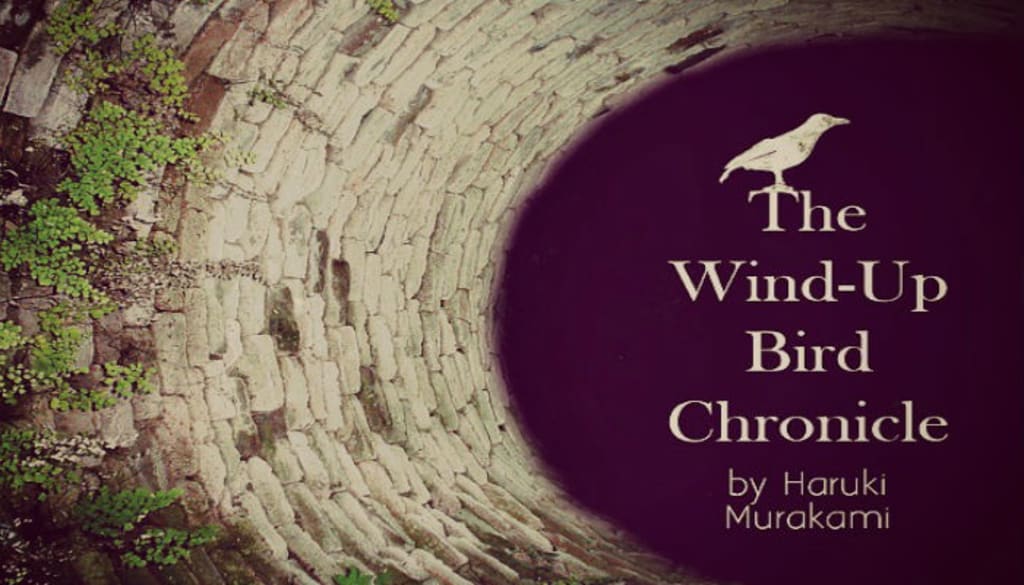
Wind-up Bird Chronicle is a famous work by Japanese author Haruki Murakami. This novel was published in Japan in 1996 and in Vietnam in 2006 through a translation by Tran Tien Cao Dang.
Wind-up Bird Chronicle captivates not only discerning critics but also a wide range of readers in different countries. It is not an easy book to read; besides its massive volume of text, Wind-up Bird Chronicle also contains the typical "difficulty of understanding" of a high-quality modern novel. To read and appreciate "Wind-up Bird Chronicle," the reader must discard all dogmas, prejudices, and preconceived notions. What you believe to be true or exist in "real" life cannot be applied or used as a basis for understanding "Wind-up Bird Chronicle," because the world in "Wind-up Bird Chronicle" is a world where reality and fantasy intertwine.
Is "Wind-up Bird Chronicle" a romance novel? It has love, separation, searching, jealousy, and forgiveness.
Is "Wind-up Bird Chronicle" an adventure novel? It has journeys, events, and a yearning to unravel mysteries.
Or is it a detective novel? It has clues, murder, crime, and witnesses.
Or is it a war novel? It has soldiers, battlefields, and the haunting memories of war crimes.
No! The Wind-Up Bird Chronicle is a comprehensive novel, not intended to depict love, satisfy a thirst for detective work or adventure, or critique war. The Wind-Up Bird Chronicle transcends conventional paths. It is a multifaceted novel that portrays the complexities of humanity, a novel that ventures to discover the identities that have been erased in a modern society that is both money-driven and human-cold, a prophetic novel about the loneliness of modern man: having everything but actually having nothing.
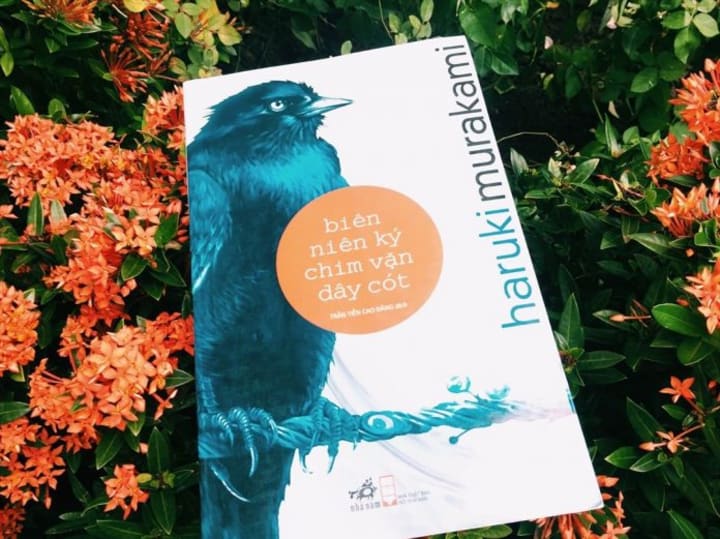
If we compare *The Wind-Up Bird Chronicle* to a forest with layers upon layers of mysteries, then our path lies in understanding: "What literary school did the author follow in writing this work?" This is a crucial question to decipher the artistic value of the work.
Critics worldwide generally consider Haruki Murakami to be among the postmodern writers. His works, from *Norwegian Wood*, *The Adventures of a Sheep*, *The Wind-Up Bird Chronicle*, and *Kafka on the Shore*, all bear the hallmarks of postmodernism.
Simply put, postmodernism is a literary movement that emerged around the beginning of the 20th century, where postmodern writers brought their works to the chaotic realm of reality. They rejected real values in favor of illusory ones, creating the novel "non-belief in grand narratives"—that is, not believing in anything grand, not labeling anything. “Unraveling” everything to reveal a world of insecurity, complexity, and chaos. The postmodern man is an empty, lonely being, devoid of light, wandering in search of what he calls “self” so as not to be lost among billions of people on Earth.
A prominent artistic characteristic of the Postmodern movement, evident in the works themselves, is the fragmentation in the structure of the works.
The Wind-Up Bird Chronicle tells the story of a man named Toru Okada. However, throughout the work, the narratives revolve around the lives of numerous characters, with sections and chapters entirely told from the perspective of other characters, such as: "The Long Story of Lieutenant Mamiya: Part 1," "The Long Story of Lieutenant Mamiya, Part 2," "Kasahara May's Perspective," "Kano Creta's Long Story," etc.
Furthermore, the work also incorporates the form of a handwritten letter or a newspaper article. This novel approach gives the novel a high degree of generalization; life is viewed through multiple perspectives, and different dimensions of the world are presented realistically and clearly. The author does not play the role of God; instead, the author allows the characters to reveal themselves. The characters use "I" to recount their stories. However, these stories lack objectivity and fail to inspire conviction in the reader because they are viewed subjectively and with personal biases. The work is a strange fusion of objectivity and subjectivity, of reality and dreams, of the sublime and the vulgar, of clarity and obscurity, of belief and disbelief, of reality and illusion…
Toru Okada, unemployed, receives an anonymous call from a woman one morning. And like a machine, Toru's fate changes from that moment on. The wheels begin to turn, Toru Okada is swept into the whirlwind of Reality and Illusion, his peaceful life disappears, the truth of his wife's infidelity and abandonment, an unusual encounter with the Kano sisters, with the veteran Mamiya, with the May-born girl Kasahara May, and especially the battle in virtual hotel room 208 with Wataya Noboru—his brother-in-law, a university lecturer, a skilled orator, and a popular politician.
The entire work is divided into jigsaw puzzle pieces. The reader is playing with the puzzle. These pieces, seemingly unrelated, are invisibly connected. Chaos in order. Simplicity in complexity. Reading *The Wind-Up Bird Chronicle*, we see the emergence of two worlds: The real world with the tranquil life of an ordinary family in Tokyo, with a spacious glass-fronted house, a small garden, bustling streets, subway trains, a laundromat, jazz music, jeans, t-shirts, telephones – the common objects of modern life. The virtual world with the two sisters: Kano Malta – the prophet, Kano Creta – the spiritual light, old man Honda also possessing prophetic abilities, Toru's dreams, the well – the door leading to room 208, the mysterious girl who talks about sex on the phone, the mother and daughter Nutmeg and Cinnamon, the battle to free Kumiko from Noboru…
These two worlds are not separate; in the work, they are one. This fusion expands all the reader's senses. We not only see the visible aspects of real life but can also penetrate the hidden corners of the characters' emotions. By constructing a modern story with the naive belief of fairy tales – that humans can prophesy, can see through walls, can save themselves – Murakami opens up every angle of humanity, stripping everything bare. Life that people think they understand down to the smallest detail, things and phenomena that people believe they can fully comprehend, instantly turn into nothingness. We are bewildered, just as Toru is bewildered. We doubt, just as Toru doubts. That real and virtual world is the world of the human mind, within each person. Where thought is power, where both angels and demons, both darkness and light, both despair and hope are contained. Toru's journey is a journey of searching for and conquering the Evil within himself.
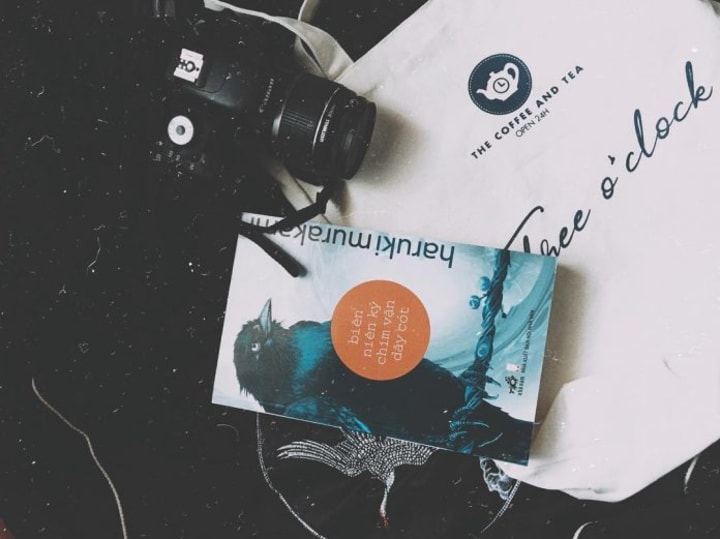
Another artistic feature of The Wind-Up Bird Chronicle is the system of symbols within the work. Symbols are sensory images of objective reality that express the author's viewpoint and ideology. The dense symbols in The Wind-Up Bird Chronicle create a hazy, mysterious veil that challenges the reader to decipher them.
The symbol that is repeated most often is the "wind-up bird." This is also the title of the work. The "wind-up bird" is a bird that has never appeared, without a specific form; it only leaves behind "metallic sounds, like it is winding a clock." The "wind-up bird" is a sign, a sign of time. "And every time the wind-up bird lands in my yard and winds itself, the world sinks deeper into chaos." This wind-up bird has appeared in the past through the memories of Que, the mute boy. It also appears in the story of the war veterinarian. And it constantly appears in Toru Okada's thoughts. It is a symbol of non-linear time, of past and present indistinguishable. Each time the bird's cry, like the winding of a clock, foreshadows impending events. But besides that, "wind-up bird" is also a nickname Toru Okada gave himself; in this sense, we can see that the "wind-up bird" is also a symbol of a person in the post-industrial age, whose life is pre-programmed, a person who lives but like a machine, without freedom, without "normality" in the sense of "singing" their own song. The Chronicle of the Wind-Up Bird is a record of a lost person in a life of isolation, where people cannot sing clear, joyful songs but can only emit sounds like they are programmed, each day beginning as a pre-set day. Unconsciously, humans live in a collective, unconsciously programmed, and gradually their individuality disappears. The remaining journey of life is a journey to find what has been lost.
The work contains many coded symbols, symbols that appear and disappear. Kano Malta – a symbol of mystery; Kano Creta – a symbol of human sexuality; Honda – a symbol of the desire to know everything in advance, to grasp the future of humanity; Kumiko – a symbol of love, forgiveness, or obsession; Boris the Skinning – a symbol of war crimes; Wataya Noboru – a symbol of Evil, its original form concealed by sweet words and cunning rhetoric. The dry well where Mamiya saw revelations during the war, where Toru in 1984 sought to re-evaluate his chaotic life, the place that connects to room 208 – where Toru had relations with two women in his dreams, is also where everything ends. The deep, dark, waterless well, a gateway to another world, silenced all sounds and turmoil. The well was the path Toru took to discover himself, shedding his old self, venturing into life, rescuing Kumiko, and simultaneously freeing himself from the haunting constraints of Fate, dogma, and the grand narratives that controlled and transformed people into emotionless machines.
Sex in *The Wind-Up Bird Chronicle* is also a form of symbolism. Sex in this work is not intended to attract attention, nor is it a means of pleasure; nor is it vulgar or taboo. Sex in this story is a type of relationship, a kind of bond connecting people to a life that is half real, half illusory. The sexual relationship in the story takes place between Toru and Kano Creta in a dream, and the forced relationship between Kano Creta and Noboru. The relationship between Toru and Creta represents the end of Creta's life as a "flesh prostitute," while the relationship between Creta and Noboru is the rebirth of Creta's third "self." Noble in baseness. Sacred and profane. Murakami exposes all the hidden aspects of human life on the page. Nothing is commonplace. Everything that belongs to humanity is cherished by the author. Sex in *The Wind-Up Bird Chronicle* is like a code of life, of enlightenment, of awareness.
In terms of linguistic value, Murakami uses language to create a very unique literary style, imbued with the writer's distinctive artistic flair. Murakami's strength lies in his descriptive writing. Most of his stories are narrated in the first person. The "I" character observes and experiences the world. His writing is not forceful, powerful, or tempestuous, but rather gentle, relaxed, and serene, like the tea ceremony or flower arrangement of the land of cherry blossoms. His characters perceive life completely, paying attention to even the smallest details: a frown, a pair of shoes, a voice, a gesture… With this keen observation, the characters in *The Wind-Up Bird Chronicle* are not superficial or indifferent as they appear. The cold exterior only serves to conceal the turbulent inner feelings. For example, Toru's act of ironing clothes whenever something unpleasant happens. The quieter and more peaceful the real world is, the more turbulent and intense the virtual world becomes. The writer's language is both clear and realistic, yet also fantastical and ambiguous. The pages describing the absurd, the illusory, the hallucinations, death, pain, and dreams are the best parts of the work.
The dialogue in *The Wind-Up Bird Chronicle* is also a noteworthy type of language. It's a dialogue about philosophy, about feelings, about the darkness of reality, about the unreal:
"—Can you imagine a girl with six fingers?
• Probably.
• Then why not four breasts? What's the difference?
• Are you asking too many questions?
• Is that what people tell you?
• Sometimes." (Toru talking to Kashahara)
Or the scene where Toru talks to the woman in room 208:
“—You want to know my name. But unfortunately, I cannot tell you what my name is. I know you very well. You know me very well. But I myself don't know who I am.
• I'm fed up with those kinds of questions. I need something concrete that I can't grasp with my hands…”
Dialogue in *The Wind-Up Bird Chronicle* can often be understood as monologue. The character speaks to express themselves, without waiting for a response from the listener. Or even, dialogue isn't about resolving the topic but about continuously opening up new topics. Resolving one nothingness with other nothingnesses. Nothingness is not simultaneously meaningless. Nothingness is a way of describing the absurdity of existential life. What is life if it doesn't have things that humans cannot explain? Thus, dialogue in this novel can be seen as a kind of symbol.
The characters in the work are clearly depicted with appearances, pasts, psychologies, and life events, yet they remain enigmas. We cannot fully understand Toru, Kumiko, or Kano Creta, even though we know their lives well. By keeping the characters at a distance—seeing them but unable to touch them, speaking to them but unable to understand them—Murakami shows us the limitations of human existence: perception is limited while reality is infinite. Nothing can be definitively accepted. Never before has the human psyche expanded to such boundless extent. But never before have we realized how small we are. The language in the work, therefore, makes it impossible to distinguish between reality and illusion. All of this creates a hazy veil of language, making it captivating despite our inability to fully comprehend it. That is the power of true literature.
In *The Wind-Up Bird Chronicle*, the author uses a series of philosophical concepts as implicit codes to solve problems. These philosophies are expressed by the characters during narration or dialogue. It is these philosophical statements that give the work depth and create interest for the reader. For example:
“Ultimately, do humans truly understand each other? We may invest a great deal of time and effort trying to understand others, but how far do we ultimately reach the deepest essence of that person?”
“Our lives are far more profound than those caught in the whirlwind of life imagine. Light only shines on the actions of life in the most fleeting moments, perhaps only a few seconds. Once the light has passed and we haven't grasped the many revelations it offered, there will be no second chance.”
The final point regarding the linguistic value of the work is Murakami's use of character names as a kind of symbol: Toru identifies himself as a "wind-up bird," Kasahara May calls herself a "duck," Nutmeg and Cinnamon, the cat initially named Wataya Noboru later becomes Mackerel, and the sisters Kano Malta and Kano Creta are nicknames… Names – in themselves – are a "grand narrative," a means, yet people often mistakenly consider them important. You might be named A, but you could also be named B. What should be valued is you, not A or B. Rejecting all names, restoring to people their own unique selves so they are not deceived by illusory values – perhaps this is Murakami's intention in writing *The Wind-Up Bird Chronicle*.
Through analyzing some of the artistic values of the work, we can somewhat understand why *The Wind-Up Bird Chronicle* can captivate a wide range of readers. Because each person, regardless of their position or state of mind, finds their own answer to the eternal question: "What is the purpose of our existence?"
In an interview, Murakami once confided: "We become richer, but we still don't know which path to follow." The Wind-Up Bird Chronicle, ultimately, is an expression of that very confusion.
About the Creator
HieuDinh
- Loves nature, likes to grow ornamental plants such as succulents, lotus (participates in volunteer activities to plant forests, protect forests in the locality)
- Loves dogs and cats (participates in local wildlife rescue activities)
Rachel Reviews: Lakefront Wolves by Joseph Deegan
Meet Finn. He's an 18 year old kid who has potential. He's bright with great school scores and he's also an athlete, a footballer of some prowess. He has it all going for him, it would seem, and yet, he's determined to send what could be a well-planned, stable existence firmly off the rails. He drinks, he smokes, he takes drugs, he has violent tendencies and he's in danger of losing not only his mind but all that he holds dear.
By Rachel Deeming8 days ago in BookClub
6 Life-Changing Books Most People Read Too Late
We all have moments when we pause and wonder: Why didn’t anyone tell me this earlier? Sometimes that realization comes after a mistake, a burnout, a failed relationship, or years spent chasing goals that never truly mattered. Often, the wisdom we needed already existed — quietly waiting between the pages of a book.
By Diana Meresc7 days ago in BookClub


Comments
There are no comments for this story
Be the first to respond and start the conversation.