
Why Reading Self-Help Books Isn’t Just for ‘Broken’ People
Breaking the stigma and showing how anyone can benefit from motivational books

When someone says they’re reading a self-help book, it’s often met with silent judgment, sympathetic nods, or the assumption that they must be going through a crisis. The term "self-help" has, for too long, carried a stigma associated with brokenness, failure, or desperation. But in reality, self-help books are not bandages for the wounded. They are tools for anyone committed to growth, reflection, and continuous improvement. They offer more than advice—they invite transformation.
This article explores why self-help literature is not just for people in distress but for anyone seeking a richer, more purposeful life.
________________________________________
The Stigma Around Self-Help Books
The phrase “self-help” tends to evoke mental images of people trying to fix a failing marriage, heal from trauma, or overcome addiction. While many people do turn to these books during life’s most challenging seasons, that doesn’t mean self-help is only for times of crisis.
In fact, the assumption that only “broken” people need guidance is deeply flawed. If a person sees a therapist, reads a motivational book, or attends a personal development seminar, it doesn't mean they are falling apart—it often means they’re actively working to become better, stronger, and more fulfilled.
________________________________________
Everyone Has Room to Grow
Think about it this way: Do only unhealthy people go to the gym? Do only failing students seek extra tutoring? Of course not. People work out to stay healthy, not just to lose weight. Students pursue additional learning even when they’re already doing well, because they want to excel. The same logic applies to personal development books.
Self-help books cover a wide range of topics—from productivity and mindset to finances, leadership, relationships, and spiritual growth. They serve as roadmaps for those who want to level up, not just catch up.
________________________________________
Self-Help as Preventive Medicine
Another important perspective is viewing self-help books as preventive medicine. Instead of waiting for life to spiral out of control, many people use them to develop the emotional intelligence, mindset, and tools needed to navigate life more successfully.
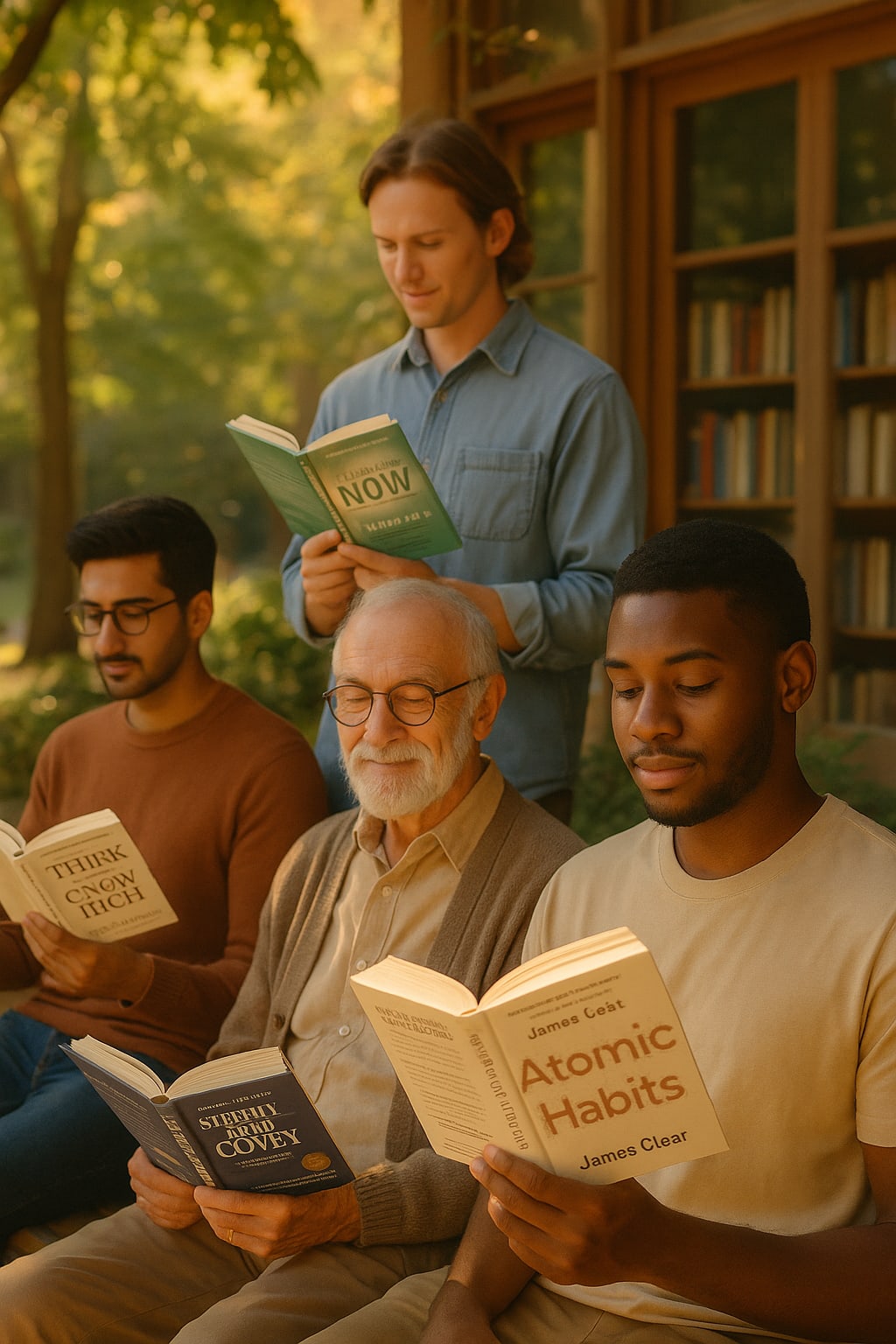
Books like Atomic Habits by James Clear or The 7 Habits of Highly Effective People by Stephen R. Covey provide proven systems and practical advice that help readers build a foundation of discipline, awareness, and purpose. These books don’t just fix problems—they prevent them.
By learning how to set goals, create healthy habits, manage stress, and communicate effectively, readers can avoid many common pitfalls long before they arise.
________________________________________
The Universal Themes of Self-Help
One of the reasons self-help books resonate with so many people is that they tap into universal human experiences. Regardless of background, we all face
• Self-doubt
• Fear of failure
• Relationship challenges
• Stress and burnout
• Desire for meaning and purpose
These themes transcend economic status, career stage, or age. Whether you're a college student, a mid-level manager, or a retired teacher, self-help books offer valuable insights into the human condition. They remind us that we’re not alone—and that improvement is always within reach.
________________________________________
Self-Help as a Gateway to Self-Awareness
Reading self-help books can also foster deeper self-awareness. As you explore different frameworks and philosophies, you begin to reflect on your habits, mindset, and choices.
Books like The Power of Now by Eckhart Tolle or Daring Greatly by Brené Brown push readers to confront their inner dialogue and reshape limiting beliefs. These experiences often lead to greater emotional intelligence, better decision-making, and improved relationships.
Self-awareness isn’t something we’re born with—it’s something we develop. And books are powerful tools in that process.
________________________________________
Real-World Benefits of Self-Help Literature
1. Increased Productivity: Books like Deep Work by Cal Newport or Eat That Frog! by Brian Tracy teach readers how to manage time, reduce distractions, and focus deeply—skills valuable to anyone, not just people in crisis.
2. Better Financial Habits: Titles like Rich Dad Poor Dad or Your Money or Your Life offer guidance on managing money, investing wisely, and creating wealth. You don’t need to be broke to benefit from financial literacy.
3. Enhanced Communication Skills: Books like How to Win Friends and Influence People by Dale Carnegie help readers strengthen both personal and professional relationships.
4. Stronger Mindset: Motivational books help build mental resilience and grit, traits essential for long-term success and well-being.
5. Inspiration for Life Transitions: Whether changing careers, starting a business, or pursuing a passion, self-help books provide clarity and courage for life’s pivots.
________________________________________
Learning from Those Who’ve Been There
Many self-help books are written by individuals who’ve walked the walk. They’ve built companies, failed spectacularly, recovered from trauma, or undergone profound transformation. Their stories offer not only hope but also strategies.
Reading about someone else’s journey creates connection and perspective. You realize your struggles are not unique—and that others have overcome the same battles you face. This is one of the most powerful forms of learning: shared human experience.
________________________________________
Self-Help and the Growth Mindset
The most successful people in the world—from athletes to entrepreneurs—often swear by the power of reading and lifelong learning. Why? Because they have a growth mindset. They believe that intelligence, talent, and abilities can be developed through effort and persistence.
Self-help books align perfectly with this mindset. They provide frameworks for setting goals, improving focus, and becoming more self-aware. If you believe in your capacity to grow, you’re already practicing one of the central tenets of personal development.
________________________________________
Let’s Break the Stigma
It’s time to change the narrative: reading self-help books doesn’t mean you’re broken—it means you’re brave. It means you’re willing to look inward, take responsibility, and take steps toward becoming your best self.
There is nothing weak about seeking wisdom. There is nothing shameful about wanting more from life. In fact, those who embrace self-help are often the most proactive, self-aware, and resilient individuals out there.
________________________________________
Final Thoughts
You don’t have to wait for a crisis to invest in personal growth. Whether you’re feeling stuck, seeking clarity, or simply curious about how to live better, self-help books offer insight and inspiration.
So, the next time you pick up a book about habits, healing, or happiness, do it with pride. You’re not broken—you’re evolving. And that journey is worth celebrating.
________________________________________
What’s the last self-help book that changed your perspective? Share your thoughts and favorite titles in the comments below. Let’s inspire each other to keep growing.
About the Creator
Voice of Simplicity
''Voice of Simplicity'' shares thoughtful insights on life, personal growth, and everyday wisdom. Focused on clarity and calmness, this platform explores meaningful ideas through a simple, relatable lens.
Keep reading
More stories from Voice of Simplicity and writers in BookClub and other communities.
5 Common Myths About Reading That Might Be Holding You Back
Reading is one of the most rewarding and accessible ways to expand your mind, spark your imagination, and deepen your understanding of the world. Yet for many, a tangle of misconceptions stands between them and the joy of turning pages—whether physical or digital. If you’ve ever felt discouraged by thoughts like “I’m just not a reader” or “I’ll never finish that book,” you’re not alone. Below, we unpack five of the most common myths about reading—and show you how to break free from each one, opening the door to a lifelong habit you’ll cherish.
By Voice of Simplicity10 months ago in BookClub
Rachel Reviews: Lakefront Wolves by Joseph Deegan
Meet Finn. He's an 18 year old kid who has potential. He's bright with great school scores and he's also an athlete, a footballer of some prowess. He has it all going for him, it would seem, and yet, he's determined to send what could be a well-planned, stable existence firmly off the rails. He drinks, he smokes, he takes drugs, he has violent tendencies and he's in danger of losing not only his mind but all that he holds dear.
By Rachel Deeming14 days ago in BookClub
7 Best Books For People Who Deal With Insecurities
Insecurity is a universal human experience. At some point, most of us question our worth, our abilities, or whether we truly belong. Whether it’s self-doubt at work, fear of rejection in relationships, or the quiet voice telling us we’re “not enough,” insecurity can quietly shape our decisions and limit our potential.
By Diana Meresca day ago in BookClub


Comments
There are no comments for this story
Be the first to respond and start the conversation.