
5 Common Myths About Reading That Might Be Holding You Back
Debunk misconceptions that make reading seem difficult or boring

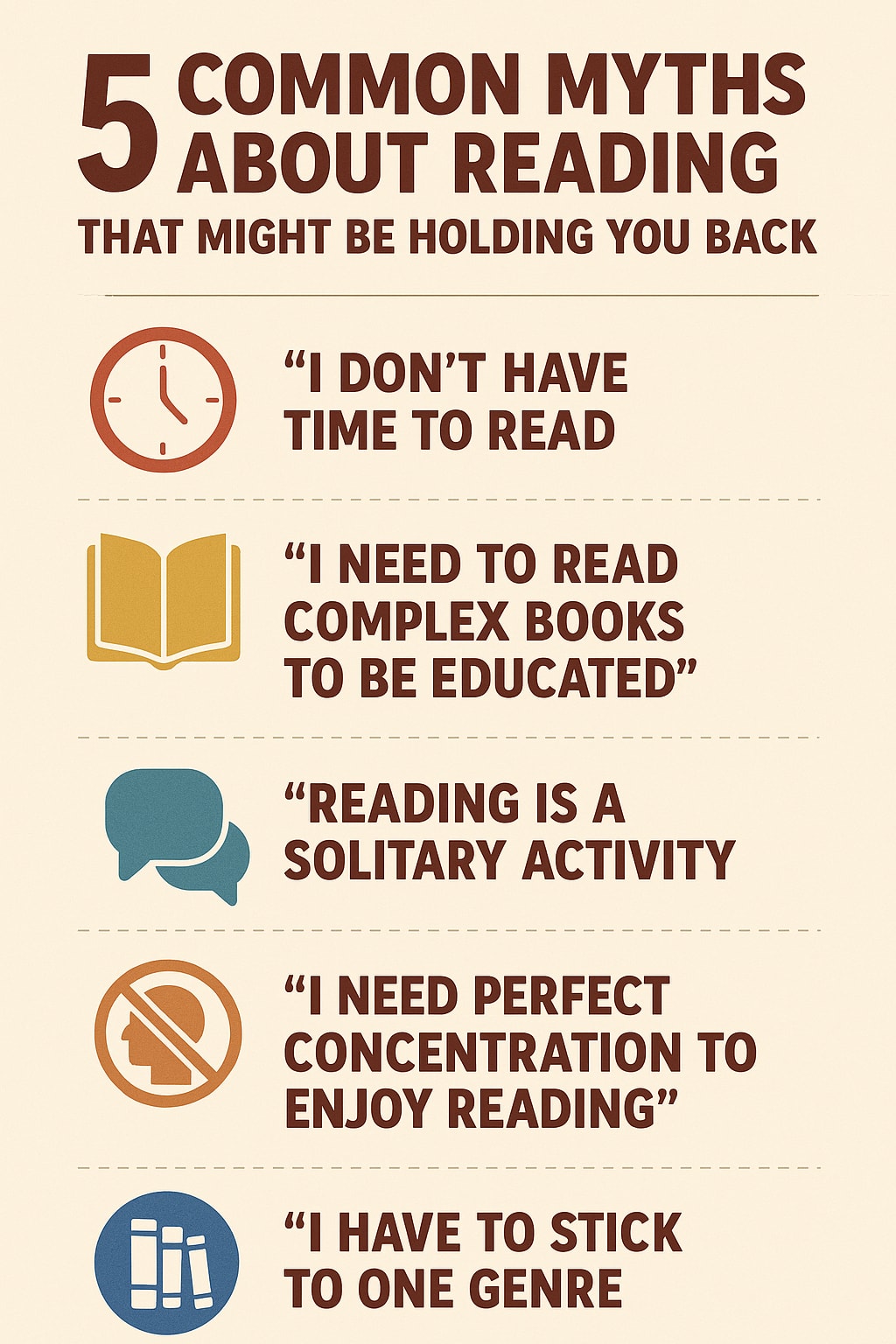
Reading is one of the most rewarding and accessible ways to expand your mind, spark your imagination, and deepen your understanding of the world. Yet for many, a tangle of misconceptions stands between them and the joy of turning pages—whether physical or digital. If you’ve ever felt discouraged by thoughts like “I’m just not a reader” or “I’ll never finish that book,” you’re not alone. Below, we unpack five of the most common myths about reading—and show you how to break free from each one, opening the door to a lifelong habit you’ll cherish.
Myth 1: “I Don’t Have Time to Read”
It’s understandable to feel swamped: between work, family, errands, and the lure of screen-based entertainment, carving out reading time can feel impossible. But reading doesn’t require hours on end. Fifteen minutes in the morning with your coffee or ten minutes before bed can add up to dozens of pages each week. Consider these small hacks:
- Integrate reading into your routine. Swap out ten minutes of scrolling social media for reading a short story or a couple chapters.
- Carry a book (or e-reader). Waiting rooms, commutes (audio books!), and checkout lines become unexpected reading opportunities.
- Set micro-goals. A “two-page minimum” goal per day feels less daunting than “read a book.”
By treating reading like a habit—much like brushing your teeth—you’ll find time naturally emerges. And as you start to notice the pleasure and insights reading brings, you’ll often choose it over other “time fillers.”
Myth 2: “I Need to Read Complex Books to Be Educated”
Many aspire to tackle dense classics or weighty nonfiction right away, but this lofty ideal can backfire by making reading feel like work rather than pleasure. The truth is, every book—whether a punchy modern thriller, a light memoir, or an illustrated collection of essays—can broaden your horizons.
- Define “educational” broadly. Fiction develops empathy and emotional intelligence; genre novels sharpen pattern recognition and narrative understanding.
- Embrace entry points. Short story collections, essays in magazines, or even well-crafted magazine articles build confidence and reading stamina.
- Use layers. Start with enjoyable, accessible reads before venturing into more challenging material. By the time you pick up that philosophy text or historical tome, you’ll have cultivated focus and curiosity.
Remember, your goal is growth and enjoyment. If you’re not enjoying a book, set it aside—countless alternatives are waiting to engage you.
Myth 3: “Reading Is a Solitary Activity”
It’s easy to imagine reading as a lone pursuit: you, the pages, and your own thoughts. However, reading can be an inherently social experience:
- Join a book club—online or in person—and discuss plots, themes, and character arcs with others.
- Share recommendations with friends and family (and ask for theirs). A simple text—“What are you reading?”—can spark lively exchanges.
- Follow author events and reading challenges on social media platforms. Tag along for live Q\&As, virtual read-alongs, and community-driven lists that inspire fresh picks.
When you share reflections, you deepen comprehension and build real connections. Suddenly, each book becomes a gateway to conversation and community.
Myth 4: “I Need Perfect Concentration to Enjoy Reading”
It’s a comforting fantasy: a cozy nook, perfect silence, and nothing but the story unfolding before you. But life rarely offers that level of calm. Instead of waiting for the ideal moment:
- Practice “fragmented” reading. Even in a noisy café or with distractions around, you can absorb sections of a book. Your brain is remarkably adept at tuning out peripheral noise.
- Use audiobooks. Pair them with chores, morning jogs, or cooking. You’ll be surprised how much you remember.
- Experiment with formats. E-readers let you adjust font size and background color for better focus; physical books encourage tactile engagement.
Accept that imperfect environments can still foster deep engagement. Over time, you’ll train yourself to slip into “reading mode” more easily, no matter the setting.
- Myth 5: “I Have to Stick to One Genre”
Some people believe that to be a “real reader,” they must specialize—say, in classic literature or hard science fiction. But restricting yourself to familiar territory limits both your palate and your growth as a reader.
- Treat genres like cuisine. Just as you might occasionally try sushi if you usually eat pizza, mix up your reading menu. A romance novel could inspire hope; a memoir might offer practical life wisdom.
- Alternate “comfort” reads with “stretch” reads. After a suspenseful thriller, pick up a poetry collection or a bit of experimental fiction to exercise different parts of your reading brain.
- Use recommendations to branch out. Read what friends from varying backgrounds love, or trust “if you liked X, try Y” lists curated by libraries or book blogs.
Variety keeps reading fresh and introduces you to unexpected wonders. Soon, you’ll be weaving a tapestry of experiences—both new and nostalgic.
Putting It All Together
Reading should be a source of joy, insight, and connection, not a chore. By dispelling these common myths, you can begin to build a reading habit that fits your life, boosts your personal growth, and brings you closer to communities who share your interests. Start small, stay curious, and embrace every format—from audiobooks to graphic novels—that speaks to you.
Action Steps:
1. Set a tiny daily goal. Even five minutes makes a difference.
2. Track your progress. Use a simple checklist, a reading app, or a bullet journal.
3. Share your journey. Post a brief review or quote on social media, and invite friends to join you.
4. Explore one new genre this month. Permit yourself to wander.
Above all, remember: reading isn’t a finish line—it’s an unfolding adventure. Tear down these myths, and welcome the endless worlds waiting for you in between the covers.
About the Creator
Voice of Simplicity
''Voice of Simplicity'' shares thoughtful insights on life, personal growth, and everyday wisdom. Focused on clarity and calmness, this platform explores meaningful ideas through a simple, relatable lens.
Keep reading
More stories from Voice of Simplicity and writers in BookClub and other communities.
The Best Books to Start With if You’re New to Reading
Diving into books for the first time can feel daunting: unfamiliar words, long chapters, and the question “Where do I even begin?” Choosing the right starter book can transform reading from a chore into a joy. Below is a curated list of eight accessible, engaging, and meaningful books to build confidence and momentum. Each title is selected for clear prose, compelling stories, and universal themes that resonate with new readers.
By Voice of Simplicity10 months ago in BookClub
Rachel Reviews: Lakefront Wolves by Joseph Deegan
Meet Finn. He's an 18 year old kid who has potential. He's bright with great school scores and he's also an athlete, a footballer of some prowess. He has it all going for him, it would seem, and yet, he's determined to send what could be a well-planned, stable existence firmly off the rails. He drinks, he smokes, he takes drugs, he has violent tendencies and he's in danger of losing not only his mind but all that he holds dear.
By Rachel Deeming14 days ago in BookClub
A New Perspective on Change Arrives in Denver with Lori Montry’s You’re Not the Problem
In a culture that often tells people to try harder, stay disciplined, and push through discomfort, Lori Montry’s upcoming book launch event in Denver offers a different starting point. Her message is simple but powerful. Many of the struggles people blame on themselves may have far deeper roots.
By Chris Adams2 days ago in BookClub



Comments
There are no comments for this story
Be the first to respond and start the conversation.