
What Essential Lessons About Freedom Does Huck Finn's Dangerous Journey Still Teach Us Today?
Why is Huckleberry Finn's Powerful Critique of Society Still Incredibly Relevant After 140 Years?

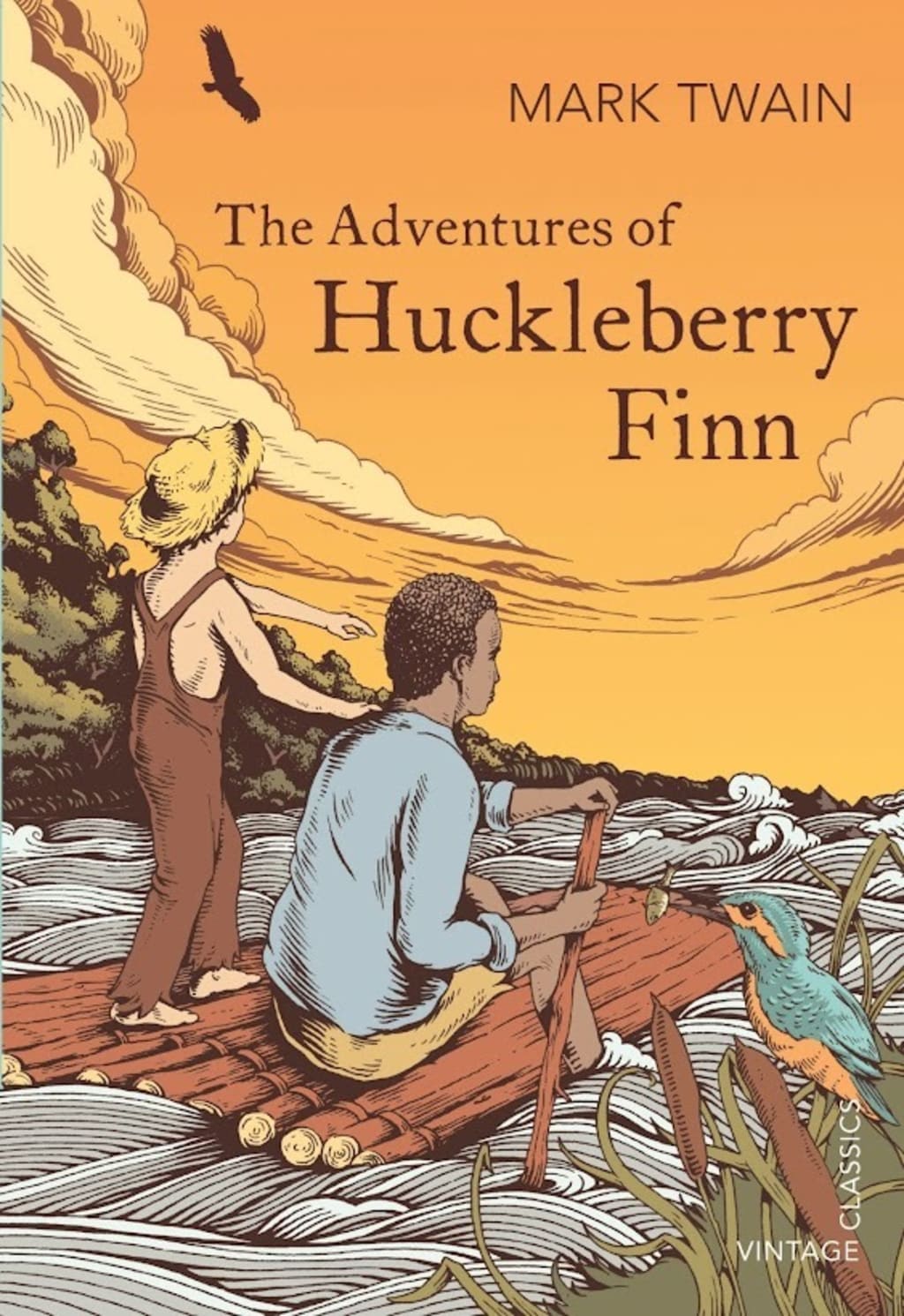
The Enduring Journey of Huckleberry Finn
More than a century has passed since Mark Twain wrote The Adventures of Huckleberry Finn, yet the story of a boy and a runaway slave floating down the Mississippi River remains one of the most important and debated books in American history. It is a book that schools assign and a book that schools ban. It is praised as a masterpiece and criticized for its language. Why does this story hold such a powerful grip on us? The answer lies in its deep look at what it means to be free, the problems with society, and the struggle to do the right thing in a world that often seems wrong.
Huck's journey with Jim is more than just an adventure. It is a search for the real meaning of freedom. It questions the rules of civilization and shows its deep flaws. This book is not just a story from the past; it is a mirror that reflects the ongoing American conversation about race, friendship, and morality. To understand Huckleberry Finn is to understand a core piece of America itself. This exploration will delve into the characters, the powerful symbols, and the difficult questions that Twain raised. We will see why this novel, with all its humor and heartbreak, continues to challenge and speak to readers in the modern world.
The Heart of the Story: A Boy Named Huck
Huckleberry Finn is not a typical hero. He is a poor, uneducated boy from the lowest level of white society in the pre-Civil War South. His father, "Pap," is a violent drunk who resents Huck for any attempt at becoming "sivilized." At the start of the novel, Huck has come into a large sum of money, and the well-meaning Widow Douglas has taken him in to raise him properly. But Huck finds this new life of clean clothes, regular schooling, and churchgoing to be suffocating. He feels trapped by the very things that are supposed to be good for him.
Huck’s view of the world is simple and direct. He speaks in a plain, regional dialect that Mark Twain carefully wrote to sound authentic. This choice of narrator was revolutionary. For the first time, a major American novel was told through the eyes and voice of a poor, semi-literate boy. This allows the reader to see the world from the bottom up. Huck's perspective exposes the hypocrisy of the "respectable" people around him. He sees their rules about manners and religion as confusing and often cruel. He prefers the freedom of his old life, sleeping outdoors and living by his own wits.
Huck's core struggle is between his "sound heart and a deformed conscience." His conscience has been shaped by the racist society he lives in. It tells him that helping Jim, a runaway slave, is a terrible sin and a crime. His heart, however, sees Jim not as property but as a friend, a father figure, and a fellow human being. This conflict comes to a head in a famous moment when Huck decides to write a letter to Miss Watson to tell her where Jim is. He feels torn. He believes he will go to hell if he helps Jim, but he cannot bring himself to betray his friend. In a powerful decision, he tears up the letter and declares, "All right, then, I'll go to hell."
This moment is the moral climax of the novel. Huck chooses his personal loyalty to Jim over the laws and religious teachings of his entire society. It is a profound act of rebellion. He rejects the "deformed conscience" that civilization gave him and listens to his own experience and feelings. This decision shows Huck's true growth. He starts as a boy who accepts the world as it is, but his journey on the river with Jim teaches him to question everything and form his own moral code.
Huck's Escape from "Sivilization"
Huck's first escape is not from slavery but from his abusive father and the suffocating rules of the Widow Douglas. When Pap kidnaps him and locks him in a remote cabin, Huck experiences a different kind of imprisonment. While he is free from the Widow's rules, he is under the constant threat of his father's violence. This brutal life forces Huck to become resourceful.
He stages his own murder, a clever plan involving pig's blood and a smashed door, to escape his father for good. This "death" is symbolic. Huck is killing off his old self, the boy who was trapped by both the high and low parts of society. By faking his death, he sets himself free from all expectations. He is no longer Judge Thatcher's ward, the Widow's project, or Pap's punching bag. He is a blank slate, ready to find a new life on the river.
His destination is Jackson's Island, a small patch of wilderness in the middle of the Mississippi. Here, he feels truly at home. He can live simply, without rules or fear. This island represents a temporary paradise, a natural world away from the corrupting influence of society. It is on this island that he finds Jim, who has also run away, and their shared journey begins. For Huck, freedom initially means being left alone. But as he travels with Jim, his understanding of freedom deepens. He learns that true freedom is not just about escaping rules but about connecting with another person in a bond of trust and care.
The Moral Center: A Man Named Jim
Jim is one of the most important and complex characters in American literature. He is a slave owned by Miss Watson, the sister of the Widow Douglas. He is a husband and a father, separated from his family by the institution of slavery. When Huck first meets Jim on Jackson's Island, Jim reveals he ran away because he overheard Miss Watson considering selling him "down to Orleans." This was a slave's worst fear, as it meant being sold to the brutal sugar plantations of the Deep South, likely never to see his family again.
Throughout the novel, Jim is portrayed as a deeply compassionate and noble figure. He is a protector and a father figure to Huck. When they find a floating house containing a dead body, Jim covers the face so Huck will not have to see the gruesome sight, knowing it is Huck's father. He celebrates when he thinks Huck is safe and mourns when he thinks Huck is lost. He is often the voice of practical wisdom, interpreting signs in nature and guiding their journey.
Despite his kindness, Jim is a product of his time, and his portrayal has been a source of controversy. He is often superstitious and speaks in a thick dialect that some modern readers find difficult. In the early parts of the novel, Huck sometimes plays cruel pranks on him, treating him as a source of amusement. For example, after they get separated in a thick fog, Huck pretends it was all a dream. Jim's feelings are deeply hurt, and he scolds Huck, saying, "Dat truck dah is trash; en trash is what people is dat puts dirt on de head er dey frens en makes 'em ashamed." This is a turning point. Huck feels ashamed and apologizes to Jim. It is a small moment, but it marks a huge shift in their relationship. Huck begins to see Jim as his equal, a friend whose feelings matter.
Jim's goal is simple and powerful: he wants to become a free man and earn enough money to buy his wife and children out of slavery. His dream is not just for himself but for his family. This makes his quest for freedom a deeply moral and selfless one. It stands in stark contrast to the selfish and foolish pursuits of many of the white characters they meet on the river. While the Grangerfords are caught in a pointless and deadly feud and the Duke and the King are consumed by greed, Jim's focus is on love and family.
The most controversial part of Jim's story is the ending. When Tom Sawyer appears, he hijacks Jim's escape, turning it into a complicated and cruel game based on adventure novels. Tom knows all along that Miss Watson has died and freed Jim in her will, but he keeps this information secret for his own amusement. During this time, Jim suffers needlessly. He is imprisoned, chained, and surrounded by snakes and rats. Yet, he endures it all with patience. When Tom is shot during the final "escape," Jim gives up his chance at freedom to stay and help the doctor save Tom's life. This act of self-sacrifice is the ultimate proof of his nobility. He shows more humanity and honor than anyone else in the story. Jim is not just a runaway slave; he is the moral compass of the novel.
The Faces of a Flawed Society
The Mississippi River carries Huck and Jim past a series of towns and settlements, each one showcasing a different kind of corruption and hypocrisy in so-called "sivilization." The people they meet represent a cross-section of Southern society, and through them, Mark Twain delivers a sharp critique of the world he knew.
The Grangerfords and Shepherdsons: The Folly of "Honor"
After being separated from Jim, Huck is taken in by the Grangerfords, a wealthy and aristocratic family. They live in a fine house filled with tacky furniture and bad art, but they are considered the height of "well-born" society. Huck is impressed by their manners and their status. However, he soon learns that this respectable family is locked in a bloody, decades-long feud with another family, the Shepherdsons.
No one remembers how the feud started, but they continue to kill each other in the name of family honor. They even bring their guns with them to church, where they listen to a sermon about brotherly love. Twain uses this to expose the absurdity and violence that can hide beneath a surface of respectability. The Grangerfords are "sivilized" on the outside, but their actions are barbaric. The feud reaches its tragic climax when a Grangerford daughter elopes with a Shepherdson boy, leading to a brutal shootout that leaves many dead, including Huck's young friend, Buck. Huck is horrified by the senseless violence and is overjoyed to escape back to the safety of the raft with Jim. The experience teaches him that wealth and social status do not make people good or wise.
The Duke and the King: The Greed of Con Artists
Further down the river, Huck and Jim encounter two professional con men. The younger man claims to be an English duke, and the older, more audacious one, declares he is the "lost Dauphin," the rightful king of France. Huck knows they are frauds from the beginning, but he and Jim are powerless to challenge them. These two grifters, known as the Duke and the King, are masters of manipulation. They exploit the ignorance and greed of the people they meet.
Their scams range from the absurd to the cruel. They put on a terrible Shakespearean performance and run another scam called the "Royal Nonesuch," a low-brow show that is so bad it's essentially a prank on the whole town. Their most despicable act is when they impersonate the brothers of a recently deceased man, Peter Wilks, to steal the inheritance from his grieving daughters. They weep and wail in a display of fake sorrow, completely fooling the townspeople.
Huck is disgusted by their cruelty. He sees how they prey on good people's trust. His decision to hide the gold to try and return it to the Wilks sisters is another step in his moral development. He is actively working against the con men, even at great personal risk. The Duke and the King represent the worst of society. They are driven by pure greed and have no moral compass. Their presence on the raft contaminates Huck and Jim's sanctuary. Eventually, in a moment of desperation, the King commits the ultimate betrayal: he sells Jim back into slavery for forty dollars. This act shows the depths of human depravity and sets the stage for Huck's final, heroic decision to save his friend.
Tom Sawyer and the Romantic Escape
The final section of the novel takes place at the Phelps farm, where Jim is being held. By coincidence, the Phelpses are Tom Sawyer's aunt and uncle. When Huck arrives, they mistake him for Tom. Soon after, the real Tom Sawyer appears. Instead of simply freeing Jim, Tom sees the situation as a chance to live out the elaborate escape fantasies he has read about in romantic adventure novels.
Tom's plan is selfish and cruel. He knows that Jim is already a free man, yet he subjects Jim to weeks of unnecessary suffering for his own entertainment. He makes Jim keep a journal written in blood on a shirt, live with snakes and spiders, and dig a tunnel with case-knives. The plan is a parody of adventure stories, and it contrasts sharply with the real danger and moral seriousness of Jim's actual flight for freedom.
Huck goes along with Tom's plan, falling back under the spell of his more dominant and imaginative friend. This part of the book is often criticized because it seems to undo much of Huck's moral growth. He reverts to being a follower, and the serious tone of the journey is replaced by a kind of absurd comedy. However, Twain may have had a purpose for this. Tom represents the "sivilized" world with its blind commitment to rules learned from books, even when those rules are impractical and cruel. He is playing a game, unable to see that Jim's freedom is not a game at all. The contrast between Tom's romantic nonsense and Jim's real suffering is Twain's final critique of a society that romanticizes ideas like honor and adventure while ignoring the real human pain it causes.
The Mighty Mississippi: A River of Freedom and Danger
The Mississippi River is more than just a setting in the novel; it is a central character and a powerful symbol. For Huck and Jim, the river is their path to freedom. It is a force of nature that carries them away from the corrupt and dangerous world on the shore.
A Symbol of Freedom
Life on the raft is simple and idyllic. Huck and Jim float along, trailing their feet in the water, looking at the stars, and talking. On the raft, they are equals. The rules and social hierarchies of the shore disappear. There is no master and no slave, just two friends helping each other survive. The river is a space where Huck's "sound heart" can win out over his "deformed conscience." It is a place of peace, honesty, and natural beauty. Huck describes their life on the raft with deep contentment: "You feel mighty free and easy and comfortable on a raft."
This freedom is always temporary and fragile. The river may be a sanctuary, but the shores are lined with danger. Every time they stop at a town, they encounter the problems of civilization: feuds, cons, and violence. The river provides an escape, but it cannot wash away the evils of the world entirely.
A Force of Nature
The river is also a wild and unpredictable force. It is both a protector and a threat. A powerful storm on Jackson's Island sends a flood that brings them a house full of goods, but it also carries the dead body of Huck's father. A thick fog separates Huck and Jim, leading to one of their first serious conflicts. A steamboat runs over their raft in the dark, smashing it and sending them back to the dangerous shore.
The river's dual nature reflects the journey itself. The path to freedom is not easy or safe. It is filled with unexpected dangers and moral challenges. The river can be a peaceful paradise one moment and a deadly force the next. It mirrors the unpredictable nature of life and the constant struggle between good and evil, safety and danger. The river does not judge; it simply flows, carrying all of society's castoffs—runaway boys, escaped slaves, and con men—on its current. It is the great, untamed heart of America, offering both the promise of a new beginning and the constant threat of being pulled under.
The Language of the People
One of Mark Twain's greatest achievements in The Adventures of Huckleberry Finn was his use of dialect. Before this novel, most literary characters spoke in a formal, standardized English, no matter their background. Twain wanted to capture the way real people talked in the Mississippi Valley. In an explanatory note at the beginning of the book, he states that he has used a number of different dialects, including the "Missouri negro dialect" and various forms of "Pike County" dialect. He insists that he has done so with care and that the distinctions are not made at random.
This commitment to authentic speech serves several purposes:
- Realism: It makes the characters and the setting feel real and alive. The reader is transported to the pre-Civil War South, listening to the voices of its people.
- Characterization: The way a character speaks reveals a lot about them—their social class, their education level, and their regional origins. Huck's plain, ungrammatical speech shows his lack of formal schooling but also his honesty and directness. Jim's dialect reflects his status as a slave from a specific region.
- Social Commentary: By putting these "low" dialects at the center of a serious work of literature, Twain was making a radical statement. He was suggesting that the stories of poor, uneducated people like Huck and Jim were just as worthy of being told as the stories of kings and queens. He was elevating the common American voice.
However, the use of dialect, particularly the frequent use of the N-word, is the primary reason the novel is so controversial today. The word appears over 200 times in the book. Twain was not using the word to be hateful; he was using it to accurately reflect the language of the time and place he was writing about. The characters who use it most casually are often the most racist and unpleasant people in the book, like Huck's father. Twain uses the word to expose the deep-seated racism of the society.
For modern readers, especially students, encountering this word can be painful and jarring. This has led to intense debates about whether the book should be taught in schools. Some argue that the book's historical context and its powerful anti-racist message outweigh the harm of the language. They believe that studying the book, including its difficult language, is a valuable way to confront the history of racism in America. Others argue that the language is too damaging and that there are other ways to teach about this period without exposing students to racial slurs. Some publishers have even released versions of the book that replace the N-word with "slave," a decision that has itself been highly controversial. This ongoing debate shows just how powerful and unsettling Twain's novel remains.
A Controversial Legacy: The Great American Novel?
Ever since it was published, The Adventures of Huckleberry Finn has been a source of both praise and protest. In 1885, the public library in Concord, Massachusetts, banned it, calling it "trash and suitable only for the slums." They found its language coarse and its hero, Huck, a bad role model for children. Over the decades, the reasons for criticism have shifted. Today, the main controversy surrounds its portrayal of race and its use of racial slurs.
Yet, despite the controversy, many critics and writers have called it "The Great American Novel." The author Ernest Hemingway famously wrote, "All modern American literature comes from one book by Mark Twain called Huckleberry Finn." He praised its realism, its moral seriousness, and its revolutionary use of the American vernacular.
So, what makes this book so important?
- It Confronts America's "Original Sin": The novel tackles the issue of slavery and racism head-on. Through the relationship between Huck and Jim, Twain explores the deep moral contradictions of a country founded on the idea of freedom while practicing slavery. Huck's decision to help Jim is a rejection of that contradiction.
- It Defines an American Identity: Huck is a new kind of American hero. He is not a polished gentleman or a brave soldier. He is a resourceful, independent, and morally conscious outcast. He values freedom from social constraints and forms his own code of ethics based on his experiences. This character has become a powerful archetype in American culture.
- It Revolutionized American Writing: By using a simple, direct, and dialect-filled prose, Twain broke away from the formal, English-influenced literary style of his time. He created a voice that was distinctly American, paving the way for generations of writers to come.
The novel is not perfect. Its ending is deeply problematic for many readers. Tom Sawyer's cruel games seem to trivialize Jim's struggle, and the sudden news that Jim has been free all along can feel like a cheat. Some critics argue that the ending undermines the book's powerful moral message. Others defend it as Twain's final, cynical jab at society, showing how easily a serious moral quest can be derailed by romantic foolishness.
Whether you see the ending as a flaw or a final piece of satire, the journey that precedes it is undeniably powerful. The story of Huck and Jim on their raft, finding a small piece of freedom and humanity in a deeply flawed world, continues to resonate. It forces us to ask difficult questions about our own society, our own morals, and our own definition of freedom. That is why, more than a century later, we are still talking about Huckleberry Finn.
About the Creator
Alex Lim
Writing about data and emerging technologies topic, Solution Consultant, Technology (pupuweb.com) and Marketing/Business (paminy.com) Blogger, Photographer (pimodi.com), Husband, and Father of 2
Rachel Reviews: The Spiral Archive by Pieter Hendrik
It's difficult for me to know where to start with a review of this book as it was, for me, an entirely unique experience and one that I'll probably never have again. I don't want that to be interpreted as unenjoyable but it has left me scratching my head a little and ruminating on its content, its themes and its characters.
By Rachel Deeming2 days ago in BookClub



Comments