
We should treat everyone with respect and appreciation
By praising a good person, we can make him a better person.

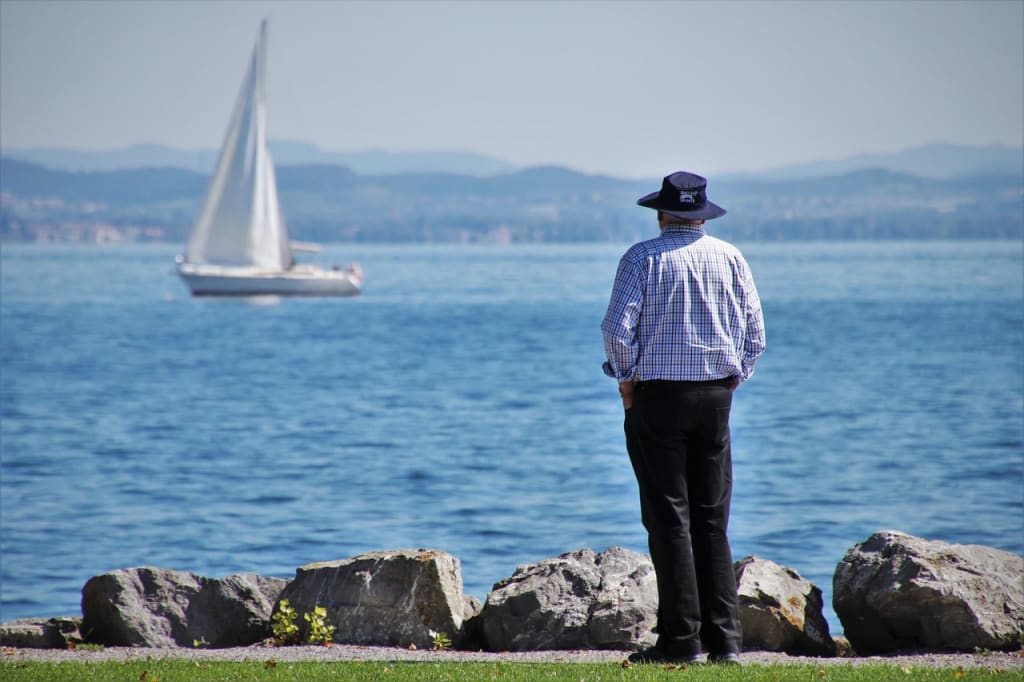
If we examine, we are a little stingy in the matter of expressing gratitude and even in the people we live among, these habits have not been awakened. I do not know why. We are very good people, we are lovely people, we provide good and happy things for each other. But we are stingy in the matter of praise and appreciation. This custom has not even become a habit here and we have not considered that praise and appreciation is also obligatory. If it is not obligatory somewhere, then it should be done so that unity and harmony are created between humans. Unfortunately, here, people are praised after their departure. If you go to the largest graveyard in Lahore, Miani Sahib, you will see many books on which the name of the deceased, date of birth and date of death are written. Then there will also be descriptive words along with it. Now that poor person cannot go out and see what is written on the book. It was not useful for him. It would have been better if he had been praised and appreciated while he was alive. It is a source of support for him to know that the people around him are very encouraging people. There is an incident where some companions of the Prophet (peace and blessings of Allaah be upon him) were there before him. The new ones came and said, "O Messenger of Allaah, these companions of yours seem very dear to me and I like them. I am not very familiar with them, but they are very kind-hearted." The Prophet (peace and blessings of Allaah be upon him) said, "Did you tell them this?" He said, "Yes, I did not." He said, "Go immediately, follow them and put your hand on their shoulder and say, "I like you, I like you." So they ran after them and said, "I love you very much." Obviously, they must have responded to his love with love. We are lacking in some love. It is not that we do not have it in our hearts. I think we have enough love in our hearts. Our people sing songs and tell stories. We are very loving people, but we cannot express it with our tongues. I do not know why. And the expression of praise and scolding should be spontaneous and spontaneous.
Books are praised and praised. The author's book is praised in a way. It is a good thing. Now look, someone has written a book. For example, if he has children, the author of the book has become a father. So, if he has children, he has to go to the house of the father of the child and say goodbye. And sometimes, this praise and scolding can also be your support, it can help you, it can protect you. One of our professors used to say this. Look, when you go to a hotel or a restaurant and eat food and you are angry for some reason, you can make up your own mind and say whatever you want to the hotel manager. There is nothing wrong with that. Call the owner of the dispensary and humiliate him. It is okay. But for God's sake, don't be harsh with the deaf. Because if you are harsh with my deaf person, the result can be dangerous. Because once I saw two deaf people in a big hotel They were standing next to the door with their own chests, which are plates, and a large gentleman was eating. One deaf man called another deaf man and said, "Look, he ate. He ate. He didn't even realize it. Praise and appreciation are also beneficial in this regard. However, our channel is very lacking in this, which I think should be paid attention to. The gesture of gratitude between the shopkeeper and the customer is not the same. When you buy petrol, you never say thank you to the boy who filled your petrol.
Because you are a great man, why do we need to thank you? Because we have been ruled here for a long time by great kings and then by the company of brave men. And we have not learned this method and behavior. Thanking a person becomes generous and has a great impact on his soul, his existence, his personality and his individuality. Our elders did not teach us this. Our teachers did not teach them to say thank you. If we had been told, we would have certainly respected them. The professors I mentioned were not professors. I have already mentioned that they were teachers, teachers of teachers, and teachers of honor. They had a degree above that of professor. They had come to meet the professors in the staff room and introduce them to life-giving and life-affirming things. They used to say, "Look, this is a matter of human beings. Whenever you pull a plant out of the ground, you must first ask permission from him. I have not taken an oath from you. I respect you very much and assure you that I will I will uproot you, I will use you for my own use, but with this I assure you that a time will come when I will also be of use to you. When I disappear, when I become a hand, I will be of use to your descendants, your descendants. This is the matter of elders, so always take permission from him and talk to him in love before uprooting him. And then he would say, always speak to him in a loud voice, not in a whisper, so that others can hear that you are being grateful to him. You are uprooting him. There are coriander plants, mint, and countless other things. I said, Sir, I have never thanked my servants. What kind of people are you talking about? But sometimes when I look carefully, in our society too, sometimes we find people who have a sense of gratitude. It was a matter of many years. I had a bicycle, which ran on petrol, as NSU used to say, I bought it for 925 rupees and 35 paise, and it was very powerful. When it was much ahead of the motorbikes of yesterday, its greatest advantage was that when the petrol ran out, you could pedal it like a bicycle. It was made in Germany. The Director of Industry kindly gave me a permit.
We collected 935 rupees and gave me some money and bought it. It was a long time ago. In 1960-61, I used to ride it. Once, I was riding it. It was a very good ride. People used to look back and see what a respectable man he was. He had a fast motorbike. Once, I was coming. A young man stopped me near the Central Jail. I was wearing a shirt, his slippers were on and he was wearing an old-fashioned pair of jeans. I said, "Yes, take me as far as you can." I said, "Okay, come and sit down." But he seemed a little suspicious to me. So I asked, "Where have you been here?" He said, "Yes, I came to get some of my papers from here. I will leave the jail the day after tomorrow." I was released but I forgot my chit. I forgot my chit. I don't know what it was. I said, "You were imprisoned here." He said, "Yes, I am a very famous pickpocket. I am a thief." He said, "Yes, my area is Misri Shah." Misri Shah is an area of Lahore. I am from there. They caught me and forcibly filed a case against me, even though I didn't have any witnesses against me.
I said, "You are a pickpocket." He said, "Yes, I am. But in this case, I was treated very unfairly and was sentenced to nine months. I have completed my nine-month sentence and am now going home." I said, "Okay, then, then, you are a very honorable man. When you have narrated this whole incident with honor and honesty, sit down. He sat down behind us. We continued walking. When we reached Ferozepur Road, where Ferozepur Road turns into Lenton Road, we went there and he said, "You go this way. I went this way. I went this way. We reached the middle of this road. A soldier was standing there, blowing a whistle and stopping me. He said, "This is a one-way street." I said, "Sir, is there any board here?" He said, "No, it is not the government's job to put up a board. Its job is to give orders. The government has given orders. This is a one-way street. So why are you coming from this way? I will issue a challan for you." I pleaded with him to come. Don't issue a challan. My companion also got down and stood up. He said, "Santri Badshah, let him go. We didn't know what was wrong." He said, "No, I won't leave you." I tried to argue that you should have put up a board outside. You didn't put up a board. He said, "It's not our job to put up a board. It's the job of some other department. You should know." He said, "You're not familiar with the law. That's not our goal. It's your fault. You should know which roads in Lahore are one-way and which aren't." I said, "What can be done now?" After arguing for a lot of money, he took out a copy, made a carbon copy, asked for my name, wrote a challan, tore it up, gave it to me, and put the carbon copy under the next piece of paper. He put the copy in his shirt pocket. Now, my companion, whom I was bringing behind me, the poor thing, was obviously very upset that this happened because of me. He tied his hands and said, "Santri Badshah, it's not your fault." It is my fault that I brought them to this place, so please forgive them for God's sake.
He said, "No, the law is the law." He hugged him and put him under his feet. He lifted him up high and gave him the money. For God's sake, he pushed him away. He said, "Okay, whatever you want, it doesn't matter." The soldier told him that when so-and-so has to appear in the state court in a few days, I said, "Okay." So when you and I got on the motorcycle, both of us were dead. Then he said, "Take me to the furnace." I said, "Okay, let's take you wherever you want. Drop me off outside the furnace. Then from there, I will make my own arrangements and leave." When I reached Bharati, he said, "I am very grateful to you. You brought me here with great love, hard work, and great vision." I said, "No." He said, "What can I thank you for?" Then he took out the soldier's copy from his pocket and gave it to me. I had a new carbon copy made, which also had a copy of my challan. This is yours, this is yours. When he was typing,
When he was hugging, he was getting up and down. Now the pocketing was also perfect. He said, "Yes, keep this souvenir of mine. Keep all the invoices with you." That's how I remembered this incident. When someone has done a small favor, a burden falls on a person. It is very important to repay this burden immediately. At least thank them. Yes, absolutely. At least thank them. We don't have this custom. No one taught us. If we were taught in school, the relationship between a teacher and a student or with adults or if your work has been done somewhere. But in these small places where I have seen shops and other places, we have never thanked them or paid them. If we were told this, we would do as we have been told to say "Assalamu Alaikum." You still see that when I go for a walk in the morning, people pass by each other without greeting each other. Otherwise, you go and see. In France, especially, people don't know each other personally, but they keep saying "Love each other with great affection." They keep saying, "I don't understand, I don't understand, is there any kind of burden or is there any jealousy or quarrel between us?" Yes, one thing is certain, a person considers himself to be of such a status that he says, "How can I thank him?" For example, you are passing by on the road, and while passing by on the road, a street sweeper is sweeping. Street sweepers are generally good people, they stop the sweeper and when you pass by, you never say thank you or please.
Our Babaji Noor Wale says, "I remembered a story from a street sweeper that whenever you pass between the houses of street sweepers or street sweepers while blowing dust, never put money on your nose or put your hand on them because they are also human beings who are doing this work, and you humiliate them by putting a handkerchief on your nose, saying, "Look, I am a very superior person, I am a superior person. When a human being breathes, I do not breathe in the same air that you breathe in, so let's pass by just like that." Since someone always brought up the issue of argument in the middle, we used to say that our elders say that we should inhale oxygen and avoid dust at home. They said, "The most you can do is to pass between them and hold your breath, but you should not do this by making a fist and putting your hand on your nose and passing by, considering them human beings. This was a new lesson for us to try to consider them human beings. No one had told us this because we have a Brahmin system that we have borrowed from the Hindus. That is, we have borrowed it because Brahmin, Vaish, Shudra, these are the chains of being human. One is smaller than the other and the other is smaller than it. Whereas with us, this order has been given that the nine human beings born 1450 years ago are the offspring of one human being and an Arab has no superiority over a non-Arab, and a non-Arab has no superiority over an Arab, nor a white over a black, nor a black over a white. But unfortunately, we are not close to this lesson as a person. We have only been following what we have read or read in books, and we are still moving forward. I am reminded of my teacher, Master, that many times on holidays or when there was a half-holiday in the university, we professors would request him to take us along and we wanted to wander around with him. A stream used to pass through the small mountains, a rain stream, let's say somewhere.
The old fun that you must have seen in our northern regions, when we were passing over it, talking, gossiping, the master professor was also with us. When we had passed over this bridge, he started saying, "Thank you very much." I thanked him and my hair stood up. Whenever he would pass over the bridge or through any such difficult gorge, he would definitely thank him. I have passed through it. This aspect of his love and his dance was so beautiful that when he would turn around, he would not raise his hand to thank him. I wanted such difficulties to continue in our path and the professor, the master, to continue walking with us and he would continue thanking us and we would continue learning from him how to express gratitude and how many angles it has and how many aspects it has. I was asking you that unfortunately we were not told, we were not taught, otherwise we are quite good people. I am not saying this because I belong to these people, we are quite We have qualities, we are hardworking people, you have seen that even if we do not work hard at home, we have shown our excellence by going abroad to Bahrain, America, Dubai. We are working here too with great speed and God willing, Allah will build our country. I apologize. The people who trained us with the same training, that is, get your rights and fight for them and keep trying. No one has drawn our attention to our duties. If this is started from today, that is, from this date in 1999, then some of our rights are our duties and we will fulfill them and then we will demand our rights, then it will be beneficial. I will again state in a humble language that the people of Sindh did not draw our attention to it, rather if they had given it, they would have taken it from the other side. Now, if they are mindful and want to show kindness to us, they should also draw our attention to our duties. I want to assure them on your behalf and on behalf of all the viewers that we will be proven in fulfilling our rights and fulfilling our duties by the grace of God, just as We are restless to demand our rights. It is often said that there is a flaw in the system. There is no flaw in the system. There is carelessness in the system. These are the differences. If you completely decide that within a framework, you and I are all together, then that system, which is a flawed system, will not exist and that medicine will become a caravan towards creations. But girls do express gratitude, they thank their friends or they even thank their servants.
About the Creator
Keep reading
More stories from Afzal Othi and writers in BookClub and other communities.
The effects of culture in our lives
I have been specifically asked to present something to you about culture. In this regard, today's program may be a little different, but I will definitely try to easily go through the difficult stages that have been or are being presented in the search for the culture of our lives. Ladies and gentlemen, I have seen about 62 different definitions or discussions about culture, but in the field of knowledge, humanities and social sciences have not been able to reach any specific final conclusion. That is, our very worthy anthropologist, a woman like Benedict, or the great French scholar Levi Star, and then on the literary level, T.S.L. Eliot, all of them have defined it. But the truth is that I am courageous and have a stone in my heart and with great courage, I understand that Westerners are not able to give the correct definition of culture in such a way that they consider culture to be associated with human life, this life that we are living. But for this, it is necessary to expand this life far and wide until you understand the life to which it belongs. Not from the intermediate parts between birth and death, but with this endless journey of life that goes from here to here after, these poor people have this life and its knowledge and know about it, so they often say that the relationships of a certain group of people, their beliefs, their games, their movements, their courage and honesty, whose culture is and becomes a part of it, we accept this.
By Afzal Othi11 months ago in BookClub
7 Contemporary Romance Books Everyone Should Read In 2026
Love is timeless, but the stories we tell about it evolve with the world around us. Contemporary romance captures the pulse of modern relationships, blending passion, humor, and emotional depth with the realities of our everyday lives. Unlike classic romance, contemporary tales often tackle themes like career challenges, cultural differences, mental health, and personal growth—making them both relatable and inspiring. In a world where connection is increasingly digital, these books remind us of the beauty of vulnerability, the excitement of chemistry, and the transformative power of love.
By Diana Meresc5 days ago in BookClub




Comments
There are no comments for this story
Be the first to respond and start the conversation.