
Tradition on a Leaf: Exploring the Richness of Bangla Food Culture
From humble rice and fish to festive biryani and sweets, discover how traditional Bangla cuisine, served on banana leaves, connects generations through flavor, culture, and sustainability.

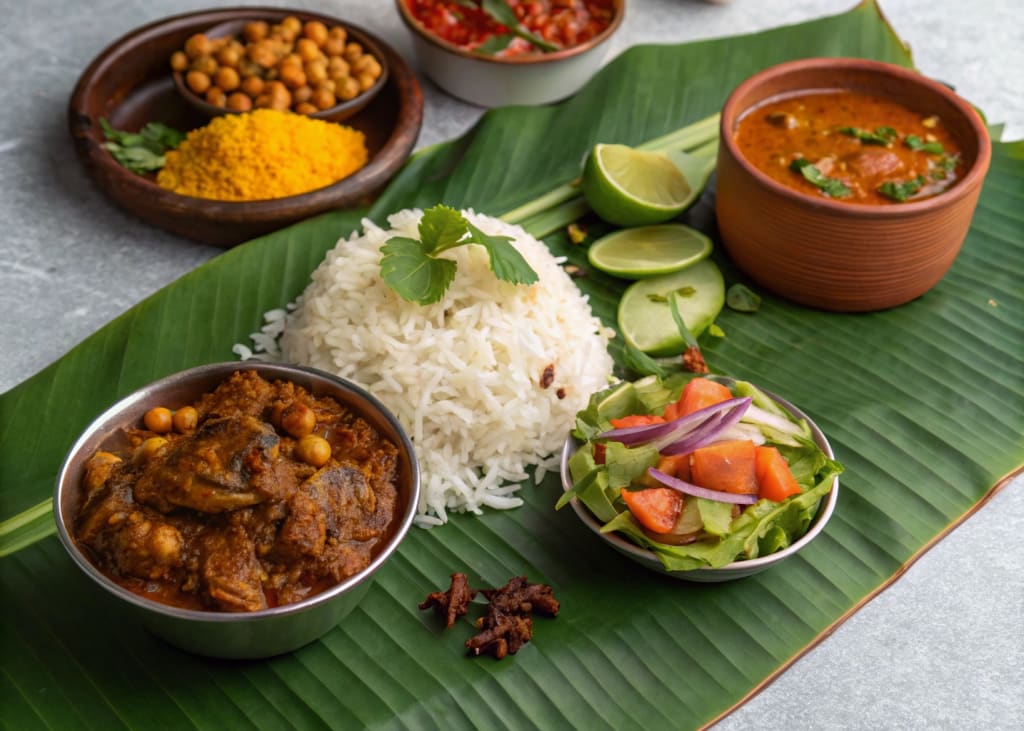
Traditional Bangla food is a reflection of the land’s rich culture, vibrant heritage, and centuries-old culinary wisdom. Deeply rooted in the soil of Bengal and shaped by various historical influences from the Mughals and Persians to the British Bangladeshi cuisine offers a tapestry of flavors that is both comforting and complex. The soul of Bangla food lies in its simplicity and seasonality, with rice, fish, lentils, and vegetables forming the core of everyday meals. What truly elevates the dining experience, especially in rural Bangladesh, is the traditional practice of serving meals on Banatree leaves a biodegradable, eco-friendly, and culturally symbolic alternative to modern plates that enhances the aroma and taste of the food.
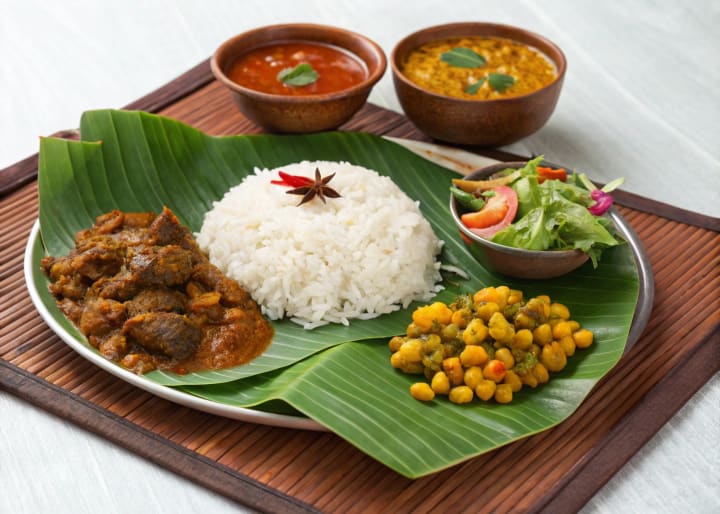
Rice is the bedrock of Bangladeshi meals. Whether it is the plain steamed rice or the aromatic polao, rice is served in almost every household across the country. It is typically accompanied by lentil soup or dal, made from masoor, moong, or chana. This simple yet satisfying duo, especially when served hot on a fresh-cut banatree leaf, becomes an experience of nature and nostalgia. On special days or during rainy afternoons, khichuri rice cooked with lentils, ghee, and spices is often paired with beef curry, eggplant fries, or pickles, creating a mouthwatering blend of warmth and flavor.
Fish is not just food in Bangladesh it is emotion. Blessed with an abundance of rivers and wetlands, Bangladesh offers a wide range of freshwater fish like hilsa, rui, katla, koi, and pangas. Hilsa, the national fish, is particularly prized for its rich taste and soft texture. Cooked in mustard gravy or lightly fried with salt and turmeric, hilsa dishes are considered delicacies. Eating fish and rice served on a Banana leaf amplifies the flavor, as the leaf’s natural fragrance subtly infuses the food, making the meal more earthy and enjoyable.
Vegetables, too, are an integral part of traditional Bangla cuisine. Seasonal produce like pumpkin, eggplant, bottle gourd, spinach, and bitter gourd are prepared in a variety of ways, steamed, curried, or mashed. Dishes like shukto, a lightly spiced bitter-sweet vegetable medley, or labra, a mixed vegetable curry flavored with mustard and five-spice , are typical vegetarian staples. Chorchori, made by pan-frying vegetables until slightly charred, is another classic. One of the most beloved accompaniments in Bangladeshi households is bharta mashed vegetables or fish blended with mustard oil, chopped onions, green chilies, and salt. Served warm on a banatree leaf, these vegetable dishes evoke the comfort of home-cooked meals and ancestral traditions.
While rice and vegetables dominate the daily table, meat dishes hold a special place during festivals and family gatherings. Kacchi biryani, an opulent dish made with marinated mutton, fragrant rice, and rich spices, is a wedding essential. Beef rezala, known for its creamy, aromatic gravy, and chicken roast are also popular choices during Eid and other special events. The distinct flavors of these meat curries, especially when savored on a fresh banatree leaf, offer not only a culinary delight but also a sensory connection to traditional dining practices.
Bangladeshi street food is a world of flavor in itself. Spicy, tangy, and crunchy delights like fuchka (pani puri), chotpoti, beguni, and alu chop are loved across the country. Fuchka, crispy shells filled with spicy mashed potatoes and tamarind water, is an evening favorite for people of all ages. Chotpoti, a medley of chickpeas, potatoes, onions, and tamarind sauce, is especially popular during festivals and in urban areas. These snacks are sometimes served on dried banatree leaves shaped into small bowls, preserving the eco-conscious tradition of using natural serving ware.
No discussion of Bangla food is complete without its divine sweets. Made primarily from milk, sugar, and chhana, sweets like rosogolla, sandesh, chomchom, kalojam, and mishti doi are essential at every celebration from weddings and birthdays to religious festivals. Payesh, a sweet rice pudding cooked in milk with cardamom and occasionally garnished with raisins or nuts, is a birthday favorite. In winter, jaggery-based sweets and traditional pitha like bhapa pitha, chitoi pitha, and patishapta are made in every household. These delicacies, especially when served warm on a clean banatree leaf or wrapped in banana leaves, not only taste better but also carry the essence of rural life and Bangladeshi hospitality.
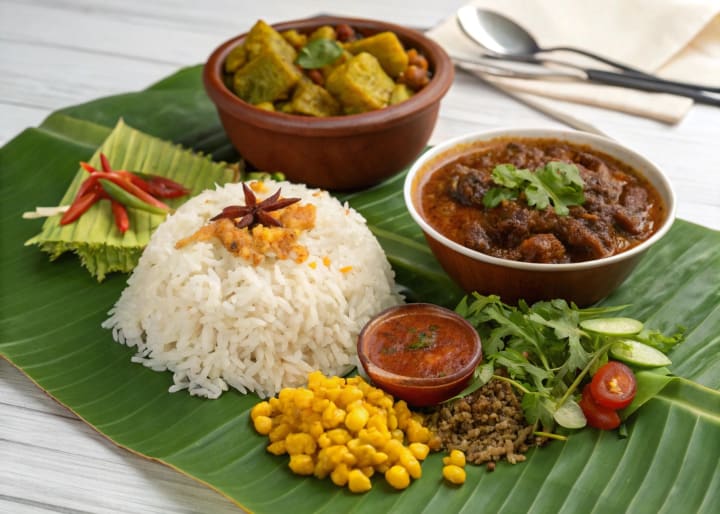
Spices form the backbone of Bangladeshi cuisine, lending depth, heat, and character to every dish. Mustard oil, with its sharp and pungent aroma, is a signature element in many recipes. Ground turmeric, red chili powder, cumin, coriander, bay leaves, cardamom, and cinnamon are used to build layers of flavor. The use of panch foron a traditional blend of five whole spices adds a unique and unmistakable touch to many vegetable and fish dishes. These spices, when combined with slow cooking and served traditionally on a banatree leaf, make the dining experience even more authentic.
Food traditions in Bangladeshi households reflect strong family values and social customs. Lunch is often the main meal, featuring rice with various accompaniments, while dinner may include flatbreads and lighter side dishes. Meals are typically shared with family members, and in rural areas, they are often eaten sitting on the floor with food served on large banatree leaves, reinforcing a deep connection to the earth and simplicity of life.
Cultural and religious festivals in Bangladesh are always accompanied by elaborate meals. During Eid-ul-Fitr and Eid-ul-Adha, kitchens fill with the aroma of biryani, shemai, meat curries, and sweets. Hindu households prepare special vegetarian dishes and sweets during Durga Puja, Saraswati Puja, and other festivities. The Bengali New Year, Pohela Boishakh, is incomplete without the traditional meal of panta bhaat, fried hilsa, onion, and green chili often enjoyed on banatree leaves in open-air gatherings, music, and cultural programs.
In conclusion, traditional Bangla food is not just about ingredients or cooking techniques it’s about memories, hospitality, and a way of life. The use of banatree leaves in serving food symbolizes a harmony with nature, a nod to sustainable practices, and a continuation of cultural heritage. Whether it's the rich aroma of kacchi biryani, the simple comfort of dal-bhaat, or the festive joy of fuchka on a street corner, Bangla food tells stories of generations. As Bangladesh moves forward, these traditions preserved in flavors and served on nature’s own platter remain a cherished link to the heart of the nation.
About the Creator
G.M. Rayhan
I'm G.M. Rayhan, a Journalist and content writer covering trending news from around the world. I deliver timely, engaging, and reliable stories that inform and inspire readers to stay connected with global events and viral topics.
Keep reading
More stories from G.M. Rayhan and writers in BookClub and other communities.
The Transformative Power of Reading: Unlocking Knowledge and Personal Growth
In today's fast paced digital world, where information is constantly flashing across our screens, reading books continues to stand tall as one of the most powerful ways to acquire knowledge and wisdom. Books are more than just printed words on paper they are timeless companions that transport us to new worlds, deepen our understanding of life, and broaden our horizons. Whether fiction or non-fiction, reading isn't merely a pastime; it's a transformative habit that nurtures our intellect, sharpens our thinking, and enriches our language skills. Its value extends far beyond academics, touching every aspect of personal growth, from creativity to empathy and lifelong learning.
By G.M. Rayhan10 months ago in BookClub
My New Book is Finally Here
My poetry collection Beautiful and Brutal Things is done. It's actually done and finally published over 270 pages. Over a year of my life went into this book. More than a year, really. Long days at my computer, sometimes seven days a week because I couldn't stop even when I probably should have. Then two months of editing that felt harder than the writing itself. But it's finished, and I'm still standing, and the book is real.
By Tim Carmichael3 days ago in BookClub
Whiskers, Wanderlust & the World’s Street Cats
Welcome back to The Chapter Café, where stories are always on the menu and comfort is served by the chapter. I’m your host, Kristen, and today we’re curling up with a book that’s part travelogue, part love letter, and entirely purr-worthy. On today’s menu? Street Cats & Where to Find Them by Jeff Bogle—a photographic journey through the world’s most feline-friendly cities, told with warmth, wit, and a deep appreciation for the cats who roam them.
By Kristen Barenthaler5 days ago in BookClub




Comments
There are no comments for this story
Be the first to respond and start the conversation.