
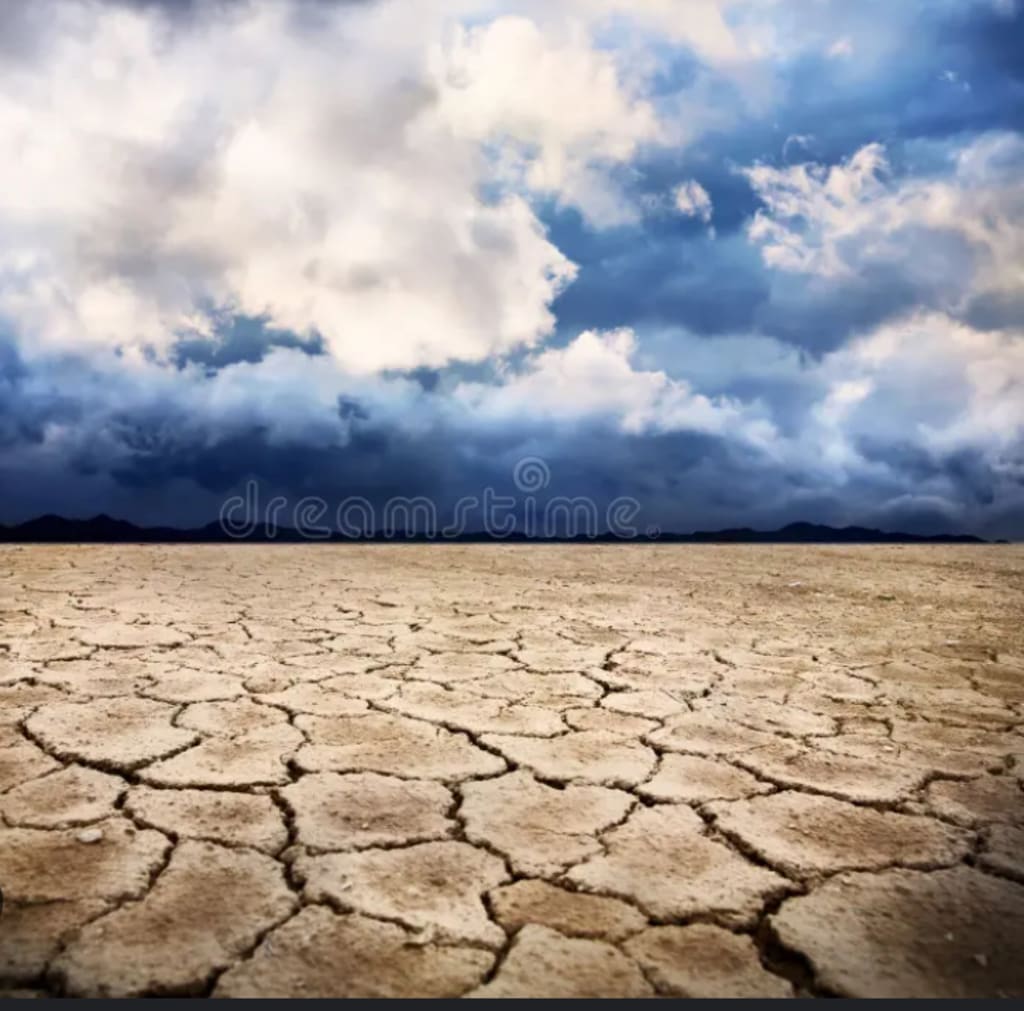
In the beginning, it was a slow burn. No one realized how quickly the water would run out. First, it was the rivers—fading, shrinking into cracked earth. Then the lakes. A few dry months, a season without rain, and people were still hopeful, thinking it would just take time for things to settle. But it didn’t. The reservoirs emptied, and soon, every well ran dry.
The cities adapted at first. People carried water in plastic bottles, trading the precious liquid in exchange for food, for shelter, for a moment of comfort in a world increasingly parched. There were whispers of solutions: desalination plants, water filtration systems, and elaborate plans to divert the last trickles of rivers to the most desperate places. But all of it faltered, stalling, failing. There was no new source of water coming.
At some point, people stopped trying to fight it. Desperation seeped in like the heat of the relentless sun. They stopped watering crops, the land becoming dust and bone, the air thick with the scent of burning wood as people tried to escape the dryness with fire, with smoke. The soil cracked open like a wound, and the dead rotted under a scorching sky.
A new kind of violence emerged, born of thirst. Families fought over the few remaining wells. Cities rioted, crumbling into anarchic chaos as water became a commodity, a currency stronger than gold. It wasn’t just the desperate who turned violent; it was the ones who knew they had no future without it.
Lena and her brother, Jacob, were survivors. Their town had once been small, the kind of place where everyone knew each other, but now, it was an enclave of the last holdouts. They lived on what little they could scrape together—tiny puddles collected after brief, scorching rains, and a small ration they kept for themselves.
One morning, Lena woke to a scream. Jacob had been scavenging, digging through the rubble of what had been a grocery store, when he came across something—a small tank, a portable filtration system, the last remnants of something bigger. His eyes were wide with hope. But before he could reach it, someone else appeared. A stranger, desperate. They both lunged for it at the same time.
Lena heard the thud of bodies colliding, the sickening sound of a knife cutting through skin, then Jacob’s gurgling, desperate breath. She ran toward him, but when she reached him, it was too late. His eyes were lifeless, staring at the sky that no longer offered reprieve.
She stood, frozen, for a long moment. Her heart was a broken rhythm in her chest, but there was no time for grief. The stranger was watching her now, the knife still gleaming with her brother’s blood. There was no warning, no pause. Lena knew, as she looked at that stranger, that the world had become one long, slow death march. There was no room for mercy, not anymore.
She grabbed a sharp piece of metal, her hands trembling with the weight of what she had to do. The world had turned cruel in ways she couldn’t have imagined before. It wasn’t just the water. It was the people who had lost everything and now took whatever they could.
By the time Lena stood over the stranger, panting, blood staining her hands, the realization came: the fight wasn’t for survival anymore. It was for the last spark of humanity, and it was already gone.
About the Creator
Keep reading
More stories from D Longford and writers in BookClub and other communities.
The fall of a star
**The Rise and Fall of Marcus Gaines** Marcus Gaines was a name that once echoed in stadiums across the country. A star running back with lightning-fast feet and an uncanny ability to turn impossible plays into touchdowns, Marcus had everything: fame, wealth, and the adoration of millions. But life has a way of testing even the brightest stars, and for Marcus, the fall came faster than anyone could have imagined.
By D Longford12 months ago in BookClub
My New Book is Finally Here
My poetry collection Beautiful and Brutal Things is done. It's actually done and finally published over 270 pages. Over a year of my life went into this book. More than a year, really. Long days at my computer, sometimes seven days a week because I couldn't stop even when I probably should have. Then two months of editing that felt harder than the writing itself. But it's finished, and I'm still standing, and the book is real.
By Tim Carmichael2 days ago in BookClub
Hildegard von Bingen
Light, Intellect, and Authority in the Medieval World Hildegard von Bingen stands as one of the most extraordinary intellectual figures of the Middle Ages, a woman whose range of achievement resists narrow definition. Born in 1098 in the Rhineland region of what is now Germany, Hildegard entered a world shaped by monastic reform, theological debate, and emerging centers of learning. From this environment emerged a thinker whose influence reached far beyond the walls of any cloister. Across a long life, Hildegard produced visionary theology, original sacred music, works of natural history and medicine, and a vast body of correspondence that circulated among the most powerful religious and political leaders of the twelfth century. Recognition during life was not limited to local admiration but extended across the Holy Roman Empire and into the highest ranks of the medieval Church.
By Marcus Hedare3 days ago in BookClub




Comments
There are no comments for this story
Be the first to respond and start the conversation.